
Choosing a career gets confusing fast when you’ve got plenty of options but no real sense of which one actually fits you.
A student might score well in Maths and still have zero interest in engineering. Someone might love Biology but have no desire to become a doctor. Another might genuinely enjoy writing, talking to people, or solving problems and never once think of those as career-relevant strengths.
And then there’s everyone else’s opinion piling on top: parents, teachers, friends, social media, and sometimes your own shifting expectations.
This is exactly where an aptitude test for career selection can actually help.
It won’t hand you a verdict like this is the one career you must choose. A good aptitude test was never built to do that. What it can do is help you understand certain abilities and point toward areas worth exploring further.
That matters because career choice isn’t really the question what job should I take?
It starts one level deeper with understanding yourself.

What Is an Aptitude Test for Career Selection?
An aptitude test measures specific abilities. Depending on which one you take, it might look at numerical reasoning, verbal reasoning, logical thinking, spatial ability, problem-solving, or a mix of these.
When it’s used for career guidance, the results can point you toward fields where those particular strengths tend to matter.
Say someone scores well on numerical reasoning that might be worth exploring in careers built around numbers. Someone with strong verbal reasoning might look into communication, language, writing, or analytical roles.
But a test can’t just say: You’re good at numbers, so become an accountant.
Real career decisions are messier than that. Your interests, personality, academic background, goals, and personal preferences all factor in too.
Think of an aptitude test as one useful data point not the final word.
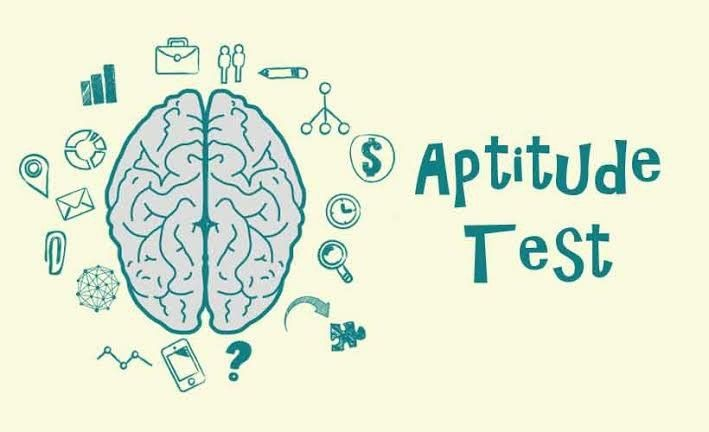
How Does a Career Aptitude Test Work?
Most of these assessments run you through a series of questions or tasks built to measure specific abilities. Depending on the test, you might be asked to spot patterns, solve numerical problems, work through written passages, complete logical sequences, manipulate shapes, spot relationships, tackle unfamiliar problems, or just work accurately with information under time pressure.
Your answers get scored according to whatever method the test uses.
But honestly, the score itself isn’t the interesting part. What matters more is what you do with it:
What does this actually tell me about my strengths?
Which areas are worth digging into further?
Do those areas line up with what I’m interested in?
What careers actually use these abilities day to day?
What would it take, education-wise, to get there?
That’s where real career guidance becomes more valuable than just taking a test and skimming a list of matched occupations.
What Does an Aptitude Test Measure?
There’s no single, universal aptitude test different assessments measure different things. Here are some of the common areas you’ll come across.
1. Numerical Reasoning
This measures how comfortably you work with numbers, quantities, and numerical relationships. Strong numerical reasoning tends to show up as useful in careers involving quantitative analysis, finance, economics, or data work though having the ability doesn’t mean you have to go that route. Your interest still has to be there.
2. Verbal Reasoning
This looks at how well you understand and work with written or spoken information relevant for careers built around reading, communication, writing, or explaining complex ideas clearly.
3. Logical Reasoning
This measures how you spot relationships, patterns, and rules, and use them to work through problems. Useful to know if you’re leaning toward fields built on structured thinking.
4. Abstract Reasoning
Abstract reasoning tests your ability to recognize patterns and relationships without leaning on familiar, real-world examples. It’s a decent window into how you approach genuinely unfamiliar problems.
5. Spatial Ability
This is about understanding shapes, objects, and how they relate to each other in space relevant to design, architecture, and a lot of technical work where visualization matters.
6. Mechanical Reasoning
Some assessments dig into your grasp of basic mechanical principles and physical systems, which can be useful signal for certain technical and engineering paths.
7. Attention & Accuracy
A number of assessments also track how carefully and consistently you process information because plenty of jobs need people who notice details, not just people who move fast.

Why Is an Aptitude Test Useful for Career Selection?
Think about how career decisions often happen for students. A friend chooses a particular course, and suddenly it starts looking like a safe option. Parents may have their own expectations. Salary figures can make one career seem more attractive than another. And sometimes, students simply continue with the subject they perform best in because it feels like the obvious choice.
None of these approaches are inherently bad but none of them tells the whole story either.
An aptitude test adds another piece to the puzzle.
It surfaces strengths you might not notice. Some abilities never show up clearly in school marks or day-to-day life.
It opens up possibilities you hadn’t considered. You might discover an area worth exploring that never crossed your mind.
It can support stream selection. For students deciding what to study after Class 10, it’s one useful input among several.
It can support course selection. After Class 12, it helps when you’re weighing different degrees or directions.
It sharpens career conversations. Instead of saying I don’t know what I want to do, you can say here are my stronger areas, here’s what I’m considering, and here’s what I’m still unsure about. That’s a far better place to start from.
Aptitude Test After 10th: Can It Help You Choose a Stream?
Class 10 is usually when the career pressure starts getting real. Science or Commerce? Arts? Which subjects should you even pick? What if you get it wrong?
An aptitude test can offer some useful input here but don’t let one score make the whole decision. Look at the bigger picture instead: which subjects you actually enjoy, which ones you can stand studying for years, where your academic strengths lie, what kind of problems genuinely interest you, which careers appeal to you, what courses you might want later, and yes, what the aptitude results suggest too.
Being good at Maths doesn’t automatically mean Science is the answer. And struggling in one subject doesn’t rule out an entire career direction.
Your stream is a starting point not your whole career.
Aptitude Test After 12th: Is It Still Useful?
Yes, absolutely.
After Class 12, the decisions get more specific. Which degree should you pick? Should you go professional? Which specialization actually fits you? Should you keep going in the direction you’ve already chosen, or is there something better out there?
This is where an aptitude assessment can add another useful perspective. After Class 12, you may already have a few directions in mind, but still be unsure which one fits you best. You might enjoy technology without knowing whether Computer Science is the right path, or like Biology while having no interest in medicine. Even being good with numbers doesn’t automatically tell you whether finance, economics, business, analytics, or another field would be a better fit.
The test won’t decide for you. It just hands you more to work with.
Career Aptitude Test vs Interest Test vs Personality Test
People tend to lump these together. They’re not the same thing at all.
| Assessment | Mainly looks at | A simple question it helps answer |
| Aptitude test | Abilities | What kinds of tasks might I be good at? |
| Interest test | Preferences | What kinds of activities or work do I enjoy? |
| Personality assessment | Behavioural tendencies | What kind of working style suits me? |
Say an aptitude test shows you’re strong with numbers. Great that’s useful information. But then you realize you don’t actually enjoy spending your day crunching numbers. Should you just ignore that discomfort because your score says otherwise?
Not necessarily. What you’re really looking for is the overlap between your abilities and your interests that’s usually the more productive place to focus.
For what it’s worth, career exploration tools like the U.S. Department of Labor’s O*NET Interest Profiler are built around the same idea: help people explore work-related interests and occupations, rather than declaring one correct career for them.
When Should You Take an Aptitude Test?
There’s no magic age. It really comes down to what decision you’re actually trying to make.
Before Class 10 good for early exploration and understanding your natural strengths.
After Class 10 useful for stream-related conversations and thinking through future options.
During Class 11 or 12 helps narrow down courses and career directions as things get more concrete.
After Class 12 helpful when comparing degrees, professional courses, or entirely different career paths.
During college useful if you’re questioning your current course or eyeing a different direction.
As a working professional can help when you’re considering a career change or trying to figure out what type of work might actually suit you better.
So if you’re stuck wondering am I too old or too young for this? that’s the wrong question. The right one is: what decision am I actually trying to make right now?
How Accurate Is a Career Aptitude Test?
This is where you need to be a bit careful.
An aptitude test isn’t a crystal ball. It can’t guarantee success in any particular career, and it shouldn’t be sold to you as a prediction of your entire professional future.
How useful an assessment actually is depends on things like what it’s designed to measure, how it was built, how it’s scored, whether there’s real reliability and validity evidence behind it, whether it’s appropriate for the person taking it, and how well the results are explained afterward.
Serious assessment resources like O*NET publish technical documentation covering exactly this development, scoring, reliability, validity. That level of transparency is worth looking for.
So skip the site that promises 100% accurate career prediction. A far better question to ask is: what does this test actually measure, and what evidence backs it up?
Can an Aptitude Test Tell You Which Career Is Right for You?
Not on its own. This is probably the single biggest misunderstanding people have about aptitude testing.
A real career decision pulls together several different threads: aptitude (what abilities do I have), interest (what do I actually enjoy), personality (how do I like to work), values (what matters to me), education (what am I willing to study for), goals (what do I want out of this), and reality (what does the job actually involve day to day).
A career that looks perfect on an aptitude score can still be wrong for you if you hate the actual work. And a career that doesn’t jump out on a test isn’t automatically off the table either.
The result needs context. Always.
What If Your Aptitude Results Don’t Match Your Interests?
Don’t panic this happens all the time, and honestly, it can make the whole career conversation more interesting rather than less.
Say your test shows strong numerical reasoning, but you have zero enthusiasm for traditional number-heavy careers. That doesn’t mean the test got it wrong. It just means it’s time to widen the lens.
Maybe you’re actually drawn to business, technology, economics, design, research, entrepreneurship, or general problem-solving all places where numerical ability quietly helps, even if the job title doesn’t scream numbers.
The goal is finding where your abilities and interests overlap, not forcing yourself into whatever the test technically points toward. If a result suggests a direction you don’t enjoy, you’re not obligated to chase it just because the score is high.
Your result is information. Not an order.
What Should You Do After Receiving Your Aptitude Test Results?
This is where a lot of people stop too early they get the report, glance at the recommended careers, and pick one on the spot.
Slow down instead.
Understand your strongest areas. Look past the career names and actually understand the abilities behind your results.
Build a shortlist. Pick several careers worth exploring rather than jumping straight to one.
Check it against your interests. Ask yourself honestly would I actually enjoy doing this?
Research the education pathway. What degree, training, or entrance exam does it actually require?
Look at the real work, not the title. Find out what people in this field actually do on an ordinary Tuesday.
Think about your future goals. Lifestyle, environment, growth, responsibilities all of it matters.
Talk to someone who understands career planning. If you’re still stuck, discuss it with a career counsellor instead of trying to make sense of everything solo.
How to Choose a Good Career Aptitude Test
Search career aptitude test online and you’ll get flooded with options some genuinely useful, some barely better than a BuzzFeed quiz.
Before picking one, ask a few basic questions. What does it actually measure is it really testing aptitude, or is it secretly an interest or personality quiz wearing a different label? Who built it, and is there clear information about the developers? Is there any evidence of reliability and validity behind it? Is it even appropriate for your age group a test built for adults might not translate well to a school student, and vice versa. How are the results explained a bare list of careers with zero context isn’t especially useful. And can you actually discuss the results with a professional afterward? For a decision this important, that conversation adds a lot of value.
Online Aptitude Test or Professional Career Assessment?
An online test is a fine, convenient starting point. There’s nothing wrong with using one just to get curious about your own strengths.
But there’s a real difference between getting a result and understanding what it actually means for you.
Take a student who scores strongly in one area but tells a counsellor they’ve never enjoyed the kind of work usually associated with it. That doesn’t make the test useless it just means you now know two things: you probably have some ability there, and you probably won’t enjoy using it in the obvious careers built around it. That’s genuinely valuable to know.
Professional career counselling exists to bring all these pieces together aptitude, interests, personality, academics, goals, and the practical realities of each path. If you want to go deeper, you can look into Hashtag Counseling’s career counselling services.
Common Mistakes People Make With Aptitude Tests
Chasing the highest-salary career. Salary matters, sure, but it shouldn’t be the deciding factor on its own.
Treating the result as final. It’s a starting point for exploration, not a locked-in verdict.
Trying to game the answers. If a test asks about your abilities or preferences, answer honestly trying to steer toward a better result defeats the whole purpose.
Ignoring your own interests. Being good at something and actually enjoying it are two completely different things.
Taking a pile of random tests. Different assessments measure different things, and stacking five unrelated results together often creates more confusion, not less.
Judging a career by its title alone. Always dig into what the job really involves and what it takes to get there.
Taking a test without a clear reason. Before you sit for one, know what decision you’re actually trying to make a stream, a college course, a career, or a career switch. That context shapes how you should read the results.
How Hashtag Counseling Can Help With Career Selection
At Hashtag Counseling, an aptitude assessment is treated as one piece of a bigger career guidance process not a scoreboard that tells someone what they have to become.
Instead, the assessment gets weighed alongside aptitude, interests, personality, academic background, strengths, goals, education options, and personal career preferences. Together, that gives students and professionals a far more complete picture to work from.
If you want support figuring out your options, you can explore career counselling at Hashtag Counseling.
Who Can Take a Career Aptitude Test?
Honestly, it’s not limited to one age group.
Students after Class 10, thinking through streams and future directions.
Students after Class 12, comparing degree programmes and career paths.
College students reconsidering their course, specialization, or direction entirely.
Graduates exploring what comes next after finishing their degree.
Working professionals weighing a career change or a different professional direction.
Age isn’t really the point. The decision you’re trying to make is.
A Simple Example
Picture a Class 10 student who assumes Science is the obvious pick because they score well in Maths.
Their aptitude test shows strong numerical and logical reasoning but also strong verbal reasoning. During a career conversation, it turns out they actually enjoy Economics, debating, and understanding how businesses operate.
Suddenly there’s a lot more worth exploring. Could Economics be the right fit? Finance? Business? Something data-related? Technology? Or some other field that blends analytical thinking with communication?
The aptitude test didn’t pick the career for them.
It made the conversation a lot more useful.
And that, really, is exactly what an aptitude assessment is supposed to do.
Final Thoughts
An aptitude test won’t tell you who you are. But it can help you understand yourself a little better.
Whether you’re confused about what comes after Class 10, unsure which course to pick after Class 12, or quietly considering a career change knowing more about your abilities gives you a real starting point.
Just don’t stop at the score. Look at your interests. Think about the kind of work you actually enjoy. Research the careers you’re weighing. Understand what education they demand. And give yourself permission to explore more than one possibility before you commit.
An aptitude test should open up the conversation about your career not shut it down.
If you’d like help making sense of your options, Hashtag Counseling can walk you through a more complete assessment and counselling process.
Your career doesn’t have to be decided in one test. It just needs to be chosen with better information.
Frequently Asked Questions
Q1: What is an aptitude test for career selection?
It’s an assessment that measures particular abilities or reasoning skills relevant to different types of study or work, giving you useful input when exploring career options.
Q2: Is a career aptitude test the same as an interest test?
No. An aptitude test mainly measures abilities, while an interest test explores what kinds of activities or work you actually prefer. They give you different information.
Q3:Which aptitude test is best for career selection?
There’s no single best test for everyone it depends on your age, your purpose, and what abilities the assessment is designed to measure. Look for transparency about how it was built and how the results should be read.
Q4:Should I take an aptitude test after 10th?
It can help you understand your strengths before choosing a stream, though stream selection should also weigh your interests, academic performance, and future plans.
Q5:Should I take an aptitude test after 12th?
Yes it’s useful when comparing degrees, professional courses, or career directions and you want an extra perspective on your strengths.







2 Comments