Let me tell you a secret that most therapy platforms won’t say upfront.
Online therapy is not for everyone. It is not automatically the right option. And going in with wrong expectations is one of the fastest ways to decide it doesn’t work, when the real issue is just that it wasn’t matched to what you needed.
That said, online therapy in India has genuinely changed what’s possible for a huge number of people who would otherwise have no realistic access to professional mental health support. Not as a lesser substitute. As a legitimate option that works well for the right person in the right situation.
So here’s the honest version of this conversation.
Why This Even Matters in India Specifically
It’s worth understanding the context before anything else.
India has a serious shortage of mental health professionals relative to its population. Most qualified therapists are based in major tier 1 or tier 2 cities. Someone in a smaller town or rural area trying to find a qualified therapist nearby is often looking at very few options, long waits, or significant travel for a weekly appointment.
Then there’s stigma. And in India this is real in a specific way. Walking into a counseling center in your own locality, somewhere people might recognize you, stops a significant number of people from ever starting. It’s not irrational. The social weight of being seen seeking mental health care in communities where it’s still not normalized is a real barrier that deserves acknowledgment rather than dismissal.
Then cost. In-person therapy with a qualified professional in a metro can be genuinely expensive. Then time. City traffic, demanding work schedules, the logistics of a weekly in-person appointment, it all stacks up into a reason not to go.
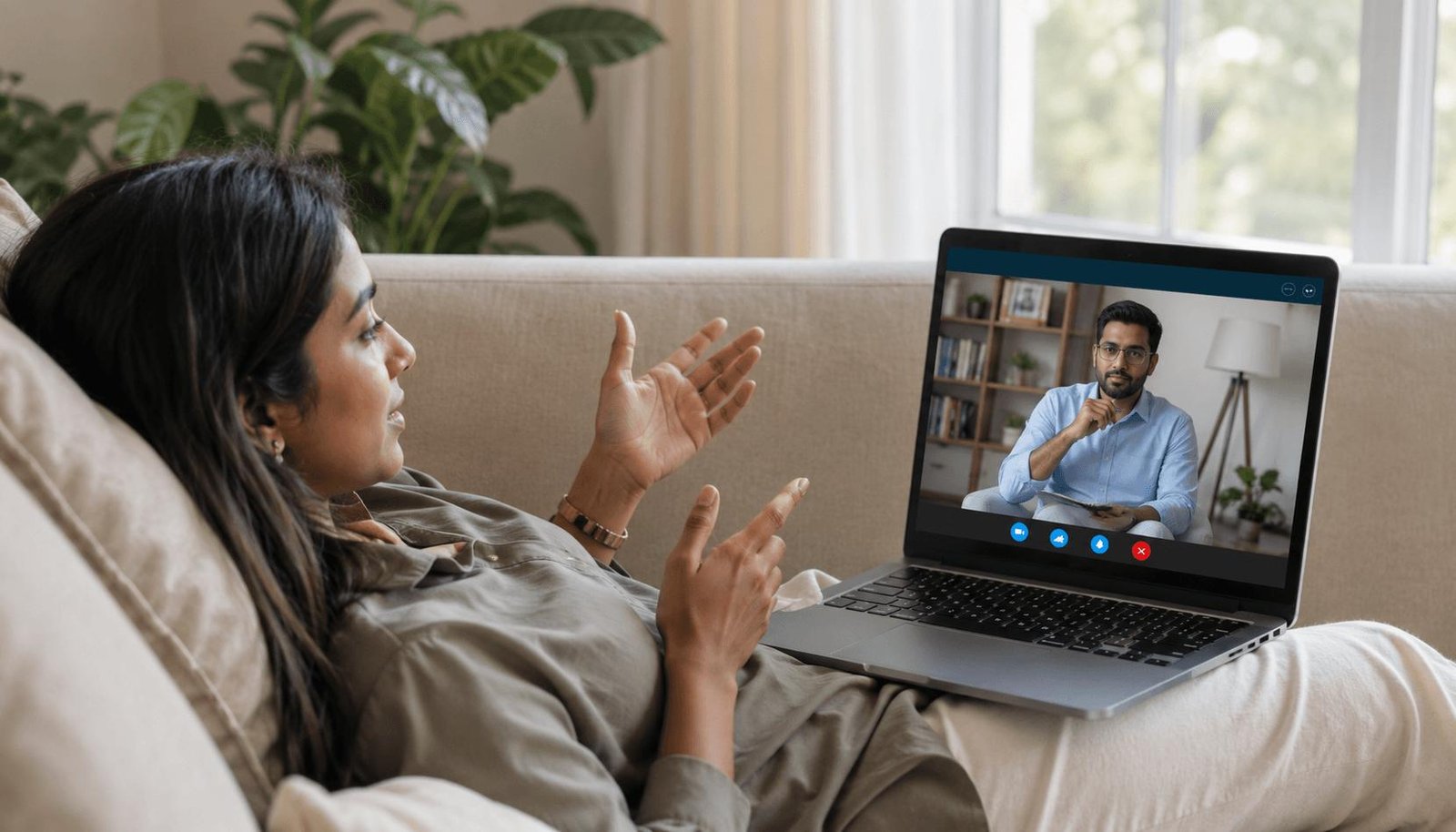
Online therapy in India removed most of those barriers at once. You don’t need to live near the right therapist. You don’t need to be seen. You don’t need to lose hours to travel. You can have your session from your room, your car, a quiet corner of your office, wherever you can carve out private time for an hour.
That’s not a small thing for a country where mental health infrastructure has historically left most people outside it.

What the Research Actually Says
Here’s what the evidence shows because it matters before anything else.
Multiple studies comparing online therapy outcomes to in-person therapy outcomes across depression, anxiety, grief, relationship difficulties, and stress have found something consistent: outcomes are comparable. Not slightly worse. Comparable.
The therapeutic relationship, which is the actual engine that therapy runs on, develops through online sessions in ways similar enough to in-person that it doesn’t significantly affect results for most people dealing with most things.
That’s not marketing. That’s what the research says. The hesitation around online therapy in India is often more cultural than clinical.
The Benefits. Being Specific About Them.
Comfort changes what people say, and that matters clinically.
A lot of people are genuinely more honest in their own space than in a room that feels clinical and formal and mostly unfamiliar. And honesty is the whole engine of therapy. If being on your own couch, in your own lighting, without a stranger physically two feet away makes it easier to say the difficult truth, that’s not just convenience. That’s a real clinical advantage.
Consistency is easier to maintain and this might be the most underrated benefit of all. The biggest predictor of good therapy outcomes is showing up regularly. When the barrier to attendance is just opening a laptop rather than navigating traffic and finding parking, people cancel less. Fewer cancellations means more sessions. More sessions means more progress. The math is very simple.
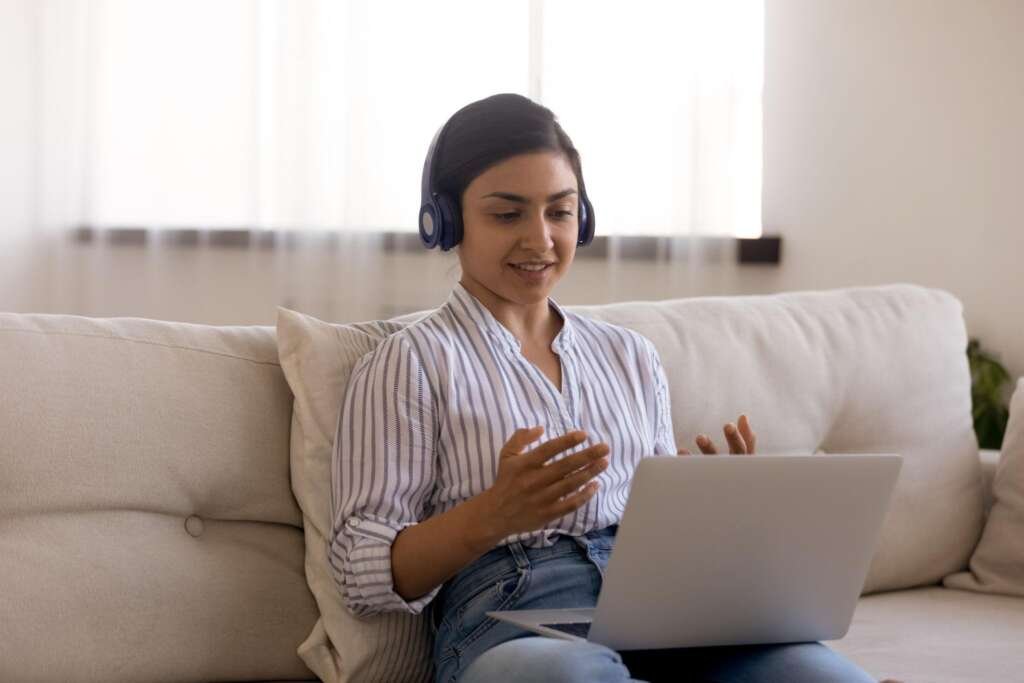
Privacy works differently online in a way that matters specifically in India. For someone in a joint family home, being able to take a session from a bedroom with headphones, or from a car parked outside, removes a barrier that in-person appointments don’t solve. You get the private space without having to explain to three people where you’re going and why.
The best online therapy experiences aren’t ones where you’re tolerating the format. They’re ones where the format is actively working for you.
The Limitations. Because Pretending They Don’t Exist Helps Nobody.
If someone is in acute distress, experiencing active suicidal ideation, or in the middle of a severe mental health episode, online therapy alone is not sufficient. These situations need in-person assessment, possibly involving psychiatry or emergency services. An online therapist can provide support and help you connect to the right resources but cannot be the primary response when things are genuinely dangerous.
Some therapeutic approaches are harder to do well on a screen. Trauma therapy involving significant body-based work, modalities that depend heavily on physical presence and shared space, these can be more challenging online. Not impossible but harder. Worth discussing explicitly with a potential therapist if you know you need this kind of work.
Technology creates friction that in-person appointments don’t have. A dropped connection mid-session when something emotionally significant is happening is not a minor inconvenience. Poor audio, visual lag, background noise that wasn’t supposed to be there, these interrupt the flow in ways that matter.
And some people just don’t feel the connection through a screen. That’s not a failure. It’s information about what you need. If you’ve tried online sessions and something consistently feels missing, that’s worth taking seriously.
How to Find the Best Online Therapy for Your Situation
Okay, this part is where most people get genuinely stuck.
You search on the internet and you get ten different platforms, different therapists being praised in all different reviews. Honestly it gets really confusing choosing the best therapy for yourself specifically. So let me help you to make this simpler.
Qualifications first, always. In India that means an actual degree in psychology, counseling, or social work, ideally with supervised clinical training behind it. Registration with bodies like the Rehabilitation Council of India matters.
The five-question quiz matching thing. Please be cautious of this. The therapeutic relationship is the single most important factor in whether therapy actually works for you, and no algorithm built on “do you prefer structured or open-ended conversations” is going to predict it accurately. It’s worth having even one brief initial conversation with a potential therapist before committing to ongoing sessions. That conversation tells you more than any quiz result will.
At Hashtag Counseling, we offer mental health care through both online and in-person formats. We don’t run you through a quiz. We start with a real conversation, about what you’re carrying, what you’ve already tried, what kind of support might actually make sense. And if we’re not the right fit for what you need, we’ll tell you honestly rather than just take the booking.
FAQs
Q1. Is online therapy in India as effective as in-person?
For most cases yes. Research consistently shows comparable outcomes and the gap is smaller than most people expect.
Q2. What’s the best online therapy for anxiety or depression?
A qualified therapist with real experience in what you’re dealing with specifically, not just whoever has an open slot.
Q3. How much does online therapy in India cost?
Anywhere from a few hundred to several thousand rupees per session. Qualifications, experience, and platform all affect the number.
Q4. Can I access online therapy from a small town or rural area?
Yes, fully. This is honestly one of the most important things online therapy changed. Where you live no longer determines what you can access.
Q5. What if it doesn’t feel right after a few sessions?
Then the therapist or the format might not be the right match. Try both possibilities before deciding therapy itself isn’t for you.