


“PCB liya hai? Toh NEET de rahe ho na?”
For a lot of students, this question shows up almost the moment they finish Class 10. You pick Physics, Chemistry and Biology and suddenly it feels like everyone around you has already decided your future on your behalf.
Doctor. That’s it. That’s the plan, apparently.
But what if you don’t actually want to become a doctor? What if you like Biology just fine but have zero interest in spending years grinding for NEET? Maybe science genuinely excites you, but a hospital ward isn’t where you picture yourself – a lab feels more like it. And perhaps you’re more curious about areas such as nutrition, biotechnology, psychology, research, or environmental work. These interests can point you toward a career in the life sciences without making medicine the only option.
This is exactly where a lot of PCB students get stuck. They know MBBS isn’t for them. They just have no idea what comes after that realization.
Here’s the reassuring part: PCB does not lock you into one career. There are genuinely solid career options after 12th PCB without MBBS – the real work is understanding what these careers actually involve, what you’d need to study and whether the day-to-day work suits the kind of person you are. So instead of dumping another giant list of course names on you, let’s actually walk through this decision properly.
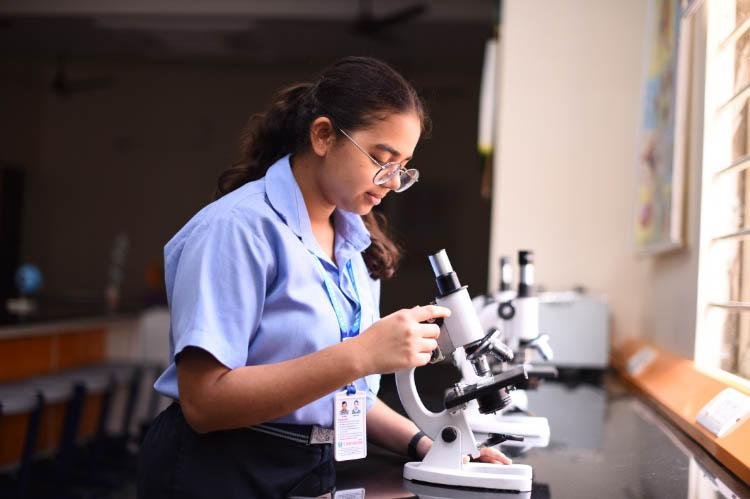
First: PCB Does Not Mean You Have to Become a Doctor
This needs saying plainly, because it rarely gets said clearly enough.
Choosing PCB is not the same thing as choosing medicine. PCB gives you a foundation in Biology, Chemistry and Physics – what you build on top of that foundation depends entirely on your interests, abilities, eligibility and the kind of work you actually want to be doing years from now.
You might end up in a healthcare career, a laboratory-based career, a life-sciences career, a research pathway, nutrition, environmental work, psychology, pharmacy, forensic science, biotechnology, or somewhere else entirely where a science background is genuinely useful.
If you’re still comparing the wider possibilities, our guide to career options after 12th can help you look at the bigger picture before narrowing your choices to PCB-specific paths.
What If You Don’t Want to Give NEET?
This is probably the single biggest reason students go looking for other options in the first place.
You might not want the intensity of that competition, or perhaps spending months preparing for an entrance exam simply isn’t how you want to spend your time. And sometimes, the reason is even simpler: medicine just isn’t the career you want, regardless of how well you might perform in the exam. All of that is genuinely okay.
But don’t fall into the trap of thinking “if I skip NEET, I have no good options left.” You do have options – plenty, actually. Some courses run their own separate entrance or admission processes, while others admit students based on Class 12 marks or institution-specific criteria instead. The exact rules shift depending on the course and the college, so always check current eligibility requirements directly before you apply anywhere, rather than assuming.
The real question worth sitting with isn’t “how do I avoid NEET.” It’s: what do you actually want instead?
Career Options After 12th PCB Without MBBS
Let’s break these into categories – it makes the decision a lot more manageable than staring at one enormous, undifferentiated list of course names.
1. Healthcare Careers Beyond MBBS
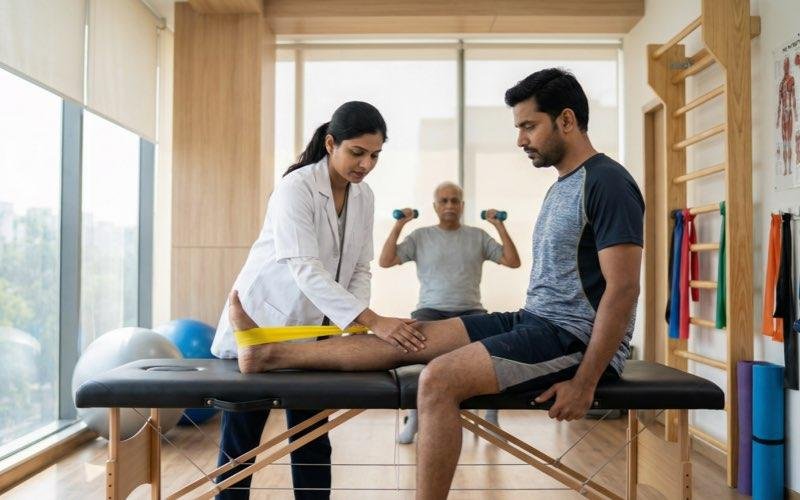
If the healthcare environment appeals to you but becoming a doctor specifically doesn’t, there’s real range here – nursing, physiotherapy, occupational therapy, pharmacy, medical laboratory sciences, nutrition and dietetics and other allied healthcare professions.
Worth knowing: nursing education in India is regulated by the Indian Nursing Council, pharmacy by the Pharmacy Council of India and a large chunk of the newer allied-health professions – things like medical lab sciences, physiotherapy support roles and several other technical healthcare careers – now fall under the National Commission for Allied and Healthcare Professions, set up following the Allied and Healthcare Professions Act, 2021. That regulatory structure matters practically, because it shapes what qualifications you’ll eventually need and which institutions are recognized for a given role.
And these careers, even though they’re all under the “healthcare” umbrella, can look nothing alike day to day. A physiotherapist spends most of their time working directly with patients on movement and rehabilitation. A laboratory professional spends far more time with samples, testing protocols and diagnostics, often with minimal patient contact at all. A pharmacist’s world revolves around medicines and how they’re used, dispensed and monitored.
So the question isn’t “which one is the best.” It’s “which kind of healthcare work would I actually enjoy doing five days a week?”
2. Biotechnology: For Students Who Like Biology and Technology
Biotechnology tends to be one of the more genuinely interesting options for PCB students who don’t see a hospital in their future. It sits right at the intersection of biology, technology and scientific research – genetics, molecular biology, cell biology, biomedical science, pharmaceutical research, agricultural biotechnology, food biotechnology and various industrial applications all live under this umbrella.
It’s a particularly strong fit for students who like asking how things actually work at the cellular or molecular level, rather than treating biology as something you memorize for an exam. If you enjoy Biology but have no real pull toward treating patients, this is worth a proper look – though keep in mind the career path often runs through postgraduate study and specialization depending on exactly where you want to end up.
3. Microbiology: If the Laboratory Interests You More Than the Hospital
Some students genuinely love Biology but have no appetite for direct patient interaction – and that’s a completely different, equally valid profile. For them, microbiology offers a real, distinct career path.
Microbiology deals with microorganisms and it connects naturally to healthcare research, food science, pharmaceuticals, industrial applications, environmental science and general laboratory research. If experiments, careful observation and scientific investigation appeal to you more than a patient-facing role ever would, this deserves real consideration.
The right question here isn’t “is microbiology a good career” in the abstract. It’s “do I actually enjoy the kind of work microbiologists do all day” – which is a much more honest way to test the fit.
4. Pharmacy: For Students Interested in Medicines
If Biology and Chemistry both genuinely interest you, pharmacy is worth a proper look – and it’s a much broader field than the mental image of “standing behind a counter handing out medicines” suggests.
The wider field spans pharmaceutical companies, drug manufacturing, quality control, research, drug safety, regulatory work and clinical healthcare settings. Pharmacy education in India runs under the Pharmacy Act, 1948, overseen by the Pharmacy Council of India – which means the qualification pathway is fairly well-defined once you know which specific route (diploma, degree, or further specialization) you’re aiming at. Your actual career possibilities down the line depend heavily on your qualification, any further education and the experience you build. For a student who likes medicines and chemistry but wants nothing to do with the doctor route, pharmacy genuinely makes sense.
5. Psychology: If You’re More Interested in People Than Cells
This is where a PCB student’s search can veer somewhere completely unexpected.
Maybe you picked PCB because you liked Biology, but over the two years, you noticed what you’re actually drawn to is people – why people behave so differently from each other, how emotions shape decisions, how the mind develops over a lifetime, why identical situations produce wildly different reactions in different people. If questions like these genuinely hold your attention, psychology deserves serious exploration.
PCB students can pursue psychology programmes wherever they meet the eligibility criteria. But it’s worth being clear-eyed here: studying psychology and becoming a licensed, practicing psychologist are not automatically the same thing. Different professional roles within psychology – clinical work, counselling, organizational psychology and so on – carry different education and regulatory requirements, so understand the full pathway before you commit to a course based purely on the subject name.
6. Nutrition and Dietetics
If your interest in Biology connects most naturally to health, food and lifestyle rather than disease treatment, nutrition is another genuine direction. Depending on the specific course and career pathway, you could eventually work in clinical nutrition, community nutrition, sports nutrition, public health, food and wellness, or nutrition-focused research.
This suits students who are fascinated by how nutrition affects the body but have no interest in a conventional medical career. As always, check the specific course and professional requirements carefully before deciding – nutrition qualifications and their recognized scope of practice vary more than people expect.
7. Environmental Science: When Biology Takes You Outside the Hospital
Not every Biology student is captivated by the human body specifically. Some are far more drawn to wildlife, ecosystems, climate, biodiversity, conservation, pollution and sustainability more broadly.
If that sounds closer to you, environmental science and related life-science fields are absolutely worth exploring. Your Biology background translates directly into understanding living systems, ecosystems and environmental problems – it’s not a detour from Biology at all, just a different application of it. This is actually a great illustration of why “what specifically do I like about Biology?” is such a useful question to sit with. Two students can both genuinely love Biology and still end up wanting completely different careers.
8. Forensic Science: For Students Who Like Science and Investigation
If scientific analysis combined with investigation genuinely appeals to you, forensic science might catch your interest. The field revolves around the scientific examination and interpretation of evidence – which suits students who enjoy laboratory work, careful observation, working methodically with evidence, scientific reasoning and close attention to detail.
Just don’t pick this one because crime shows made it look thrilling. The actual, day-to-day work is far more methodical, procedural and scientific than television tends to suggest – which isn’t a downside if that kind of rigor genuinely appeals to you, but it’s worth knowing going in.
9. Research and Life Sciences
Some students aren’t in any hurry to land a conventional “job” right after graduation. They’d rather keep asking questions, running experiments and figuring out how things actually work at a fundamental level. If that describes you, life-science research is a real direction worth mapping out – through biology, biotechnology, microbiology, biochemistry, genetics, molecular biology, or biomedical sciences.
Research careers typically require postgraduate education and, depending on the specific role, further specialization on top of that. So if research genuinely interests you, think seriously about the long-term education pathway involved – not just the first degree you’ll pick up along the way.
Which PCB Careers Need NEET?
This is one of the most important things to get right, because getting it wrong can needlessly close off options you’d actually want.
Not every career available to PCB students runs through the same entrance route. Some medical programmes use NEET as part of their admission process, but plenty of other courses run their own separate entrance examinations, university-level admissions, or merit-based processes entirely independent of it. So before you write off a career purely because you don’t want to sit NEET, actually check the specific admission route for that particular course – and don’t assume one rule applies uniformly across every college, because eligibility genuinely varies by programme and institution. For medical admissions specifically, always check the latest official NTA information alongside the exact requirements of the programme you’re applying to.
PCB Without MBBS: Which Path Might Suit You?
Here’s a simpler way to think through this, matched to what you actually enjoy rather than a course name:
| If you enjoy | You could explore |
| Treating and caring for patients | Healthcare and medicine |
| Rehabilitation and movement | Physiotherapy |
| Medicines and Chemistry | Pharmacy |
| Laboratory testing | Medical laboratory sciences |
| Cells, genetics and technology | Biotechnology |
| Microorganisms and experiments | Microbiology |
| Food, health and nutrition | Nutrition |
| Human behaviour | Psychology |
| Wildlife and ecosystems | Environmental science |
| Scientific investigation | Forensic science |
| Experiments and discovery | Research and life sciences |
This isn’t a career calculator spitting out one right answer – it’s just a starting point for narrowing down a very wide field into something manageable.
What If You Like Biology but Hate Physics?
You’re genuinely not alone in this. Plenty of students love Biology while finding Physics either difficult or simply uninteresting and that doesn’t mean you picked the wrong stream back in Class 10.
The more useful question is: what kind of career does your actual interest in Biology point toward?Your interests can give you some useful clues. A fascination with human behaviour could point towards psychology, while an interest in cells and genetics may make biotechnology or the broader life sciences worth exploring. If health and food are what genuinely hold your attention, nutrition could be a better fit. And for someone drawn to ecosystems and wildlife, environmental science may feel far more natural than a medicine-focused career.
Your school subjects matter, sure. But the specific things you enjoy within those subjects tend to be far more useful when you’re actually making a career decision than the subject label itself.
What If You Like Biology but Don’t Want a Hospital Job?
Then don’t force yourself into one – this is one of the most common and most avoidable, mistakes students make.
The default mental chain goes: Biology → Medicine → Hospital. But that’s only one route among many. Biology can just as easily lead toward laboratories, research, biotechnology, environmental work, nutrition, education and several other directions entirely. What you need to figure out is whether your actual interest lies in the human body specifically, healthcare broadly, living organisms in general, scientific research as a process, people as subjects, the environment, or something else altogether.
That kind of honest self-questioning is where real career exploration starts paying off – far more than typing “best PCB courses” into a search bar and skimming whatever comes back.
What If You’re Good at PCB but Still Don’t Know What You Want?
Completely normal and more common than most students admit to their friends. Being good at a subject doesn’t automatically tell you which profession to pursue. You can score genuinely well in Biology and still have absolutely no idea whether medicine, research, biotechnology, psychology, healthcare, or something entirely different is the right direction.
Marks tell you about academic performance. They don’t tell you what kind of working life is actually going to make you happy over the next few decades. If you’re stuck, start with three honest questions. What do I genuinely enjoy – not what sounds impressive at a family gathering, but what you actually like learning about when nobody’s grading you on it? What am I good at, beyond marks – are you analytical, patient, observant, good with people, good at explaining complicated things simply? And what kind of work do I actually want – people interaction, laboratory work, fieldwork, research, a structured workplace, or something more creative and unstructured?
These three questions will get you considerably closer to the right career than another generic listicle ever will.
Don’t Choose a PCB Career Only Because It Pays Well
Let’s be honest about this. Salary matters – nobody’s pretending otherwise. But if salary is the only reason behind a career choice, you’re taking on a real risk.
A high-paying career can still be a genuinely terrible personal fit. Imagine choosing a profession built around constant patient interaction when you actually prefer independent work. Or picking laboratory research when repetitive experiments quietly drive you up the wall. Or committing to a long academic pathway toward a subject you have no real interest in studying deeply.
The better framework weighs interest, aptitude, personality, opportunity, education and lifestyle together – all six, not just the one number on a salary chart.
Check Course Eligibility Before You Fall in Love With a Career
This is boring advice. It’s also genuinely important, maybe more than anything else in this article.
Before applying anywhere, check the required Class 12 subjects, minimum marks, entrance examination requirements, course-specific eligibility, university requirements, professional recognition where it applies, course duration and any further education requirements down the line.
Don’t take your cues from a random Instagram post confidently declaring “PCB students can do ANYTHING!” That’s not how admissions actually work – different programmes carry genuinely different requirements. Check the official university, examination body and relevant regulatory information directly before making your final call.
How to Choose Between PCB Career Options
If you’re currently staring at ten different possible careers, don’t try to evaluate all ten at once – that’s a fast route to decision paralysis. Shortlist three instead and for each one, answer five things properly.
Before choosing a path, look beyond the course or job title. Understand what you would actually study, what the day-to-day work really involves, and whether that kind of work suits your personality. A career can look great on paper and still feel completely wrong once you’re doing it every day. How much further study does it require – some careers start right after graduation, others become considerably more specialized after postgraduate study. And can I honestly see myself doing this for several years – you don’t need to predict your entire life, but you should be able to picture yourself moving in that general direction without dread.
Can an Aptitude Test Help PCB Students?
Yes – when it’s used properly and not treated as an oracle.
An aptitude assessment can genuinely help you understand where your natural abilities might be stronger. You might discover your strengths aren’t purely academic at all – you could have notably strong analytical, verbal, spatial, or problem-solving abilities that point toward different career environments than the ones you assumed you’d end up in. A career aptitude test is a genuinely useful input when comparing options side by side.
But don’t expect it to declare “you should become a microbiologist” and call it settled. Career decisions are more layered than that. A good assessment helps you understand yourself more clearly – it shouldn’t be making the final decision on your behalf.
What About Personality?
This matters more than students tend to realize going in.
Two students can post nearly identical marks and still have completely different personalities. Personality can shape how comfortable you feel in a career. Some people enjoy constant interaction and collaboration, while others do their best work independently. Some prefer predictable routines, whereas others need variety to stay engaged. The same goes for pressure — one person may thrive in a fast-paced environment, while another may perform much better in a calmer setting.
That difference genuinely shapes how you’ll actually experience a career day to day, which is why understanding personality and career choices adds a useful layer to the decision.
What If Your Parents Still Say “PCB Means Doctor”?
This conversation can get genuinely difficult, especially early on.
Instead of walking in with “I don’t want to become a doctor” and leaving it there, try showing your parents that you’ve actually done real research into the alternatives. Don’t lead with “I want to do something else” – lead with “I’ve shortlisted three options. Here’s what I’d study for each, here’s what the career actually involves, here are the admission requirements and here’s why I think one of them genuinely fits me.”
That single shift changes the entire conversation. Parents are often worried simply because they don’t know whether an alternative career is a serious, viable path or just a vague idea. Real research gives everyone something concrete to actually discuss, rather than an abstract disagreement about “doctor versus not-doctor.”
What If Everyone Says MBBS Is the “Safest” Option?
There’s no such thing as a universally safe career – every profession comes with its own competition, shifting requirements and genuine uncertainty, medicine included.
The closest thing to “safe” you can actually build is a career grounded in relevant skills, strong education, practical experience, adaptability, genuine interest and continuous learning. Don’t choose a path just because someone confidently promised it’s “100% secure.” No honest career counsellor would ever make that guarantee and you should be a little wary of anyone who does.
A Simple Exercise for PCB Students
Take a piece of paper and draw four boxes.
Box 1 – I love. Write down topics and activities you genuinely enjoy, no filtering yet.
Box 2 – I’m good at. Think honestly about your strengths, beyond just marks.
Box 3 – I don’t want. This one’s important and often skipped. Maybe you don’t want hospitals, patient interaction, lab work, long competitive exams, desk work, or fieldwork – write it down plainly.
Box 4 – I’m curious about. This is where unexpected directions tend to surface. Pay attention to the things you naturally gravitate towards outside the classroom. You might find yourself watching psychology videos late at night, getting completely absorbed in wildlife documentaries, or reading about genetics and nutrition simply because you’re curious. These small patterns can reveal interests that you may not have consciously considered when thinking about your career. Follow those threads seriously – they often say more about your actual future than any generic “top 10 careers” article ever will.
The Real Question Isn’t “Which Career Is Best After PCB?”
It’s which career makes the most sense for you.
That’s a genuinely different question, and the answer will be different for every student.
There’s no single “best” PCB career waiting to be discovered. For one student, it might be medicine. For another, pharmacy. Someone else might find their fit in biotechnology, psychology, research or environmental science.
What matters is not choosing the career that sounds most impressive or appears highest on a ranking. It’s finding a path that makes sense for your interests, abilities, personality and the kind of work you can actually see yourself doing.
And if you’re finding it difficult to put all of those pieces together, career counselling from Hashtag Counseling can help you look at your aptitude, interests, personality, strengths and goals together rather than making the decision based only on marks, family expectations or what everyone else is choosing.
Final Thoughts
If you chose PCB and don’t want to become a doctor, you haven’t made a wrong choice. You just need to explore the rest of the map that PCB actually opens up.
There are healthcare careers beyond MBBS. There are laboratory careers. There’s the whole world of life sciences. There’s biotechnology, pharmacy, nutrition, psychology, environmental science, forensic science and research – each one a legitimate destination in its own right, not a consolation prize.
But don’t pick one just because someone called it “the best alternative” online. Find out what the actual work looks like day to day. Check the eligibility carefully. Understand the full education pathway, not just the first step. And most importantly, ask yourself honestly whether you can genuinely see yourself doing that work for years, not just tolerating it.
Your Class 11 subjects may have started this journey. They don’t have to decide where it ends.
Frequently Asked Questions
Q1. What are the best career options after 12th PCB without MBBS?
Answer: Options include pharmacy, nursing, physiotherapy, biotechnology, microbiology, nutrition, psychology, environmental science, forensic science, medical laboratory sciences and research-related fields. The best option genuinely depends on your interests, aptitude and career goals – not a fixed ranking.
Q2. Can I pursue a career after PCB without giving NEET?
Answer: Yes. Several non-MBBS courses run admission pathways that don’t require NEET at all. Requirements vary by programme and institution though, so always check current eligibility rules before applying.
Q3. Which courses can PCB students do apart from MBBS?
Answer: PCB students can explore pharmacy, nursing, physiotherapy, biotechnology, microbiology, biochemistry, nutrition, psychology, environmental science, forensic science and other life-science and allied-health areas, depending on specific eligibility.
Q4. Can PCB students study biotechnology?
Answer: Yes. Biotechnology is a genuinely relevant option for students interested in biology, genetics, molecular science, technology and research. Specific eligibility requirements vary between universities, so check each one individually.
Q5. Can PCB students study psychology?
Answer: Yes, depending on the programme’s eligibility requirements. Students aiming at professional psychology careers specifically should also understand the additional education and licensing requirements tied to their intended role – a bachelor’s degree alone doesn’t automatically make you a practicing psychologist.
Q6. What can I do after 12th PCB if I don’t want a hospital job?
Answer: Biotechnology, microbiology, environmental science, research, psychology, forensic science and other laboratory or life-science fields are all real options, depending on your interests and eligibility.
Q7. Is pharmacy a good option for PCB students?
Answer: Yes, for students genuinely interested in medicines, Chemistry, Biology and healthcare more broadly. The career can extend into pharmaceutical companies, manufacturing, research, quality control and regulatory work well beyond retail pharmacy.
Q8. Is biotechnology a good career after 12th PCB?
Answer: It can be, particularly for students drawn to biology, technology, genetics and research. Your eventual career opportunities depend heavily on your specialization, higher education and hands-on experience.
Q9. Can PCB students go into research?
Answer: Yes. Students can build toward research through biotechnology, microbiology, biochemistry, genetics and other life sciences. Research careers typically require postgraduate study and further specialization along the way.
Q10. Which PCB career is best for someone who likes Biology but not Physics?
Answer: There’s no single answer here. Depending on what specifically draws you in, biotechnology, microbiology, psychology, nutrition, environmental science, or other Biology-related fields could all be worth exploring.
Q11. Should I choose a PCB career based on salary?
Answer: Salary should be one factor among several, not the only one. Weigh your interests, aptitude, personality, education requirements, work environment, career growth and lifestyle together before deciding.
Q12. How do I choose the right career after 12th PCB?
Answer: Start by understanding what you genuinely enjoy, what you’re actually good at, what kind of work you prefer and what you specifically don’t want. Then shortlist a few careers, research their courses and eligibility properly and compare the real day-to-day work involved before making your final decision.