
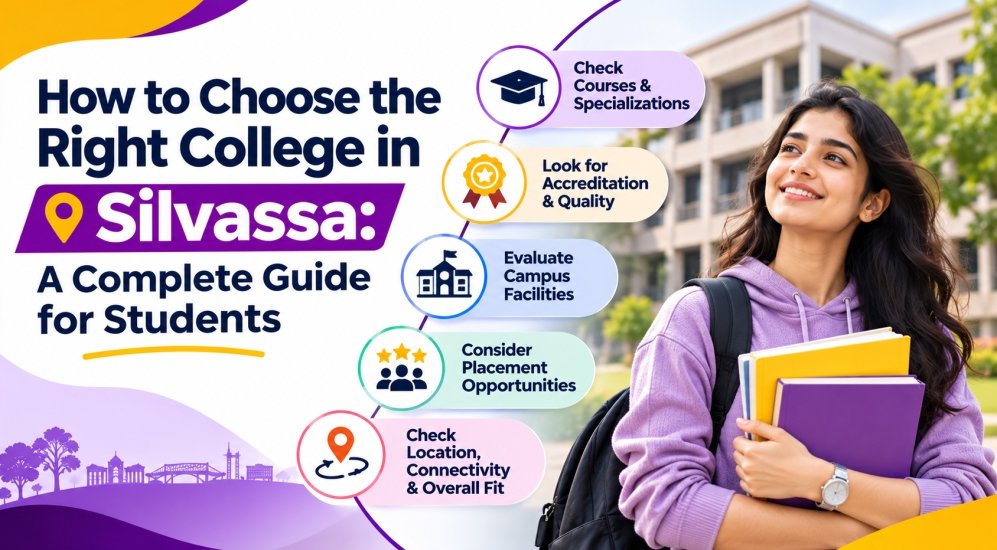
Choosing the right college is one of the most important decisions in a student’s academic journey. After completing Class 10 or Class 12, students and parents often start exploring different colleges, courses and admission opportunities.
With several institutions and educational programmes available, selecting a college can become confusing. Some students focus only on the college’s popularity, while others consider fees, location or recommendations from friends and relatives.
However, the right college should match a student’s academic interests, career goals, financial situation and learning preferences.
Students searching for the Best Colleges in Silvassa should understand how to compare institutions and evaluate the opportunities they offer before making an admission decision.
Why Is Choosing the Right College Important?
A college plays an important role in a student’s educational and professional development. The learning environment, faculty, academic resources and practical exposure can influence the overall college experience.
Choosing a suitable college can help students:
- Develop subject knowledge and practical skills.
- Explore opportunities for internships and projects.
- Participate in academic and extracurricular activities.
- Build communication and teamwork skills.
- Prepare for further education or employment.
- Connect with faculty members and fellow students.
A popular college may not automatically be the right choice for every student. The decision should be based on individual requirements and course suitability.
8 Important Factors to Consider Before Selecting a College
1. Check Course Availability
Before selecting a college, identify the course you want to pursue. Different colleges offer different undergraduate, postgraduate and professional programmes.
Check whether the institution offers your preferred course and whether the curriculum matches your academic interests.
For example, students may explore programmes in:
- Commerce and Business Administration
- Arts and Humanities
- Science
- Computer Applications
- Engineering and Technology
- Management
- Professional and vocational education
Do not select a college only because it offers many courses. Focus on the programme that matches your educational and career objectives.
2. Verify College Recognition and Accreditation
One of the most important steps is checking whether the college and its programmes have the necessary recognition or approvals.
Depending on the institution and course, students should verify relevant university affiliation, regulatory approval and accreditation.
Before admission, check:
- University affiliation.
- Applicable regulatory approvals.
- Accreditation status, where relevant.
- Course recognition.
- Eligibility requirements.
- Validity of the programme.
Students can refer to the official websites of relevant educational authorities to verify institutional and programme-related information.
3. Understand the Faculty and Teaching Methods
Teachers and faculty members contribute significantly to the learning experience.
Before selecting a college, understand the teaching methods, faculty availability and academic support provided to students.
You can look for information about:
- Faculty qualifications and experience.
- Classroom teaching methods.
- Practical learning opportunities.
- Academic mentoring.
- Doubt-solving support.
- Project and research activities.
A good learning environment should encourage students to ask questions, participate in discussions and develop subject knowledge.
4. Compare College Fees and Other Expenses
College fees are an important consideration for students and parents.
Do not compare colleges only on the basis of tuition fees. Consider the overall cost of education.
Additional expenses may include:
- Admission and examination fees.
- Hostel or accommodation charges.
- Transportation expenses.
- Books and study materials.
- Laboratory or practical fees.
- Other institutional charges.
Ask the college for a clear fee structure before completing the admission process. Also check whether scholarships or financial assistance are available and whether you meet their eligibility criteria.
5. Evaluate Infrastructure and Facilities
College infrastructure can influence students’ daily academic experience.
Depending on the course, check whether the institution provides appropriate facilities such as:
- Classrooms and laboratories.
- Library and study resources.
- Computer facilities.
- Internet access.
- Sports and recreational facilities.
- Seminar and activity spaces.
Students should consider whether the available facilities support the requirements of their selected programme.
6. Explore Internship and Placement Support
Students should understand how a college supports practical learning and career preparation.
Some institutions may provide internship assistance, placement activities, industry interactions or career development programmes.
Before admission, ask about:
- Internship opportunities.
- Placement support services.
- Companies participating in recruitment activities.
- Career development workshops.
- Alumni networks.
- Practical training opportunities.
If placement statistics are shared, understand how they are calculated and whether they apply to your specific course and graduating batch. Do not rely only on promotional placement claims.
7. Consider College Location and Accessibility
The location of a college can affect daily travel, accommodation and overall expenses.
Students from Silvassa may explore colleges within the city as well as educational institutions in nearby areas, depending on their preferred course and eligibility.
Consider:
- Distance from home.
- Daily transportation options.
- Travel time and expenses.
- Hostel or accommodation availability.
- Safety and accessibility.
- Distance from libraries and other educational resources.
Students from Thane should also compare local and nearby educational options based on their preferred programme.
8. Understand the College Environment
A positive learning environment can help students participate in academic and extracurricular activities.
Before making a decision, try to understand the college culture, student support systems and opportunities for personal development.
Students can consider visiting the campus, attending an information session or speaking with current students and alumni.
Common Mistakes Students Should Avoid While Choosing a College
Selecting a College Only Because It Is Popular
A college’s reputation may be one factor, but it should not be the only deciding factor. Check whether the institution offers the course, facilities and academic environment you need.
Ignoring Course Curriculum
Students sometimes focus more on the college name than the actual programme. Always review the syllabus, subjects, practical components and academic structure.
Not Checking Recognition and Affiliation
Taking admission without verifying relevant recognition, affiliation or approvals can create problems later. Check official information before paying admission fees.
Choosing Without Comparing Fees
Students should understand the complete cost of education rather than considering only the advertised tuition fees.
Following Friends Without Personal Research
Your friends may have different academic interests and career goals. Select a college based on your own requirements rather than simply following their choices.
How Career Counselling Can Help Students Choose the Right College
Selecting a college is not just an admission-related decision. It is also connected to a student’s long-term educational and career plans. Career counselling can help students understand their interests, academic strengths and possible professional directions before selecting a course or institution
Career counselling can help students understand their interests, academic strengths and possible professional directions before selecting a course or institution.
Understanding Academic Interests
Students can explore the subjects and fields that match their interests and learning preferences.
Comparing Suitable Courses
Career guidance can help students understand the differences between courses and evaluate which programmes may suit their goals.
Connecting Education with Career Goals
Students can consider how a particular course may relate to future career opportunities and additional qualifications.
Making Informed Decisions
A counselling discussion can help students organise their doubts, compare alternatives and make more informed educational decisions.
College Selection Guidance in Silvassa and Thane
Students and parents looking for colleges in Silvassa or Thane should consider more than the name or popularity of an institution.
The right selection depends on the student’s preferred course, academic background, eligibility, financial situation and future goals.
Hashtag Counseling lists career counselling among its services. Students who are confused about course selection or future career direction can explore counselling support to understand their interests and evaluate suitable educational pathways.
Professional guidance can help students approach college selection with greater clarity. However, admission decisions, eligibility and college availability should always be confirmed directly with the respective institution.
Checklist Before Taking College Admission
Before confirming your admission, review the following points:
- Confirm that the college offers your preferred course.
- Verify affiliation, recognition and applicable approvals.
- Check eligibility and admission requirements.
- Review the complete fee structure.
- Understand the course curriculum.
- Explore available facilities.
- Ask about internship and placement support.
- Check transportation or accommodation options.
- Read official admission instructions.
- Keep copies of important admission documents.
Taking time to verify these details can help students avoid unnecessary confusion during the admission process.
Frequently Asked Questions
1. How do I choose the right college in Silvassa?
Start by identifying your preferred course and career goals. Then compare colleges based on recognition, faculty, fees, infrastructure, location and available academic opportunities.
2. What should I check before taking college admission?
Check the college’s affiliation, relevant approvals, course curriculum, eligibility criteria, fee structure and admission requirements before confirming your seat.
3. Is college ranking the only factor to consider?
No. Rankings can provide one reference point, but course quality, faculty, facilities, affordability and individual suitability are also important.
4. Should I choose a college based on placement records?
Placement information can be useful, but students should verify the data, course-wise outcomes and placement support rather than relying only on advertised figures.
5. Can career counselling help with college selection?
Yes. Career counselling can help students understand their interests, compare educational pathways and connect course choices with their future career objectives.
6. Where can I get career guidance in Silvassa?
Students can explore career counselling services in Silvassa. Hashtag Counseling lists career counselling among its services for individuals seeking support with career-related decisions.
Conclusion
Choosing the right college requires careful research, comparison and an understanding of personal goals. Students should evaluate course availability, recognition, faculty, fees, facilities and career development opportunities before making a final decision.
Instead of selecting a college only because it is popular or recommended by others, focus on finding an institution that matches your academic interests and future plans.
If you are confused about course selection or your next educational step, career guidance can help you evaluate available options and make a more informed decision.