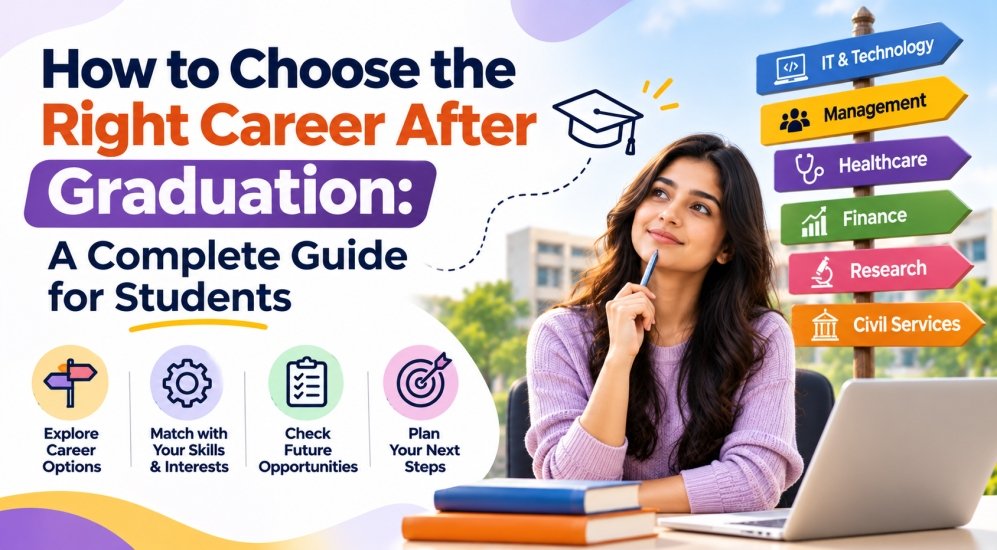
Graduation is an important milestone in every student’s life. After completing a bachelor’s degree, students often face a major question: What should I do next?
Some graduates plan to pursue higher education, while others want to start working, prepare for competitive examinations or explore professional courses. However, choosing the right career path can become confusing when there are multiple opportunities and expectations to consider.
Making a career decision without understanding your interests, abilities and long-term goals may lead to uncertainty later. This is where proper Career Guidance After Graduation in Silvassa can help students understand their options and make informed decisions.
Why Is Choosing the Right Career After Graduation Important?
Graduation provides academic knowledge, but building a successful professional journey requires more than just a degree. Students need to identify how their education, skills and interests can connect with suitable career opportunities.
A well-planned career decision can help graduates:
- Understand available career opportunities.
- Identify their strengths and areas for improvement.
- Choose suitable higher education programmes.
- Explore employment and professional opportunities.
- Develop relevant skills for their chosen field.
- Set realistic short-term and long-term career goals.
Career planning is not about choosing the most popular profession. It is about finding a direction that matches your individual abilities and aspirations.
Important Factors to Consider Before Choosing a Career
1. Understand Your Interests
Your interests can play an important role in career satisfaction. Think about the subjects, activities and professional fields that naturally attract your attention.
For example, a graduate who enjoys working with numbers may explore finance, accounting or data-related careers. Someone interested in communication may consider marketing, human resources, teaching or public relations.
Understanding what motivates you can help narrow down your career choices.
2. Identify Your Skills and Strengths
Every student has a different combination of abilities. Some may have strong analytical skills, while others may be creative, organised or good at communication.
Consider the following:
- Communication and presentation skills
- Problem-solving abilities
- Technical and computer skills
- Leadership and teamwork
- Research and analytical thinking
- Creativity and decision-making
Identifying your strengths can help you understand which professional roles may suit you.
3. Evaluate Your Academic Background
Your graduation subject can open different career pathways. However, your degree does not necessarily limit you to one particular profession.
For instance:
- B.Com graduates may explore finance, accounting, taxation, banking and management.
- B.A. graduates may consider teaching, public administration, communication, social sciences and other fields.
- B.Sc. graduates may explore research, laboratory work, technology and specialised postgraduate programmes.
- BBA graduates may consider management, marketing, business operations and entrepreneurship.
- BCA graduates may explore software development, IT support, data analytics and further technical education.
These are examples of possible directions, not guaranteed career outcomes. Eligibility requirements vary by course and institution.
4. Research Career Opportunities
Before selecting a profession, understand what the actual work involves. Research job responsibilities, qualifications, required skills, future learning opportunities and typical entry-level roles. You can explore career guidance and employment opportunities through the National Career Service.”
Do not choose a career only because it is popular among friends or relatives. A profession that suits someone else may not necessarily match your interests and abilities.
Career Options After Graduation
Graduates can explore several pathways depending on their educational background, interests and career objectives.
Higher Education and Postgraduate Courses
Some students prefer continuing their education to develop specialised knowledge.
Possible options include:
- Master’s degree programmes
- MBA and management courses
- Professional certifications
- Postgraduate diplomas
- Research-oriented programmes
- Subject-specific advanced courses
Before applying, check admission criteria, course recognition, fees and the value of the qualification for your intended career.
Private Sector Employment
Graduates may also begin their professional journey through entry-level employment.
Depending on their qualifications and skills, they can explore opportunities in:
- Banking and financial services
- Information technology
- Sales and marketing
- Human resource management
- Customer support
- Administration and operations
- Education and training
Internships and practical projects can help graduates understand workplace expectations.
Government Job Preparation
Government examinations are another option for graduates interested in public-sector careers.
Depending on eligibility, students may explore examinations conducted by organisations such as UPSC, SSC, banking recruitment bodies and state public service commissions.
It is important to understand the examination pattern, eligibility conditions, preparation time and competition before choosing this path.
Skill-Based and Professional Courses
Some graduates may benefit from additional training to develop practical and industry-relevant skills.
Examples include:
- Digital marketing
- Data analytics
- Graphic design
- Web development
- Financial modelling
- Business communication
- Project management
Choose a course after checking its curriculum, practical training, credibility and relevance to your career goals.
Entrepreneurship and Self-Employment
Graduates who want to build something independently may consider entrepreneurship or self-employment.
However, starting a business requires more than an idea. Business planning, market research, financial management, communication and problem-solving are important areas to understand before taking this step.
Common Mistakes Graduates Should Avoid
Choosing a Career Under Family or Peer Pressure
Family opinions can be valuable, but the final decision should also consider the student’s interests, abilities and goals. Choosing a profession only to satisfy others may create dissatisfaction.
Following Trends Without Research
A career field may become popular because of social media or market trends. However, popularity does not automatically mean it is the right choice for everyone.
Research the actual responsibilities, qualifications and skills required before making a decision.
Ignoring Skill Development
A graduation degree may provide a foundation, but many professional roles require additional practical skills. Graduates should identify skill gaps and work on improving them.
Making Decisions Without a Career Plan
Applying randomly for courses or jobs without a clear direction can lead to confusion. Creating a basic career plan can help students identify their next steps.
How Career Counselling Can Help After Graduation
Career counselling can help graduates understand their interests, abilities, educational background and professional preferences.
A structured counselling process may include:
Understanding Your Career Interests
A career counsellor may use discussions and suitable assessment methods to explore the student’s interests, preferences and strengths.
Exploring Suitable Career Options
Based on the student’s profile, different career pathways may be discussed. This can help graduates compare options rather than selecting a profession without sufficient information.
Identifying Skill Gaps
Students can understand which skills or qualifications may be required for their preferred career direction.
Creating a Career Development Plan
A career plan can help graduates organise their next steps, such as further education, professional training, internships or job applications.
Making Informed Decisions
Career counselling provides an opportunity to discuss doubts, evaluate alternatives and make decisions with greater clarity. It does not guarantee a particular job, admission or career outcome.
Career Guidance After Graduation in Silvassa and Thane
Graduates in Silvassa and Thane may have different educational and professional opportunities available to them. However, selecting the right option requires understanding personal interests, qualifications and future objectives.
Students can benefit from exploring career pathways, comparing educational programmes and identifying the skills needed for their preferred professional fields.
Hashtag Counseling lists career counselling among its services. Students looking for Career Guidance After Graduation in Silvassa can explore professional counselling support to understand their career preferences and possible next steps.
Graduates in Thane can also explore career planning based on their academic background, interests and individual goals.
How to Prepare for a Career Counselling Session
If you are planning to meet a career counsellor, preparing a few details beforehand can make the discussion more useful.
Consider keeping the following information ready:
- Your graduation degree and academic records.
- Subjects you enjoyed during your studies.
- Your interests and preferred professional fields.
- Skills you have developed.
- Career options you are currently considering.
- Questions or doubts about your future.
- Your short-term and long-term goals.
You do not need to have all the answers before attending a session. The purpose is to understand your situation and explore suitable directions.
Frequently Asked Questions
1. What should I do after graduation?
You can explore higher education, employment, competitive examinations, professional courses or entrepreneurship. The right option depends on your interests, qualifications, abilities and career objectives.
2. Is career counselling useful after graduation?
Yes. Career counselling can help graduates understand their strengths, explore career options and evaluate different professional pathways before making important decisions.
3. Can I change my career field after graduation?
Yes. Many graduates explore career fields different from their degree subject. However, they may need additional qualifications, training or practical experience depending on the chosen profession.
4. How do I choose between a job and higher education?
Compare your career goals, financial situation, educational interests and the qualifications required for your preferred profession. Researching both options can help you make an informed decision.
5. Where can I get career guidance after graduation in Silvassa?
Students can explore professional career counselling services in Silvassa. Hashtag Counseling lists career counselling as one of its services and can be contacted to understand the available support.
Conclusion
Choosing the right career after graduation is an important decision that deserves careful thought and planning. Instead of following trends or comparing your journey with others, focus on understanding your interests, skills, qualifications and long-term goals.
Whether you are considering higher education, employment, competitive examinations or professional courses, having a clear direction can make the decision-making process easier.
If you are exploring Career Guidance After Graduation in Silvassa or Thane, professional career counselling can help you evaluate your options and plan your next steps with greater clarity.