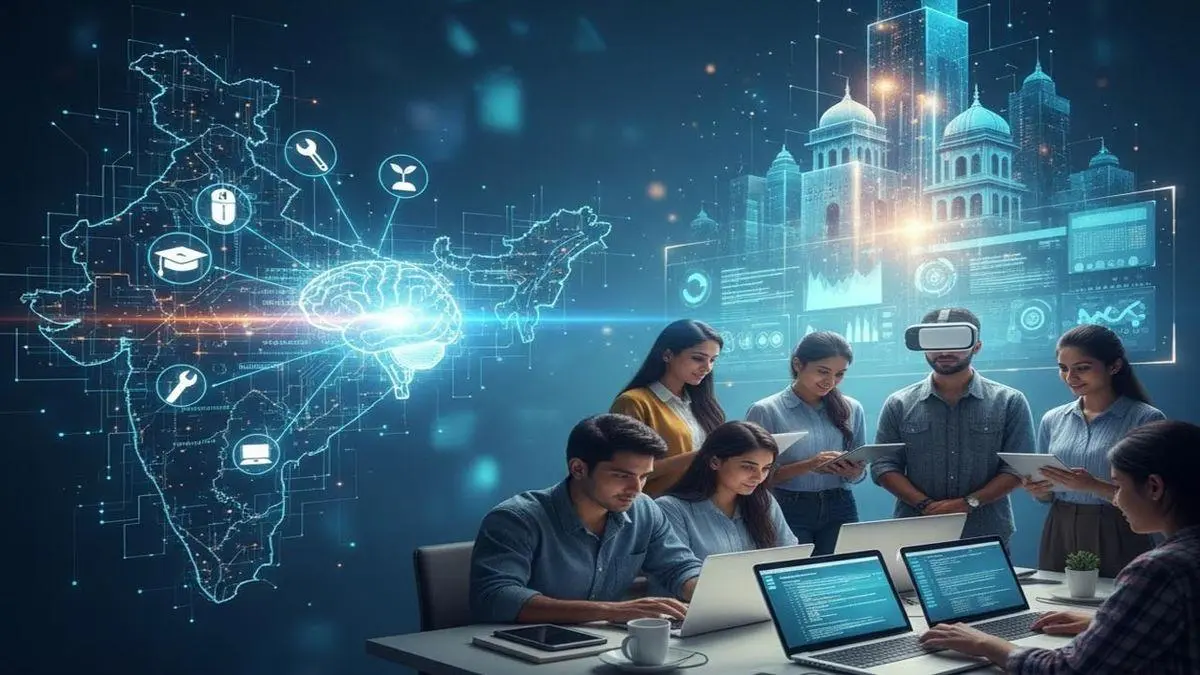
India’s career landscape is changing-and not just because of AI.
New technology, renewable energy, electric mobility, cybersecurity, semiconductors, drones, space technology and changing business needs are creating career opportunities that many students may not have considered a few years ago.
At the same time, traditional careers are changing too. A student interested in technology, science, design, the environment or problem-solving no longer has to follow one predictable path.
The latest World Economic Forum Future of Jobs Report 2025-the latest edition currently available from WEF-identifies AI and machine learning, big data, cybersecurity, renewable energy and electric/autonomous vehicle roles among the fastest-growing areas through 2030. For India specifically, the report highlights strong expected growth in Big Data, AI and Machine Learning and Security Management roles.
India’s own investments point in similar directions. The country’s renewable-energy capacity continued expanding rapidly in 2026, while government initiatives are building ecosystems around semiconductors, quantum technology, drones and private-sector space activity.
But there’s an important catch:
A career being “emerging” doesn’t automatically make it the best career for you.
The right choice depends on your interests, strengths, aptitude, education, financial circumstances and the kind of work you actually enjoy.
So, instead of simply chasing the latest “future careers” list, let’s look at 10 emerging career options in India that are worth exploring in 2026-and what it takes to enter them.
What Are Emerging Careers?
An emerging career is a career area whose demand or importance is increasing because of changes in technology, industry, society, the environment or the way businesses operate.
Some are completely new roles.
Others are established careers that are evolving because of new technology.
For example, cybersecurity isn’t a brand-new profession, but the growing dependence on digital systems has increased the need for specialised security professionals. Similarly, renewable energy has existed for decades, but India’s expanding clean-energy infrastructure is creating a broader range of technical and professional roles.
So, “emerging” doesn’t necessarily mean “a job nobody has heard of.”
It means a career area where the opportunities, skills or responsibilities are changing and becoming increasingly relevant.
And because an emerging career is not automatically the right career for everyone, understanding your own strengths and interests matters just as much as understanding the job market. A structured career planning approach for students can help you explore possibilities before making major academic decisions.

1. Artificial Intelligence & Machine Learning Specialist
If there is one technology reshaping almost every major industry, it is artificial intelligence.
AI is being applied across software, finance, healthcare, manufacturing, education, marketing, customer service and research. The latest WEF jobs report places AI and Machine Learning Specialists among the fastest-growing roles globally, while the India-specific analysis also identifies AI and ML specialists among the country’s projected fastest-growing occupations.
What does an AI/ML professional do?
Depending on the role, they may work on:
- Machine learning models
- Generative AI applications
- Natural language processing
- Computer vision
- Predictive analytics
- AI automation
- Recommendation systems
- AI evaluation and responsible AI
What skills are useful?
A strong foundation in:
- Mathematics
- Statistics
- Programming
- Logical reasoning
- Data analysis
- Problem-solving
can be valuable.
But don’t overlook human skills. The latest WEF research also highlights analytical thinking, creative thinking, resilience and lifelong learning as increasingly important alongside technical skills.
Who might enjoy this career?
AI and ML can suit students who enjoy mathematics, technology, logic, experimentation and solving complex problems.
Possible study paths
Computer science, artificial intelligence, data science, mathematics, statistics and related engineering or technology programmes can provide different entry routes.

2. Big Data & Data Science Specialist
Every digital transaction, app interaction, business operation and online service produces data.
But raw data isn’t useful on its own.
Organisations need professionals who can analyse information, identify patterns and turn data into decisions.
That’s why Big Data Specialists are among the fastest-growing roles identified by the WEF and Big Data is also specifically highlighted in India’s projected fast-growing job landscape.
What can a data professional work on?
Depending on the role:
- Business intelligence
- Data analysis
- Data engineering
- Predictive analytics
- Data visualisation
- Statistical modelling
- Machine learning
- Decision support
Skills that matter
Useful foundations include:
- Statistics
- Mathematics
- SQL
- Programming
- Data visualisation
- Analytical thinking
Who is it suitable for?
This can be an excellent option for someone who enjoys numbers, patterns, research and finding answers from evidence.
Possible study paths
Students can explore computer science, statistics, mathematics, economics, data science, engineering or related fields depending on the specific role they want.

3. Cybersecurity Specialist
The more connected India becomes, the more important digital security becomes.
Businesses, banks, hospitals, government systems and individuals all depend on digital infrastructure-and that creates a growing need to protect systems, networks and information.
The WEF identifies networks and cybersecurity among the fastest-growing skill areas, while security-related roles also feature prominently among the fastest-growing occupations.
What can a cybersecurity professional do?
Career paths can include:
- Security operations
- Ethical hacking
- Penetration testing
- Cloud security
- Network security
- Digital forensics
- Incident response
- Security risk management
What skills are useful?
You’ll benefit from understanding:
- Computer networks
- Operating systems
- Cybersecurity concepts
- Programming fundamentals
- Logical reasoning
- Problem-solving
Cybersecurity is also a field where continuous learning is essential because threats and technologies keep changing.
Who should consider it?
Students who enjoy technology, investigation, puzzles and problem-solving may find cybersecurity particularly interesting.
4. Semiconductor & Chip Technology Specialist
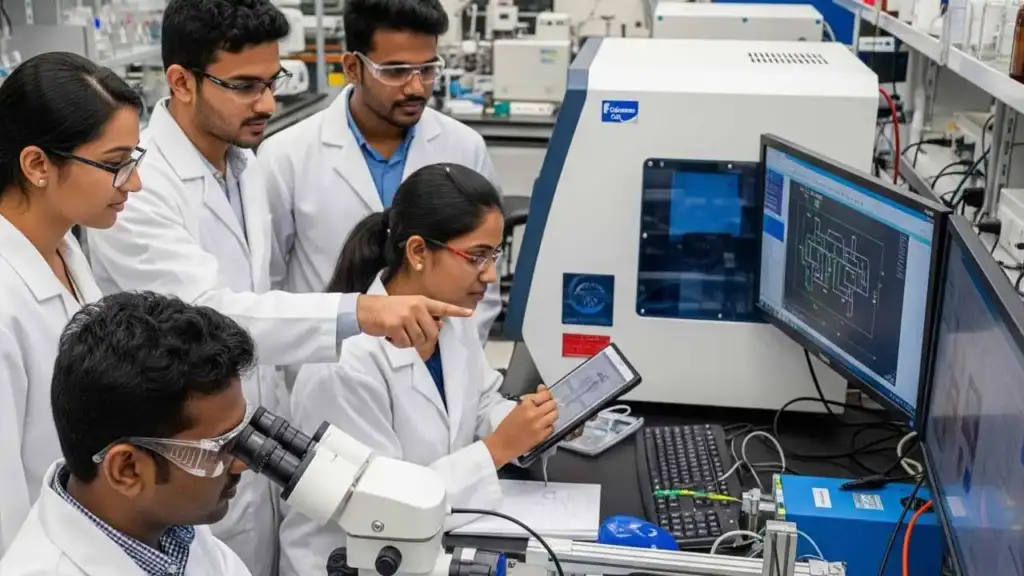
This is one of the most interesting emerging areas for students who are interested in electronics, hardware and advanced technology.
India is actively building a semiconductor and display ecosystem, with the India Semiconductor Mission focused on strengthening electronics manufacturing and design. Government programmes include support for semiconductor fabs, packaging and testing facilities, sensors, silicon photonics and chip design.
That creates opportunities across a much broader ecosystem than simply “making computer chips.”
Possible career areas include:
- Semiconductor design
- VLSI
- Chip verification
- Semiconductor manufacturing
- Semiconductor testing
- Packaging
- Electronics engineering
- Embedded systems
- Hardware research
What skills are useful?
Depending on the role:
- Electronics
- Electrical engineering
- Computer engineering
- Semiconductor fundamentals
- Programming
- Mathematics
- Physics
Who might enjoy it?
This can be a strong option for students who enjoy electronics, physics, mathematics, computers and understanding how technology works at a deeper level.
Why is this an interesting 2026 career option?
Because India’s semiconductor push is not just about one company or one factory. It is about building a wider ecosystem around electronics manufacturing and design.

5. Renewable Energy & Sustainability Specialist
India’s energy transition is creating opportunities across solar, wind, energy management, sustainability and environmental technologies.
As of 31 July 2026, India’s Ministry of New and Renewable Energy reported cumulative renewable-energy capacity of approximately 291.73 GW, including about 164.59 GW of solar and 58.14 GW of wind capacity.
The WEF also identifies Renewable Energy Engineers and Environmental Engineers among the fastest-growing roles globally.
What careers can fall into this area?
- Renewable energy engineering
- Solar energy
- Wind energy
- Energy management
- Sustainability
- Environmental consulting
- Climate-related analysis
- Clean-energy project management
What can you study?
Depending on the career:
- Engineering
- Environmental science
- Energy technology
- Physics
- Chemistry
- Sustainability-related programmes
Who might enjoy it?
This field may suit students who like science and technology but also want their work to connect with environmental and sustainability challenges.
6. Electric Vehicle & Mobility Specialist
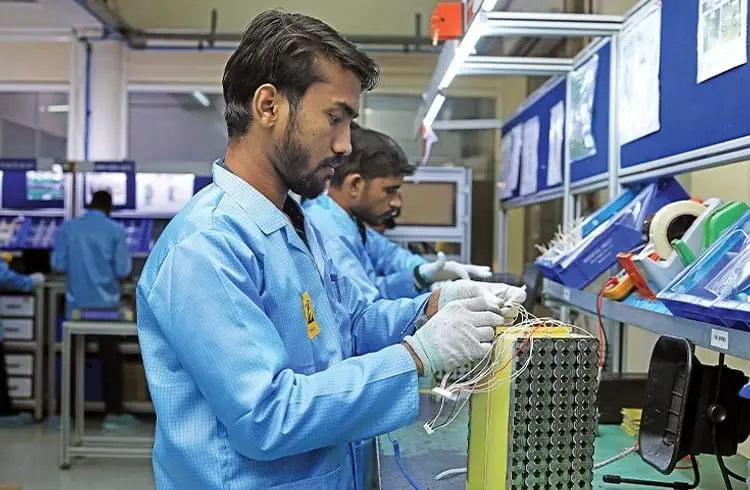
The automobile industry is changing from simply building vehicles to building connected, electric and increasingly software-driven mobility systems.
The WEF includes Autonomous and Electric Vehicle Specialists among the fastest-growing occupations through 2030.
And this career area is much broader than becoming an automobile engineer.
You could explore:
- EV battery technology
- Electric powertrains
- Vehicle electronics
- Charging infrastructure
- Automotive software
- EV testing
- Battery management systems
- Autonomous mobility
- Connected vehicle technology
What skills are useful?
Depending on the role:
- Electrical engineering
- Electronics
- Mechanical engineering
- Software development
- Battery technology
- Control systems
Who might enjoy it?
Students who love cars, electronics, engineering, software or new transportation technology can explore this field.
7. Drone & UAV Technology Specialist
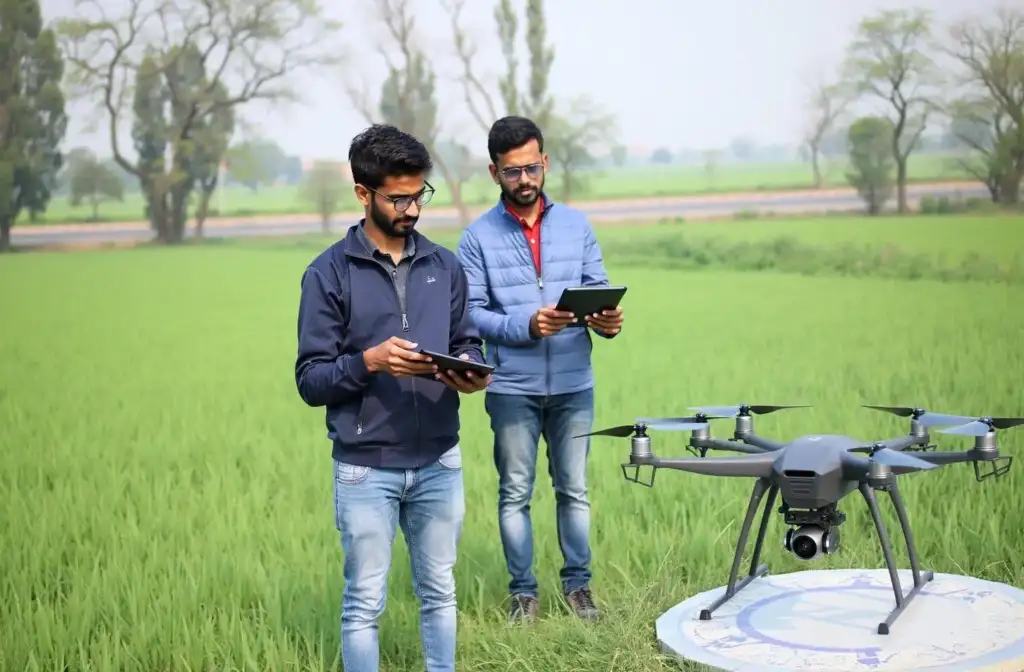
Drones are no longer limited to photography and recreational flying.
Their applications extend into areas such as:
- Agriculture
- Surveying
- Mapping
- Infrastructure inspection
- Construction
- Disaster management
- Logistics
- Security
- Geospatial applications
India also has a formal regulatory and training framework for remote pilots. DGCA’s framework provides for authorised Remote Pilot Training Organisations to train individuals seeking Remote Pilot Certificates.
And here’s the interesting part:
A drone career doesn’t necessarily mean “become a drone pilot.”
You can combine drone technology with another field.
For example:
Drone + Agriculture → precision agriculture
Drone + GIS → mapping and surveying
Drone + Engineering → infrastructure inspection
Drone + Photography → aerial media
Drone + Data → aerial data analysis
Who should consider this?
Students who enjoy technology, aviation, fieldwork and practical problem-solving may find this area exciting.
8. Space Technology & Geospatial Specialist
You don’t have to become an astronaut to build a career in India’s space sector.
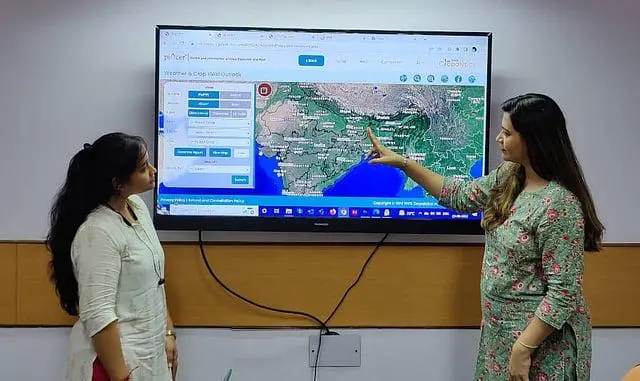
India’s space reforms have opened the sector to greater private participation, with IN-SPACe established to enable, promote and supervise private enterprises and startups undertaking space activities.
That creates opportunities across areas such as:
- Satellite technology
- Remote sensing
- Geospatial analysis
- Aerospace engineering
- Satellite communications
- Space software
- Earth observation
- Space-data applications
- Space-sector research
India’s private space ecosystem has also expanded significantly since the sector reforms.
What can you study?
Depending on your chosen area:
- Physics
- Mathematics
- Aerospace engineering
- Electronics
- Mechanical engineering
- Computer science
- Geospatial technology
Who might enjoy it?
If you’re fascinated by space, satellites, maps, physics, engineering or technology, don’t assume that “astronaut” is the only career available.

9. UX Research & Product Experience Specialist
Not every emerging career is about coding.
As more businesses move their services online, understanding how people actually use digital products becomes increasingly important.
UX researchers study users to understand:
- What they need
- What confuses them
- Why they behave in certain ways
- Where they struggle
- How a product or service can be improved
The broader shift toward technology also increases the importance of design, user experience and human-centred problem-solving. The WEF’s skills outlook highlights creative thinking, analytical thinking and technological literacy alongside technical skills.
What skills are useful?
- Research
- Psychology
- Communication
- Observation
- Critical thinking
- User interviews
- Usability testing
- Basic data analysis
Who might enjoy this?
UX research can be interesting for students who like psychology, technology, research and understanding people, but don’t necessarily want to spend their entire career writing code.
10. Quantum Technology Specialist
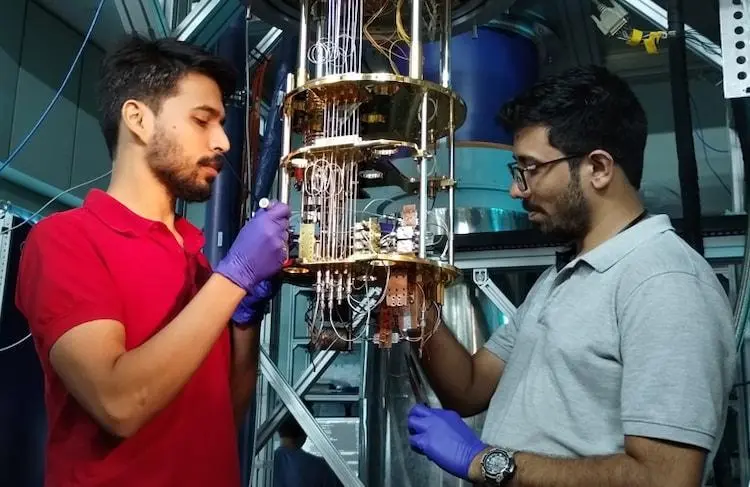
Quantum technology may sound like something from the distant future, but India is already investing in it.
The Government of India’s National Quantum Mission is focused on areas including:
- Quantum computing
- Quantum communication
- Quantum sensing and metrology
- Quantum materials and devices
The mission has established four thematic hubs and is also supporting human-resource development and startup activity in the field.
The Department of Science and Technology has also highlighted applications across areas such as communications, healthcare, finance, energy and security.
Possible career areas include:
- Quantum computing
- Quantum communication
- Quantum cryptography
- Quantum sensing
- Quantum materials
- Quantum software
- Research and development
What should you study?
This is a more specialised pathway and usually requires a strong foundation in:
- Physics
- Mathematics
- Computer science
- Electronics
- Engineering
India’s National Quantum Mission is also supporting curriculum development and capacity building in quantum technologies.
Who should consider it?
Students who genuinely enjoy physics, mathematics, computing and scientific research may want to explore this field.
Quick Comparison of These Emerging Career Options
| Career | Best suited to students who enjoy | Useful foundations |
| AI & Machine Learning | Maths, technology, problem-solving | Maths, programming, statistics |
| Big Data & Data Science | Numbers, patterns, analysis | Statistics, maths, data tools |
| Cybersecurity | Technology, investigation | Networking, computing, logic |
| Semiconductor Technology | Electronics, physics, hardware | Electronics, maths, physics |
| Renewable Energy | Science, environment, engineering | Engineering, science, sustainability |
| EV & Mobility | Cars, electronics, technology | Electrical/mechanical/software |
| Drone & UAV Technology | Aviation, technology, fieldwork | Technology, GIS, operations |
| Space & Geospatial Technology | Space, maps, science | Physics, engineering, GIS |
| UX Research | Psychology, people, technology | Research, communication |
| Quantum Technology | Physics, maths, research | Physics, mathematics, computing |
Which Emerging Career Is Right for You?
This is where the conversation needs to move beyond “Which career is trending?”
Because a growing career is not automatically the right career for every student.
Start with these five questions.
1. What subjects do I genuinely enjoy?
If you dislike mathematics, choosing a highly mathematical field simply because it is expected to grow may not be a smart decision.
If you love psychology and communication, there may be career paths where those strengths are more valuable.
2. What am I naturally good at?
Do you enjoy:
- Analysing?
- Creating?
- Building?
- Explaining?
- Researching?
- Working with people?
- Solving technical problems?
Your strengths can provide important clues.
3. What kind of work do I want to do every day?
A career title can sound exciting until you understand the actual work.
Research the day-to-day responsibilities before deciding.
4. What education does the career require?
Some careers can be entered through multiple educational routes.
Others require specialised degrees or advanced study.
Don’t assume that a short course is enough for a highly specialised profession.
5. Am I willing to keep learning?
This may be the most important question of all.
The WEF estimates that 39% of workers’ existing skill sets could be transformed or become outdated between 2025 and 2030. AI, big data, cybersecurity and technology literacy are among the fastest-growing skill areas, while analytical thinking, creative thinking, resilience and lifelong learning remain important human capabilities.
So the goal isn’t to find a career that will never change.
The goal is to build skills that allow you to change with it.
If you’re unsure whether a particular field matches your natural abilities, an aptitude test for career selection can provide another useful input alongside your interests, personality and long-term goals.
Emerging Careers vs Unconventional Careers
These terms are often treated as if they mean the same thing. They don’t.
Emerging careers
Career areas becoming more important because of technology, industry or social change.
Examples: AI, cybersecurity, renewable energy, EV technology.
Unconventional careers
Career paths that are less commonly discussed than traditional choices.
Examples: specialised UX research, certain niche creative or technical roles.
If you’re specifically looking for unusual career paths with stronger earning potential, you can explore our guide to high-paying unconventional careers in India.
Traditional careers
Established professions with long-standing education and career pathways.
Examples: medicine, law, teaching, accounting and engineering.
And remember:
Traditional does not mean outdated. Emerging does not mean automatically better.
The right career is the one that fits you.
How to Prepare for an Emerging Career in India
You don’t need to have your entire career figured out immediately.
Instead, start building a process.
Step 1: Understand yourself
Explore your interests, strengths, values and aptitude.
If you’re still in school and unsure how to approach this process, career planning for students can help you understand how interests, strengths and aptitude can be connected to future academic and career decisions.
Step 2: Research the career
Don’t rely only on Instagram reels or “top 10 future careers” videos.
Understand the actual job.
Step 3: Check the education pathway
Find out what qualifications, subjects, degrees or certifications are genuinely useful.
Step 4: Build foundational skills
Technology changes quickly, but skills such as:
- Analytical thinking
- Communication
- Problem-solving
- Creativity
- Collaboration
- Learning ability
remain valuable.
Step 5: Get practical exposure
Try:
- Projects
- Internships
- Competitions
- Workshops
- Volunteering
- Relevant courses
Real exposure can tell you much more than simply reading about a career.
Step 6: Get professional guidance when you’re unsure
If you’re stuck between several career paths, career counselling can help you connect your interests, aptitude, personality and goals with realistic career options.
Emerging Career Options After Class 10
Students don’t necessarily need to decide their exact profession immediately after Class 10.
Instead, this is a good time to explore career clusters.
For example:
Interested in technology?
Explore:
- AI
- Data
- Cybersecurity
- Semiconductor technology
Interested in science and the environment?
Explore:
- Renewable energy
- Climate and sustainability
- EV technology
Interested in space and technology?
Explore:
- Aerospace
- Space technology
- Geospatial technology
- Quantum technology
The immediate goal after Class 10 should be building the right academic foundation, not rushing into a narrow job title.
If you’re unsure which stream or subject combination could keep the right options open, structured career planning for students can help you make that decision with more clarity.
Emerging Career Options After Class 12
After Class 12, the options become more specific.
Your stream, subjects, entrance requirements and chosen degree can influence which pathways are available.
For example:
Science + Maths can open pathways into AI, data, engineering, semiconductors, EVs, space and quantum technology.
Science + Biology can lead toward health, environmental and life-science-related fields.
Commerce can support pathways into data-driven business roles, fintech, analytics and other technology-enabled careers.
Humanities can provide strong foundations for areas involving research, psychology, communication, policy, design and human behaviour.
Your Class 12 stream doesn’t define your entire future-but it can influence which doors are easiest to open.
And if you’re considering alternatives to the two most commonly discussed professional routes, you can also explore high-paying careers without engineering or medicine.
Don’t Choose a Career Just Because It’s Trending
Every year, there is a new list of “top careers of the future.”
But your career isn’t a trend.
You might discover that you enjoy AI but not programming.
You might love technology but prefer working with people.
You might enjoy science but not want to become a doctor.
You might be interested in the environment but prefer business and management over engineering.
That’s why career planning should start with self-understanding, not with a list of jobs.
A growing industry can give you opportunities.
But your interests, abilities and willingness to develop the right skills determine whether you can make those opportunities work for you.
If you’re struggling to connect your strengths and interests with realistic career options, professional career counselling can give you a more structured way to evaluate your choices.
Final Takeaway
India’s career landscape is becoming broader.
AI and data are changing how organisations work. Cybersecurity is becoming increasingly important. Semiconductor manufacturing is becoming a strategic priority. Renewable energy and electric mobility are expanding. Drones are finding new applications. India’s space ecosystem is opening further to private participation. Quantum technology is moving from research toward a broader national ecosystem.
That doesn’t mean students should abandon traditional careers.
It means they now have more options to explore.
The best career isn’t necessarily the newest one, the highest-paying one or the one everyone on social media is talking about.
The best career is one that fits your strengths, interests, abilities and long-term goals.
If you’re unsure which direction fits you, Hashtag Counseling’s career counselling services can help you explore your options more systematically instead of making a decision based only on trends.
Your future doesn’t have to follow someone else’s career path. It can be built around you.
FAQs About Emerging Careers in India
What are the best emerging career options in India in 2026?
There is no single best career for everyone. AI and machine learning, big data, cybersecurity, semiconductors, renewable energy, EV technology, drones, space technology and quantum technology are among the areas worth exploring based on current technology and industry developments.
What are some new career options in India?
New or evolving opportunities are appearing around AI, data, cybersecurity, semiconductor technology, renewable energy, electric mobility, drones, space technology, quantum technology and digital product experience.
What are new-age careers in India?
New-age careers are generally roles shaped by newer technologies, industries or changing consumer and business needs. Examples include AI/ML, data science, cybersecurity, UX research, drone technology and quantum technology.
Which emerging careers are suitable for students after Class 12?
It depends on the student’s subjects, interests, aptitude and chosen education pathway. Students should first identify the career area they enjoy and then research the relevant degree or training requirements.
Are emerging careers guaranteed to have high salaries?
No. A career being described as “emerging” does not guarantee a high salary. Earnings depend on skills, qualifications, experience, industry, location, employer and demand.
Are unconventional careers and emerging careers the same?
No. An emerging career is becoming more important because of changing technology, industries or social needs. An unconventional career is simply less traditional or less commonly discussed. The two categories can overlap, but they are not identical.
If you’re specifically comparing emerging fields with less traditional career paths, our guide to high-paying unconventional careers in India can help you explore that distinction further.
How do I choose the right emerging career?
Start by understanding your interests, strengths, aptitude, preferred work environment and long-term goals. Then research the education requirements and actual day-to-day work. Professional career counselling can also help you compare suitable options.