

Finishing Class 12 feels like a finish line – until you realize it’s actually the starting gun for a much bigger decision.
And suddenly, everyone has an opinion. Your parents are pushing engineering, medicine, CA, or a government job. A friend is prepping for some entrance exam you’ve never heard of. Someone on Instagram is hyping up the career of the future. And there are a few hundred courses online, each one somehow claiming to be the best option after 12th.
It’s a lot. It’s genuinely confusing.
Here’s the thing, though: you don’t need to have your whole life mapped out at 17 or 18. What you actually need is a sane way to narrow things down.
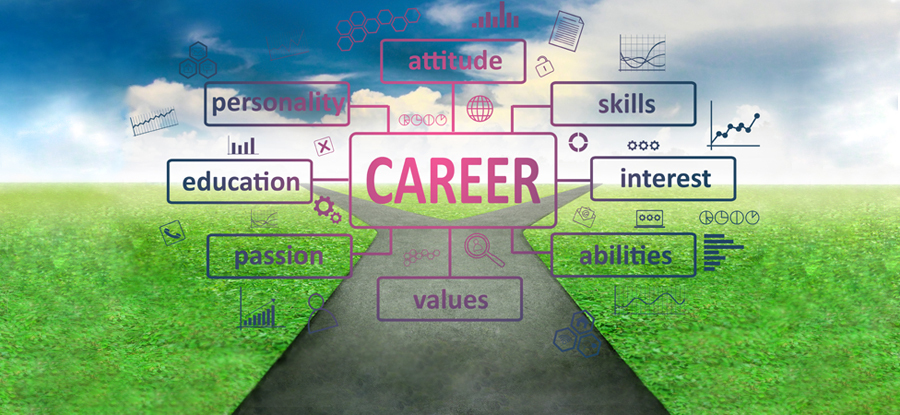
Career options after 12th span Science, Commerce and Arts/Humanities, plus professional degrees, university programmes, skill-based routes, creative fields and a growing list of tech-driven careers that didn’t exist a decade ago. The right choice isn’t the course with the fattest salary, or the one everyone else is rushing into – it’s the one that actually fits your interests, your abilities, your academic background and the kind of work you can picture yourself doing five days a week.
So if you’re stuck wondering what to do after 12th, let’s try to make this a little less overwhelming.

What Should You Do After 12th?
Before diving into lists of careers, ask yourself something more useful first:
What kind of future am I actually trying to build?
There’s no one right answer here. After Class 12, you could pursue a professional degree, join a university programme, prepare for a competitive exam, pick up a specialised course, learn a practical skill, step into a creative field, go the vocational route, chase an emerging career, or even take some time to figure things out before committing to anything.
The one thing you shouldn’t do is rush a decision just because everyone around you already has.
The Indian government’s My Career Advisor platform – a joint effort between the Ministry of Education, NCERT-PSSCIVE and the Wadhwani Foundation – actually pushes students toward this same idea: explore careers based on your aptitude, interests and values, not just what’s trending. The platform covers information on more than 1,500 job roles, including what each one actually involves day to day.
Which is really the better question to start with. Not which course is popular right now, but which kind of work could genuinely suit me?
Career Options After 12th at a Glance
Here’s a rough starting map:
| Interest / Strength | Career Areas You Can Explore |
| Mathematics & technology | Engineering, Data Science, AI, Computer Applications |
| Biology & healthcare | Medicine, Dentistry, Pharmacy, Nursing, Biotechnology |
| Business & numbers | CA, Finance, Economics, B.Com, Management |
| Communication & people | Law, Psychology, HR, Media, Marketing |
| Creativity & design | UX/UI, Fashion, Graphic Design, Product Design |
| Writing & society | Journalism, Law, Public Policy, Social Sciences |
| Technology & security | Cybersecurity, Cloud, Software, AI |
| Environment & science | Renewable Energy, Environmental Science, Sustainability |
| Aviation & travel | Aviation, Hospitality, Tourism, Logistics |
| Entrepreneurship | Management, Commerce, Business, Startup-related paths |
Treat this as a starting point, nothing more. Two students in the exact same stream can have completely different strengths – which means their best-fit careers can look nothing alike either.
Career Options After 12th Science
Science students get handed a genuinely wide range of options, but there’s a common trap: assuming Science only means Engineering or Medicine. It doesn’t – not even close. What you can actually pursue depends partly on whether you took PCM, PCB, or PCMB, along with the specific admission requirements of whatever programme you’re eyeing.
1. Engineering
Still one of the most well-worn paths for Science students, but engineering isn’t one thing – it splits into Computer Science, Information Technology, Electronics, Electrical, Mechanical, Civil, Chemical, Aerospace, Biotechnology, AI and more.
Don’t pick engineering just because you happened to study PCM. Figure out which branch actually interests you and whether you enjoy the subjects it’s built on. Someone who loves coding and logical problem-solving is going to have a completely different experience of Computer Science than someone who’s drawn to machines, structures, or circuits.
2. Medicine and Allied Healthcare
PCB students have more routes here than just become a doctor. Depending on eligibility, you could look at MBBS, Dentistry, Pharmacy, Nursing, Physiotherapy, Biotechnology, Microbiology, or other allied health and biomedical fields.
Healthcare careers tend to demand years of training, so understand the full pathway before you commit. And don’t choose medicine simply because your marks make it possible – choose it because you’re genuinely okay with what the actual work looks like.
3. Data Science and Artificial Intelligence
Technology has opened up career paths that barely existed on students’ radars a decade ago. AI, machine learning and data analysis now touch nearly every industry. The World Economic Forum’s Future of Jobs Report 2025 lists Big Data Specialists and AI/ML Specialists among the fastest-growing roles globally through 2030.
If this interests you, expect a heavy dose of maths, statistics and programming – and a fair amount of ongoing learning. You don’t need to decide at 18 that you’ll be an AI engineer specifically. Build a solid base in maths, computing, or statistics and specialise later.
4. Architecture and Design
If you like maths but you’re also drawn to visual thinking, spaces and how things are built, architecture is worth a look. So are adjacent design routes: product design, UX/UI, communication design, industrial design, interior design, fashion design.
Design isn’t just being creative – good designers also need to understand users, constraints, research and communication.
5. Research and Pure Sciences
Not every Science student needs a professional degree. If you genuinely like asking questions and figuring out how things work, Physics, Chemistry, Maths, Biology, Statistics, or Environmental Science are all real options – though this route usually leads toward postgraduate study eventually.
Career Options After 12th Commerce
Commerce students often assume their choices start and end with CA or B.Com. That’s way too narrow. Commerce actually opens doors into finance, business, economics, management, law, analytics and entrepreneurship.
1. Chartered Accountancy
CA remains one of India’s most established professional paths for anyone drawn to accounting, taxation and auditing. It’s a serious commitment with a demanding exam structure – a great fit if you genuinely enjoy financial detail work, but not something to pick just because someone called it safe. It asks for sustained effort over years.
2. B.Com and Finance
A B.Com gives you a broad base in accounting, finance, economics, business, taxation and management, which you can later sharpen through postgrad study, professional certifications, or work experience. From there, finance can lead toward banking, financial analysis, corporate finance, investment roles, accounting, risk, or business analysis.
3. Management and Business
If you’re curious about how businesses actually run, look at BBA, BMS, business management, marketing, HR, operations, or entrepreneurship. Management degrees are broad – which cuts both ways. The degree itself won’t define your career; your internships, skills and specialisation will do a lot of that work.
4. Economics
If you enjoy maths, markets and understanding why economic decisions happen the way they do, Economics is a strong pick. It can lead into research, finance, consulting, data analysis, policy, banking, or business analysis – especially good for students who like numbers and bigger social questions in equal measure.
5. Law
Law isn’t reserved for Arts students. Commerce students can pursue integrated law programmes too, opening up corporate law, litigation, IP, tax law, tech law, policy, or compliance. The real question isn’t whether law sounds prestigious – it’s whether you actually enjoy reading, arguing, researching and untangling complex rules.
Career Options After 12th Arts and Humanities
This is probably the stream that gets hit with the most unfair negativity. Arts has no scope – simply not true. Humanities opens into law, psychology, communication, design, policy, research, education, media and more.
1. Psychology
Psychology has become a much more visible career choice in recent years, branching into counselling, organisational behaviour, HR, research, education and mental-health-related work. Just don’t confuse a bachelor’s in psychology with being qualified for every psychology-adjacent profession – the training requirements differ a lot across specialisations.
2. Law
Another strong pick for anyone who enjoys reading, writing, debate and untangling how society and justice work. A humanities background also gives you useful exposure to political science, history and sociology along the way.
3. Journalism and Mass Communication
If storytelling, interviewing and current affairs excite you, this field covers journalism, digital media, PR, advertising, content, corporate communication and broadcasting. The media landscape has shifted a lot with digital platforms, so it’s worth looking past the old newspaper-and-TV image of the job.
4. Design and Creative Careers
Creative careers stretch further than most students realize – graphic design, UX/UI, fashion, animation, film, photography, illustration, product design, visual communication. The thing that actually matters here is building real skills and a portfolio, not just collecting a degree title.
5. Civil Services and Public Policy
For students drawn to government, administration and public life, this covers civil services, public administration, policy research, government programmes, development work and international relations. Most of these routes require graduation before you can sit the relevant competitive exam, so think of it as a longer game rather than something immediately after Class 12.
What About Students Who Don’t Want Engineering or Medicine?
Genuinely important question. You can absolutely build a strong career without going down either path. Law, finance, management, design, psychology, data, cybersecurity, media, economics, digital business, hospitality, aviation, entrepreneurship, sustainability – all real, all viable.
If you’re specifically looking for alternatives, our guide to high-paying careers without engineering or medicine digs into this further.
The trap to avoid isn’t engineering or medicine themselves – it’s swapping one kind of pressure for another. You’re not trying to find the next engineering. You’re trying to find something that actually fits you.
What If I Want a Career That Didn’t Exist Before?
Increasingly, that’s not a fantasy. Technology isn’t just replacing old jobs with new ones – it’s mashing skill sets together in new combinations. Psychology plus tech can lead to UX research. Engineering plus sustainability can lead to clean-energy work. Computer science plus security becomes cybersecurity. Design plus tech becomes product design. Data plus business becomes analytics.
The World Economic Forum’s latest research on jobs points to rising demand for tech skills, but it keeps circling back to human capabilities too – analytical thinking, creative thinking, resilience and a willingness to keep learning.
Which is exactly why I wouldn’t tell any student to chase a future-proof job. No job comes with a lifetime guarantee. Build a useful combination of skills instead – that’s the actual insurance policy.
How to Choose the Right Career After 12th
You can read a hundred lists of career options and still feel lost if you don’t know how to actually weigh them. So use these questions instead.
1. What subjects do I actually enjoy?
Don’t mix up I score well in this with I enjoy spending time on this. They’re related, but they’re not the same thing. You might be good at maths and still dislike the kind of work that demands constant mathematical thinking. Or you might never have topped a subject but genuinely love exploring it anyway.
2. What am I naturally good at?
Look beyond your report card. Are you good at explaining ideas, analysing information, solving problems, talking to people, writing, designing, organising, working with numbers, building things, or researching? These clues matter more than they seem. If you’re struggling to pin this down, an aptitude test can be a useful input – just not the final word.
3. What kind of work do I actually want to do?
This one gets skipped constantly. Picture the actual working day. Would you rather sit at a computer solving technical problems, meet people all day, work in a lab, be outdoors, create visual content, crunch financial numbers, write, teach, manage projects, or do research? A job title can sound impressive while the day-to-day reality is nothing like what you imagined. Research the actual work, not the label.
4. What education does it actually require?
Before you enroll anywhere, check the required subjects, entrance exams, duration, eligibility, licensing requirements and realistic long-term pathway. Don’t sign up for something just because an ad called it in demand.
5. What will it actually cost?
Tuition, accommodation, entrance-exam prep, books, travel, years of study, opportunity cost – it all adds up. A great career can still be financially out of reach for a particular family and that’s worth acknowledging honestly. It doesn’t mean giving up on the field – it might mean looking at different institutions, scholarships, public universities, or alternate routes into the same career.
6. What kind of lifestyle do I want?
This isn’t selfish, it’s practical. Some careers come with long hours, constant travel, shift work, high pressure, years of extra study, or heavy fieldwork. Others look completely different. Think about the life you want to live alongside the job.
7. Am I choosing this for myself?
Probably the hardest one. Sometimes a student says I want to be a doctor and after a bit of digging, what they really mean is my parents want me to be a doctor. Listening to your parents is fine – they usually mean well and bring real experience to the table. But you’re the one who has to live inside this career for decades. Take the advice. Don’t hand over the decision entirely.
Career Planning After 12th: A Simple Process
You don’t need anything elaborate here. Try this instead:
Step 1 – List your interests. Five things you genuinely enjoy, not things that sound good on paper.
Step 2 – Identify your strengths. The subjects, activities and skills where you actually feel confident.
Step 3 – Shortlist 5–7 career areas. Don’t lock in on one yet.
Step 4 – Research each one. What the work involves, what education it needs, how long it takes, what skills matter, what the environment feels like.
Step 5 – Talk to someone actually doing the job. A real conversation reveals things no career website ever will.
Step 6 – Compare your shortlist. Does it fit your interests and strengths? Are you okay with the education path and the cost? Do you actually like the work itself?
Step 7 – Decide, but keep learning. Picking a course now doesn’t lock your entire future in place. Your interests and opportunities will keep shifting and that’s completely normal.
Common Mistakes Students Make After 12th
- Choosing a course because everyone else is. Five friends picking B.Tech doesn’t mean you should be the sixth.
- Choosing purely for salary. Money matters, but a number without context tells you almost nothing.
- Assuming a degree guarantees a job. It’s a foundation – skills, internships, projects and communication do the rest.
- Following social-media career advice at face value. Earn ₹20 lakh in two years makes a great video title. It’s rarely great advice.
- Ignoring your own personality. Two students with similar marks can have wildly different personalities – one thrives with people, the other thrives working alone.
- Only thinking about the first job. A career outlasts your first paycheck. Think about where the field takes you five or ten years down the line.
What Should Parents Do When Their Child Is Confused?
It’s natural for parents to get anxious when their kid doesn’t have a five-year plan right after Class 12 – but that anxiety can quietly turn into pressure. Instead of why don’t you know what you want to do, try which options are you considering? and take it from there together.
Parents can genuinely help by talking through education, finances, location, opportunities, interests, strengths and long-term goals – not to make the decision for their child, but to help the child make a better one themselves.
When Should You Consider Career Counselling After 12th?
You don’t need counselling just because you’re a student figuring things out. But it can genuinely help when you’re stuck between a few realistic options – I like Science but don’t want medicine, or I want tech but I’m not sure Computer Science is right for me, or my parents and I see this completely differently.
Good career counselling isn’t about someone telling you become a lawyer. It’s about understanding why a direction does or doesn’t fit you – pulling together your interests, aptitude, personality and academic background instead of just handing you a popular course name.
A Quick Career Decision Checklist
Before you finalize anything, run through these:
- Interest – Do I genuinely enjoy this area?
- Ability – Do my current strengths support it?
- Education – Do I understand the full qualification pathway?
- Money – Is this route financially realistic for me?
- Work – Do I actually know what professionals in this field do day to day?
- Future – Am I comfortable adapting as this field changes?
- Choice – Am I picking this because I want it, or because it’s expected of me?
Answer these honestly and you’re already ahead of most people who just picked whatever course was trending.
Final Thoughts
Choosing a career after 12th is a big deal — but it doesn’t have to be a panic decision.
You don’t need the course that’s trending on social media, copy your friend’s choice. You don’t need to pick something just because someone swears it pays the most. And you definitely don’t need your entire professional life mapped out before you turn 18.
What you actually need is a clearer picture of yourself and the options genuinely in front of you. Start with your interests. Be honest about your strengths. Understand what the education actually demands. Look into the real, day-to-day work. Weigh the financial and lifestyle realities. Then compare your options.
And if you’re still stuck after all that, professional career guidance from Hashtag Counseling can help you understand your options and make a decision based on your interests, strengths and goals – rather than spending another three hours scrolling through “top careers after 12th” lists.
Your Class 12 result is a milestone — not a verdict on your entire future. The career you build from here just has to make sense for you.
FAQs About Career Options After 12th
Q1.What are the best career options after 12th?
There’s no single best career – it depends entirely on you. Engineering, medicine, law, finance, management, psychology, design, data science, AI and cybersecurity are all growing options, but the right one depends on your interests, strengths and goals.
Q2.What can I do after 12th Science?
Engineering, medicine, healthcare, computer applications, data science, AI, research, architecture, biotechnology, environmental science and more – depending on your subjects (PCM/PCB/PCMB) and eligibility.
Q3.What can I do after 12th Commerce?
CA, B.Com, finance, economics, management, business, law, banking, accounting, analytics and entrepreneurship, among others.
Q4.What can I do after 12th Arts?
Psychology, law, journalism, design, public policy, social sciences, education, media, communication and government-related careers.
Q5.Which career is best after 12th for a high salary?
No course guarantees a high salary – earnings depend on the profession, your skills, experience, employer and industry. Pick a field that fits you first, then build real expertise within it.
Q6.Can I choose a career outside my Class 12 stream?
Sometimes, yes – but eligibility varies by course and institution, so always check the specific requirements before applying.
Q7.What if I don’t know what career I want after 12th?
Don’t panic. Start with your interests and strengths, shortlist a few career areas, research the pathways and talk to people already working in those fields. An aptitude test or professional counselling can help structure the process.