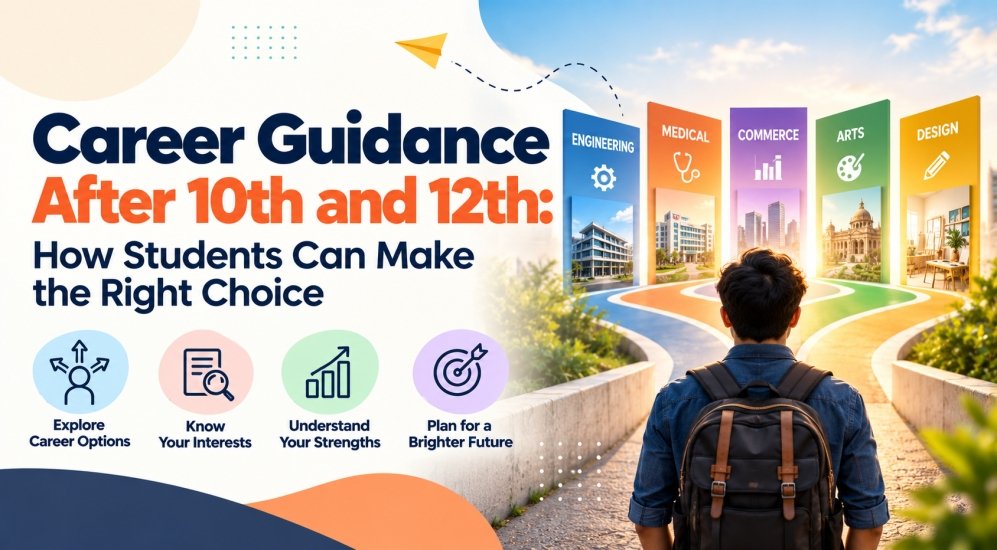
Choosing what to study after Class 10 or Class 12 is an important milestone in a student’s life. With so many courses, streams and career opportunities available, students may find it difficult to decide which direction suits them best.
Some students already have a clear career goal, while others need time to understand their interests, abilities and future options. Parents may also have questions about which educational path will provide suitable opportunities for their children.
Career guidance can help students explore their choices, understand different educational pathways and make decisions based on their individual strengths and aspirations.
For students and parents looking for career guidance in Silvassa, understanding the available options is a useful first step towards planning the future.
What Should Students Consider Before Choosing a Career?
A career decision should not depend only on marks, friends’ choices or popular trends. Students should consider several factors before selecting a stream or course.
Personal Interests
Think about the subjects and activities that genuinely interest you. Students who enjoy solving numerical problems may explore different technical or analytical pathways, while those interested in communication, creativity or social subjects may consider other options.
Interests can help narrow down choices, but they should also be evaluated alongside skills, qualifications and career requirements.
Academic Strengths
Review your performance across different subjects and identify areas where you feel confident. Academic strengths can provide useful direction when comparing courses, although marks alone do not determine a student’s future potential.
Skills and Aptitude
Skills such as communication, logical reasoning, creativity, problem-solving and practical thinking may be relevant to different professions. Understanding these abilities can help students explore suitable career directions.
Future Educational Requirements
Some careers require specific degrees, entrance examinations, professional certifications or specialised training. Researching these requirements early can help students plan their education more effectively.
Career Options After Class 10
After completing Class 10, students generally have several educational pathways to consider. The most suitable option depends on their interests, academic performance, available courses and long-term plans.
Science Stream
The Science stream may suit students interested in subjects such as Physics, Chemistry, Biology and Mathematics. Depending on subject combinations and subsequent qualifications, possible pathways include engineering, healthcare, scientific research and technology-related fields.
Students should review the subject requirements for their intended courses before making a decision.
Commerce Stream
Commerce can be suitable for students interested in business, accounting, economics and finance. Further educational pathways may include commerce degrees, finance-related qualifications, business management and accounting professions.
Arts and Humanities
Arts and Humanities offer opportunities to explore subjects such as languages, history, psychology, sociology and political science. Depending on further education and qualifications, students may consider careers in education, communication, social sciences, research and related fields.
Diploma and Vocational Courses
Diploma programmes and vocational education may offer practical, skill-oriented learning in areas such as engineering technology, design, information technology and other trades.
Students should compare course duration, eligibility, recognition and progression opportunities before enrolling.
Career Options After Class 12
Completing Class 12 opens up additional educational and professional pathways. Students should compare courses according to their interests, eligibility requirements and future career objectives.
Professional Degree Programmes
Depending on the subjects studied and entrance requirements, students may explore programmes in engineering, medicine, law, architecture and other professional fields.
Each programme has its own eligibility criteria, so students should consult official college and examination information.
Business and Management
Students interested in business operations, entrepreneurship, marketing or management may consider relevant undergraduate programmes and later specialisations.
Information Technology and Digital Careers
Students interested in technology may explore computer science, information technology, software development, data-related fields and digital services through suitable educational programmes.
The required qualifications vary by role, and practical skills can also be important.
Creative and Communication Careers
Students interested in visual communication, media, writing, animation or design can research specialised courses and portfolios required for different careers.
Comparing course content and practical training opportunities can help students choose a programme that matches their interests.
Why Career Counselling Can Be Helpful
Students sometimes feel pressure to make decisions quickly, especially when family expectations, examination results and peer choices influence their thinking.
Career counselling provides an opportunity to discuss these concerns and explore possible pathways in a structured way.
Exploring Suitable Options
A career counsellor may help students compare educational options based on their interests, strengths, academic background and goals.
Understanding Course Requirements
Students can research eligibility criteria, entrance examinations and qualifications associated with different career paths.
Making Independent Decisions
Career guidance can encourage students to understand their own preferences while considering practical advice from parents, teachers and professionals.
Planning the Next Steps
Once a student has shortlisted suitable options, the next step may involve researching colleges, preparing for entrance examinations or identifying relevant skill-development opportunities.
How Parents Can Support Their Children’s Career Decisions
Parents play an important role in helping students make educational decisions. Supportive discussions can help children feel more comfortable expressing their interests and concerns.
Encourage Open Conversations
Ask children about their interests, subjects they enjoy and the kind of work they might like to explore. Listen to their views before suggesting particular career options.
Avoid Comparing Students
Every student has a different combination of abilities, interests and goals. Comparing children with classmates or relatives may create unnecessary pressure.
Research Options Together
Parents and students can review course requirements, college facilities, costs and future educational pathways together.
Seek Professional Guidance When Needed
If a student remains uncertain after exploring available options, career counselling may help clarify their choices and identify practical next steps.
Career Guidance in Silvassa for Students and Parents
Students searching for career guidance in Silvassa may be preparing to choose a stream after Class 10, select a college course after Class 12 or explore a longer-term professional goal.
A structured approach can help them compare educational pathways and understand the requirements associated with their preferred careers.
Hashtag Counseling lists career counselling among its services. Students and parents can contact the organisation to enquire about available guidance, the counselling process and whether its services match their needs.
Before booking, confirm the service details and the qualifications of the professional providing the guidance.
Career Guidance in Thane
Students and families looking for career guidance in Thane can begin by identifying the student’s academic interests and the educational options available after Class 10 or Class 12.
Researching course eligibility, entrance requirements and potential career pathways can make the decision-making process more manageable.
Career counselling may provide additional support when students are uncertain about which stream, course or professional direction to explore.
Frequently Asked Questions
When should students start career planning?
Students can begin exploring their interests and strengths during secondary school. More focused planning is useful before selecting a stream after Class 10 and before choosing a college course after Class 12.
Is Science the best stream for every student?
No. The right stream depends on a student’s interests, strengths, goals and the eligibility requirements of their intended career. Science, Commerce, Arts and vocational pathways can all lead to different opportunities.
Can students change their career plans later?
Yes. Career paths can change as individuals gain new experiences, qualifications and interests. However, some changes may require additional education or training.
How does career counselling help after Class 12?
Career counselling can help students explore degree programmes, compare educational options, understand eligibility requirements and develop a plan based on their goals.
Where can students find career guidance in Silvassa?
Students can research local career counselling services, verify the qualifications of the professionals involved and contact providers to confirm their available services and appointment options.
Conclusion
Choosing a career after Class 10 or Class 12 is an important decision, but students do not need to make it without information or support. Understanding personal interests, academic strengths, educational requirements and future opportunities can help them evaluate their options more confidently.
If you are looking for career guidance in Silvassa or Thane, contact Hashtag Counseling to enquire about its career counselling services and available consultation options.