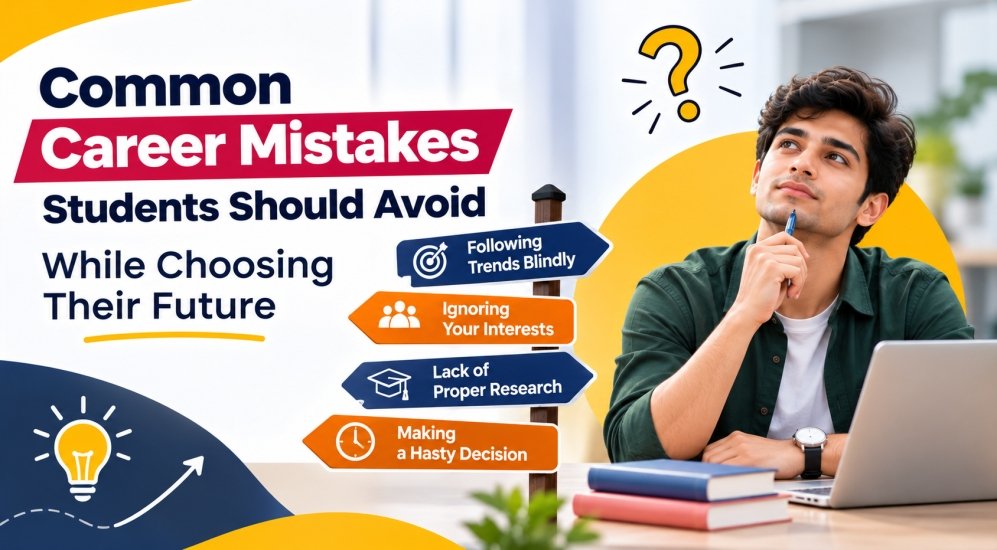
Choosing a career is one of the most important decisions in a student’s life. From selecting an educational stream to deciding on a professional field, every step can influence future opportunities.
However, many students make career decisions without properly understanding their interests, abilities or available options. Some follow their friends, while others select a course because it is popular or recommended by family members.
These decisions can sometimes create confusion and dissatisfaction later. Understanding common career mistakes can help students make more thoughtful decisions and build a career path based on their individual goals.
With the right Career Counselling for Students in Silvassa, students can explore different possibilities and understand which direction may suit them.
Why Do Students Make Wrong Career Decisions?
Career confusion is common, especially when students have limited information about different professions.
Some students know what they want to pursue, while others are unsure about their interests and strengths. Pressure from family, academic expectations and social comparisons can also influence their decisions.
Some common reasons include:
- Lack of awareness about career opportunities.
- Choosing a stream without understanding its subjects.
- Following friends or classmates.
- Depending only on academic marks.
- Not researching educational courses.
- Ignoring personal interests and abilities.
- Making decisions under pressure.
Recognising these factors is the first step towards better career planning.
7 Common Career Mistakes Students Should Avoid
1. Choosing a Career Just Because Friends Are Choosing It
One of the most common mistakes is selecting the same course or career as friends.
Students may feel comfortable following their classmates because they do not want to make a different decision. However, every student has different interests, abilities and professional goals.
A career that suits your friend may not necessarily be suitable for you.
Before selecting a course, understand your own preferences and evaluate whether the field matches your strengths.
2. Selecting a Career Only Based on Salary
Salary is an important consideration when choosing a profession, but it should not be the only deciding factor.
Students sometimes select careers based entirely on expected income without understanding the responsibilities, qualifications and working conditions involved.
A better approach is to consider multiple factors, including:
- Personal interests.
- Skills and abilities.
- Career growth opportunities.
- Educational requirements.
- Work environment.
- Long-term professional goals.
A balanced decision can help students choose a field that is both practical and personally suitable.
3. Ignoring Personal Interests and Strengths
Academic performance does not always reveal a student’s complete potential.
A student may perform well in a particular subject but may have stronger interests in another field. Similarly, someone who enjoys creative activities may not necessarily want to pursue a traditional academic career.
Students should understand what they enjoy, what they are good at and which activities motivate them.
Recognising these qualities can help narrow down suitable career options.
4. Not Researching Career Options Properly
Many students are familiar with only a few traditional professions. As a result, they may overlook other opportunities that match their qualifications and interests.
Before making a decision, research:
- Different career fields.
- Required educational qualifications.
- Professional courses and certifications.
- Job responsibilities.
- Industry expectations.
- Further education opportunities.
Reliable information can help students understand the opportunities and limitations associated with different career paths.
5. Taking Decisions Under Family or Social Pressure
Parents and family members often want students to choose careers that provide stability and professional growth. Their guidance can be valuable, but students should also have the opportunity to express their own interests.
Selecting a career only to meet social expectations may lead to a mismatch between personal interests and professional responsibilities.
Students and parents should discuss career choices openly and consider available options together.
6. Ignoring Skills Beyond Academic Qualifications
Marks and degrees are important, but many professions also require practical and interpersonal skills.
For example, communication, teamwork, analytical thinking, problem-solving and technical knowledge can play an important role in professional development.
Students should identify the skills required in their preferred field and look for suitable opportunities to develop them.
7. Making Career Decisions Without Professional Guidance
Students sometimes try to make important career decisions using incomplete information or advice from people who may not understand their individual situation.
Students can refer to the CBSE official website for academic and examination-related information.
Career counselling can provide a structured opportunity to discuss interests, abilities, educational preferences and possible career directions.
Professional guidance can help students evaluate alternatives and understand the next steps more clearly.
How Students Can Make Better Career Decisions
Avoiding common mistakes requires proper planning and self-understanding.
Understand Your Personality and Interests
Think about the subjects and activities you enjoy. Consider whether you prefer working with people, numbers, technology, creative ideas or practical tasks.
Understanding your preferences can help you explore relevant career fields.
Evaluate Your Academic Performance
Review your academic strengths and areas where you need improvement. Your educational background can help identify suitable courses and possible professional pathways.
However, do not limit your choices only to the subjects in which you scored the highest marks.
Explore Different Career Opportunities
Research both traditional and emerging career fields. Understand the educational qualifications, skills and experience required for each option.
Speaking with professionals and reviewing reliable career information can also provide useful insights.
Develop a Career Plan
Once you identify a few suitable options, create a basic plan.
Your plan may include:
- Selecting an appropriate educational course.
- Identifying necessary skills.
- Exploring internships or practical learning.
- Understanding admission requirements.
- Setting short-term career goals.
- Reviewing your progress regularly.
A career plan can be updated as your interests and circumstances change.
How Career Counselling Helps Students Avoid Career Mistakes
Career counselling can help students understand themselves and explore educational and professional opportunities in a structured way.
Identifying Interests and Abilities
A counsellor may use discussions and suitable assessment methods to understand a student’s interests, strengths and preferences.
Exploring Suitable Career Options
Students can learn about different career pathways based on their academic background and individual goals.
Understanding Educational Choices
Career guidance can help students compare courses, qualifications and educational opportunities before making a decision.
Building Career Clarity
Students can discuss their doubts, understand different alternatives and work towards making informed career decisions.
Career counselling does not guarantee admission, employment or a particular professional outcome. Its purpose is to support informed decision-making.
Career Counselling for Students in Silvassa and Thane
Students in Silvassa and Thane may have several educational and professional pathways to consider. However, selecting the right option requires more than simply following popular career trends.
Understanding personal interests, academic strengths and future goals can help students make better decisions.
Hashtag Counseling lists career counselling among its services. Students looking for Career Counselling for Students in Silvassa can explore professional guidance to understand their interests and evaluate possible career directions.
Students in Thane can also explore career planning support based on their educational background and individual preferences.
How Parents Can Support Their Children’s Career Decisions
Parents play an important role in their children’s career development. Their support can help students feel more confident while exploring different opportunities.
Some helpful ways parents can contribute include:
- Listening to their children’s interests and preferences.
- Discussing career options without unnecessary pressure.
- Encouraging students to research different professions.
- Supporting skill development and practical learning.
- Considering professional career guidance when needed.
- Allowing students to participate actively in decisions.
Open communication between parents and students can make career planning more meaningful.
Frequently Asked Questions
1. What are the most common career mistakes students make?
Common mistakes include following friends, choosing a career only for salary, ignoring personal interests, not researching career options and making decisions under pressure.
2. Why is career counselling important for students?
Career counselling can help students understand their interests, abilities and educational preferences while exploring suitable career pathways.
3. Should students choose a career based on their marks?
Marks are one factor to consider, but students should also evaluate their interests, skills, personality and long-term goals.
4. Can career counselling help students after 12th?
Yes. Career counselling can help students explore educational streams, professional courses and possible career directions after completing Class 12.
Meta Boxes
Use up and down arrow keys to resize the meta box pane.
Move upMove downShow or hide panel
Focus keyphraseHelp on choosing the perfect focus keyphrase(Opens in a new browser tab)
Get related keyphrases(Opens in a new browser window)
Google preview
Preview as:Mobile resultDesktop result
Url preview:
Hashtag Counsellinghashtagcounseling.in› common-career-mistakes-students-should-avoid-while-choosing-their-future
SEO title preview:
Common Career Mistakes Students Should Avoid While Choosing Their …
Meta description preview:
Nov 13, 2026 - Please provide a meta description by editing the snippet below. If you don’t, Google will try to find a relevant part of your post to show in the search results.
SEO titleInsert variable
Title Page Separator Site title
Slug
Meta descriptionInsert variable
SEO analysisEnter a focus keyphrase to calculate the SEO score
Premium SEO analysis
Add related keyphrase
Track SEO performance
Cornerstone content
Advanced
Insights
5. Where can students get career counselling in Silvassa?
Students can explore professional career counselling services in Silvassa. Hashtag Counseling lists career counselling among its services.
Conclusion
Choosing a career should be a thoughtful process rather than a decision based on pressure, trends or comparisons with others.
By understanding their interests, researching career options and identifying their strengths, students can avoid common mistakes and make more informed choices.
If students are uncertain about their future, Career Counselling for Students in Silvassa or Thane can help them explore different possibilities and develop a clearer career direction.