

Try this for a second. Don’t open your marksheet, don’t put too much pressure on your mind, just answer in your head.
What are you actually good at?
Took you a while, right? Or maybe nothing came at all. That’s normal. Almost every student I’ve sat with does this same thing, this little pause, this and uh I don’t know, I guess I’m okay at Maths? and And it’s not because they are not good at anything. The truth is nobody really asked that question before. Everyone just assumed the answer would show up on its own once a stream got picked.
That’s kind of backwards if you think about it.
Career planning for students in most homes starts with the wrong question entirely. Stream first. College next. Job somewhere after that. The actual person making all these choices? Gets figured out last, if at all.
We’re Always Asking The Wrong Question First
Picture this. It’s your result day. Maybe an hour passes, maybe less and someone asks andSo what are you taking? and
Nobody asks what made the last two years feel good. Nobody asks what subject you’d talk about even if it wasn’t on the syllabus. It’s always the decision first, the person second. Or honestly, the person never.
I get why. Everyone’s anxious. Decisions feel like progress and sitting around and figuring yourself out and feels slow when relatives are calling every other day asking what’s been decided.
But here’s the thing and I say this a lot to parents too: real career planning for students has to start with the person, not the stream they are choosing. Your strengths, the stuff you’re just naturally better at than most people around you. Skip that step and you’re choosing what everyone around you influenced you to choose.

Strengths and Interests Assessment Starts With Just Paying Attention
You don’t need a psychologist for this part. You need a notebook, maybe some honesty too.
Go back a few months in your head. When did time genuinely felt non-existing for you? Not andI was bored but stuck with it. and Actually disappeared. Maybe you were untangling some annoying math problem at 11pm and didn’t notice. Maybe you were writing something nobody asked for. Maybe your cousin’s bike chain came off and you ended up fixing it and weirdly enjoyed the process more than you expected.
That losing-track-of-time feeling, that’s basically the most honest signal you’ll get about yourself. Most students never even notice it because they think it’s nothing important enough to even notice.
A real strengths and interests assessment is just looking for that pattern over and over, not one good afternoon. Are you always drifting toward people, or do you secretly prefer being alone and just never say it out loud? Do messy, open-ended problems excite you or stress you out? Do you like explaining stuff, building stuff, fixing stuff, or dreaming up stuff that doesn’t exist yet?
None of these have a wrong answer. None. This is just data about you and honestly it matters way more than your report card ever will.
Marks Are Not Aptitude. They’re Not Even Close.
So your marks tell you how you did on one paper, on one day, with one teacher who may or may not have explained things well in that subject. That’s it. That’s literally all the marksheet measures.
Aptitude is something else. It’s how naturally your brain works through certain kinds of problems, completely separate from how you were taught or how nervous you were walking into the exam hall.
This is exactly why aptitude assessment for students matters so much before the big decisions happen.
And yeah, the results surprise people constantly. Kids who’ve spent years thinking andI’m just bad at this and find out they’re actually quite capable, it was simply taught wrong for how their mind works. Others discover the path everyone assumed fit them, purely based on marks, points somewhere completely different once real aptitude gets checked.
Where Strengths, Interests and Aptitude Actually Overlap
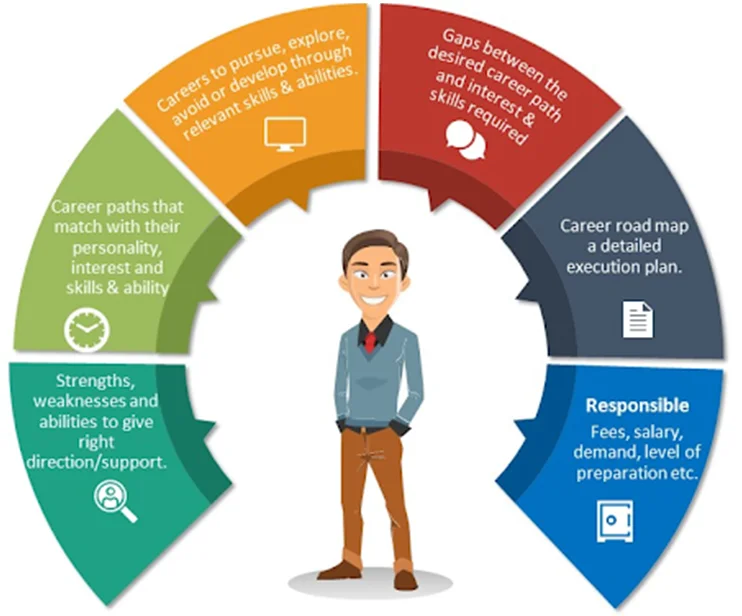
These three things – strengths, interests, aptitude, they’re separate. You can love something and have zero natural ability for it. You can be naturally gifted at something and feel completely nothing when doing it. The real sweet spot in career planning for students sits in that small overlap where all three actually meet at once.
Someone who loves talking to people, reads emotions easily, has strong verbal instincts, that combo quietly leans toward psychology, HR, counseling, that kind of communication-heavy work. Someone who gets a weird kick out of solving puzzles, has solid number sense, lights up around patterns and data, that leans toward data science, research, finance, engineering.
It’s not a magic formula that spits out one perfect career name. Think of it more like a filter. Takes a hundred overwhelming options and narrows them down to a handful that actually make sense for you specifically. And that narrowing alone, more than anything else on this list, is what makes the rest of the decision way less terrifying.
Why a Real Assessment Makes This So Much Easier
You should absolutely start this on your own. But there’s a ceiling to how far pure self-reflection gets you, especially at 15 or 17, when you simply haven’t lived enough years to have much self-data sitting around yet.
This is where a proper aptitude assessment for students actually earns its place. These tools get built by people who’ve studied this stuff for years, tested across thousands of students, designed to bring out the patterns that are genuinely hard to spot just sitting around thinking about yourself.
A good counselor doesn’t hand you a list of options and walk off. They sit with you, helps you understand yourself better and help you get the and why and behind a suggestion, not just the andwhat. and
This, right here, is basically the heart of career planning for students done right. Not guesswork. Not whatever career path a random uncle at a family gathering insists you to pursue because his son is doing well in that career. A real decision built on actual self-understanding.
What Changes Once You Actually Know Yourself
Once a student genuinely gets their own strengths, interests and aptitude. The doubt around career related questions starts lifting.
Picking a stream stops feeling like flipping a coin. Choosing a college course stops feeling like copying your friend’s decision. Talking to parents gets easier too, because now you can actually explain your reasoning instead of just saying andI just want to, and which, let’s be real, has never convinced a worried parent of anything ever.
At Hashtag Counseling, this is genuinely where we start with every student who walks through the door. Before streams, before colleges, before any of it, we spend real time on who they actually are. Because once that’s in place, everything else gets so much less complicated.
FAQs
Q1. What’s the real difference between interest and aptitude?
Interest is what excites you. Aptitude is what you’re naturally wired to do well. Sometimes they overlap, sometimes they don’t.
Q2. Can I figure this out without a professional assessment?
You can try on your own, but a real assessment finds patterns most people just can’t see in themselves.
Q3. When’s the right time for a strengths and interests assessment?
Class 9 or 10 is the best time to start, right before the big stream decisions hit.
Q4. Do good marks always mean strong aptitude?
Not really. Marks often reflect memory or teaching quality more than actual ability.
Q5. How does this actually help with career planning?
It helps narrow down the huge lists of options down to a few that genuinely fit you, which makes deciding way less stressful.