Completing graduation is an important achievement, but finding a suitable job after receiving a degree can be challenging. Many graduates apply for multiple positions, attend interviews and wait for responses, yet struggle to secure employment.
This situation can lead to frustration, confusion and questions about future career choices. Some graduates start wondering whether their degree is useful, whether they lack the required skills or whether they have chosen the wrong career field.
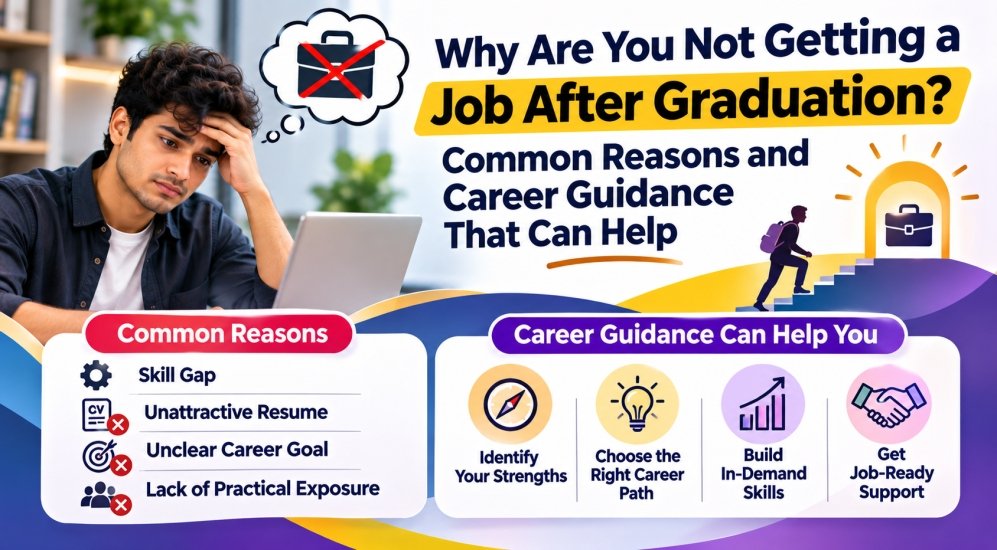
However, not getting a job immediately after graduation does not mean that you lack potential. There can be several reasons behind employment challenges, including limited practical experience, skill gaps, an unclear career direction or an ineffective job search strategy.
With proper Career Counselling After Graduation in Silvassa, graduates can understand their current situation, identify areas for improvement and explore suitable career opportunities.
Why Is It Difficult to Get a Job After Graduation?
A graduation degree provides an academic foundation, but employers may also look for practical knowledge, communication skills and an understanding of workplace requirements.
Some graduates may have the required educational qualifications but struggle to demonstrate their abilities during recruitment.
Other challenges may include:
- Limited work experience.
- Lack of industry-specific skills.
- Poor resume presentation.
- Difficulty answering interview questions.
- Applying for unsuitable job positions.
- Lack of awareness about career opportunities.
- Uncertainty about the preferred career field.
Understanding these challenges can help graduates focus on practical improvements rather than losing confidence.
7 Common Reasons Why Graduates Are Not Getting Jobs
1. Lack of Practical Skills
One common challenge is the difference between academic knowledge and practical workplace requirements.
Graduates may understand theoretical concepts but have limited experience applying them to real-world tasks.
For example, a commerce graduate may understand accounting concepts but may need practical knowledge of accounting software. Similarly, a computer science graduate may understand programming concepts but may need experience working on practical projects.
Identifying the practical skills required for a preferred role can help graduates prepare more effectively.
2. Limited Work Experience
Many entry-level job opportunities are designed for fresh graduates, but employers may still value internships, projects and practical exposure.
Students who have not completed internships or participated in relevant projects may find it difficult to demonstrate their workplace readiness.
Graduates can consider:
- Internships.
- Academic projects.
- Practical training.
- Freelance assignments.
- Volunteer activities.
- Entry-level opportunities.
These experiences can help demonstrate skills and professional interests.
“Graduates can also explore apprenticeship opportunities through the Apprenticeship India portal.”
3. An Unclear Career Direction
Some graduates apply for different types of jobs without understanding which roles match their educational background and interests.
For example, a graduate may apply for sales, administration, marketing and finance positions at the same time without having a clear preference.
Exploring career options and understanding personal strengths can help narrow down suitable job roles.
A clear career direction can also make job applications more focused.
4. Weak Resume or CV Presentation
Your resume is often one of the first things an employer reviews.
A resume that does not clearly explain your educational background, skills, projects and achievements may fail to communicate your suitability for a position.
Common resume mistakes include:
- Using an unclear format.
- Including irrelevant information.
- Making spelling and grammar mistakes.
- Not mentioning relevant projects.
- Listing skills without supporting examples.
- Sending the same resume for every job.
Graduates should prepare a clear, accurate and role-specific resume.
5. Difficulty Performing in Job Interviews
Getting an interview opportunity is an important step, but some graduates struggle to communicate their abilities confidently.
They may feel nervous, provide unclear answers or find it difficult to explain their academic projects and career goals.
Interview preparation can include:
- Practising common interview questions.
- Preparing a short self-introduction.
- Understanding the job description.
- Learning about the organisation.
- Explaining academic projects clearly.
- Practising professional communication.
Preparation can help candidates present their qualifications and skills more effectively.
6. Applying for Jobs Without Understanding Requirements
Sending applications to a large number of companies may not always produce useful results.
Some graduates apply for positions without checking the required qualifications, technical skills, experience or responsibilities.
Before applying, read the job description carefully and compare the requirements with your current profile.
Focus on positions that match your qualifications and where you can demonstrate relevant abilities.
7. Not Developing Communication and Professional Skills
Technical knowledge is important in many careers, but communication and workplace skills can also influence recruitment decisions.
Employers may expect candidates to demonstrate:
- Clear communication.
- Teamwork.
- Problem-solving.
- Time management.
- Adaptability.
- Professional behaviour.
Graduates can improve these abilities through practice, training and practical experience.
What Should You Do If You Are Not Getting a Job After Graduation?
Instead of applying randomly or giving up, take a structured approach to understanding your situation.
Review Your Educational Background
Start by reviewing your graduation subject, academic performance and areas of interest.
Think about the types of roles connected to your qualification and whether you need additional training for your preferred field.
Identify Your Skill Gaps
Compare your current skills with the requirements of job roles you want to pursue.
Identify areas where you need improvement, such as computer knowledge, communication, technical skills or practical experience.
Improve Your Resume
Prepare a resume that clearly presents your education, relevant skills, academic projects, internships and achievements.
Make suitable changes depending on the position you are applying for.
Prepare for Interviews
Practise introducing yourself, discussing your educational background and explaining why you are interested in a particular role.
You should also prepare examples that demonstrate your problem-solving, teamwork and communication abilities.
Explore Different Job Opportunities
Do not limit your search to only one type of organisation or job title.
Explore suitable entry-level positions, internships, trainee roles and opportunities related to your educational background.
How Career Counselling Can Help Graduates Find the Right Direction
Career counselling can help graduates understand why they are facing difficulties and explore suitable professional directions.
It is not simply about finding a job. It also involves understanding individual interests, abilities, qualifications and career expectations.
Understanding Your Interests and Strengths
A career counsellor may use discussions and suitable assessment methods to understand your interests, strengths and professional preferences.
This can help identify career fields that may match your profile.
Exploring Suitable Career Options
Graduates may not always be aware of the different roles available within their educational field.
Career guidance can help them explore possible career paths and understand the qualifications or skills required for different positions.
Identifying Areas for Improvement
A structured discussion can help graduates recognise areas where they may need further learning, practical exposure or skill development.
Developing a Career Plan
Career counselling can help graduates organise their next steps, such as choosing a professional course, developing relevant skills, exploring internships or preparing for suitable job opportunities.
Building Career Clarity
When graduates understand their options and priorities, they can approach job searching with a clearer direction.
Career counselling does not guarantee employment or a specific salary. It supports informed career decisions and planning.
Career Counselling After Graduation in Silvassa and Thane
Graduates in Silvassa and Thane may explore different employment and professional opportunities depending on their qualifications, interests and skills.
However, selecting the right career direction can be difficult when there are multiple job roles and educational pathways to consider.
Hashtag Counseling lists career counselling among its services. Graduates looking for Career Counselling After Graduation in Silvassa can explore professional guidance to understand their interests, evaluate possible career options and plan their next steps.
Individuals in Thane can also explore career guidance based on their educational background and professional goals.
How to Stay Motivated During Your Job Search
Not receiving interview calls or job offers can affect confidence. However, job searching is a process that often requires patience, preparation and continuous improvement.
Consider the following suggestions:
- Set realistic daily or weekly job search goals.
- Apply for relevant positions instead of applying randomly.
- Improve one professional skill at a time.
- Practise interview communication regularly.
- Track your applications and responses.
- Learn from interview feedback when available.
- Avoid comparing your progress with others.
If job search difficulties are significantly affecting your emotional well-being, consider seeking appropriate psychological support.
Frequently Asked Questions
1. Why am I not getting a job even after graduation?
There can be several reasons, including limited practical experience, skill gaps, an unclear career direction, resume-related issues or difficulty performing in interviews.
2. What should I do if I cannot find a job after completing my degree?
Review your skills, improve your resume, explore relevant entry-level opportunities and identify areas where additional training or practical experience may help.
3. Is career counselling useful after graduation?
Yes. Career counselling can help graduates understand their interests, evaluate career options and create a structured plan for professional development.
4. Can fresh graduates get jobs without experience?
Yes. Some organisations offer fresher and entry-level positions. Internships, academic projects and practical skills can help graduates demonstrate their abilities.
5. How can I choose the right career after graduation?
Consider your educational background, interests, strengths, skills and professional goals. Research suitable job roles and seek career guidance if you are uncertain.
6. Where can I get career counselling after graduation in Silvassa?
Graduates can explore professional career counselling services in Silvassa. Hashtag Counseling lists career counselling among its services for individuals seeking support with career-related decisions.
Conclusion
Not getting a job immediately after graduation can be frustrating, but it does not define your future career potential.
Understanding your skill gaps, improving practical knowledge, preparing for interviews and exploring suitable job roles can help you approach the employment process more effectively.
If you are confused about your career direction or struggling to identify suitable opportunities, Career Counselling After Graduation in Silvassa or Thane can help you understand your options and plan your next steps with greater clarity.