

Reviewed against current career-counselling practice. Last updated September 2026.
Not everyone wants to spend their working life at the same desk, on the same schedule, counting down to the weekend. That doesn’t mean they’re confused about what they want. Often, it’s the opposite – they know exactly what kind of work life they don’t want and they’re trying to figure out what to build instead.
Some people want to build things with their hands. Some want independence more than they want a title. Some are pulled toward creative work; others toward freelancing, consulting, entrepreneurship, fieldwork, or a skilled trade. And plenty of people don’t mind hard work at all – they just don’t want that work to run on a conventional office clock.
For students, this raises a genuine question: is there a career path outside the standard 9-to-5 that still offers stability, growth and a real income? Career counselling can help make that question more practical by bringing together a student’s interests, aptitude, personality and long-term goals before they commit to a particular direction.
Yes – but with a catch that gets glossed over far too often. A non-traditional career isn’t automatically easier, more flexible, or more lucrative than a conventional one. In a lot of cases, it demands more self-discipline, more continuous learning and more personal responsibility than a salaried job ever asks for.
So before picking a path just because it sounds different, it’s worth understanding what these careers actually involve – not the highlight reel, the actual mechanics.

What Does Non-Traditional Career Even Mean?
It isn’t an official job category. It simply describes any career that doesn’t follow the familiar sequence of degree → company → predictable promotion ladder.
That could mean working independently, running a business, stitching together a portfolio of income streams, moving project to project, entering a skilled trade, or working in an environment that looks nothing like a standard office.
One person builds a career as a freelance designer. Another becomes an independent digital marketing consultant. A third starts a photography business, works as a fitness coach, trains as a specialised technician, or eventually builds their own company. None of that makes the work less serious.
Non-traditional doesn’t mean unstructured – these paths still demand real skill, real experience and a clear answer to the question: how, specifically, will I get paid for this?
Why More People Are Looking Beyond the Traditional Path
Work itself has changed shape.
Technology now makes it far easier to work remotely, find clients outside your own city and build a career around one specialised skill instead of one employer. At the same time, companies increasingly rely on freelancers, consultants and contractors for project-based work rather than hiring for every role permanently.
None of this means traditional employment is going away – it means today’s students simply have more legitimate ways to build a career than previous generations did.
Someone drawn to design, for instance, no longer has to think only in terms of joining a design agency. They could work in-house, freelance, consult independently, or eventually run a small studio of their own. The same logic applies to digital marketing, software, content, photography and video production.
And it’s worth saying clearly: not every non-traditional career is digital or remote. Skilled trades, entrepreneurship, event work, fitness and specialised services are just as much a part of this picture – and none of them require a laptop and a Wi-Fi connection to exist.

1. Freelancing
Freelancing is the most visible alternative to a conventional job – and probably the most misunderstood.
Instead of one employer, a freelancer works for multiple clients, usually project by project. Common freelance fields include writing and editing, graphic design, web development, SEO and digital marketing, video editing, photography, animation, translation, consulting and social media management.
The appeal is obvious: more say over which projects you take, where you work and often when you work. What gets left out of that pitch is everything that comes with it – chasing clients, negotiating fees, managing your own deadlines, following up on late payments and getting through the slow months when work simply isn’t there.
Flexibility comes bundled with responsibility. That’s not a downside to be avoided – it’s the actual shape of the job.
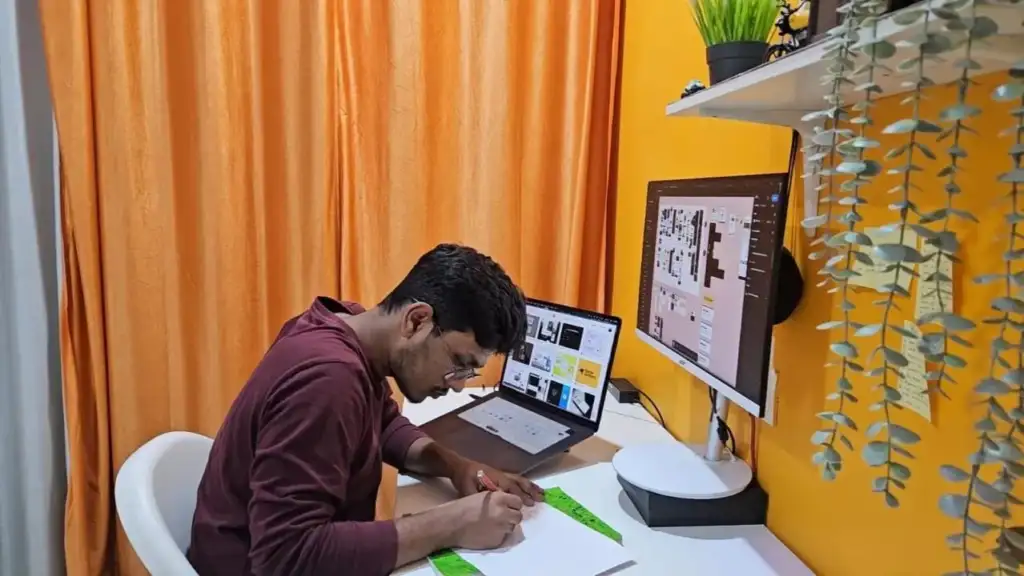
If you’re a student weighing freelancing, the smarter starting point isn’t how do I work from home? – it’s how do I become genuinely good at a skill people will pay for? The flexibility only shows up after the skill does.
2. Entrepreneurship
Some people don’t want a role inside an organisation at all. They want to build the organisation.
Entrepreneurship can mean anything from a local service business to a full technology company – e-commerce, education, food, manufacturing, professional services, digital products and plenty else.
The upside is real: you build around your own ideas and your income isn’t capped by a fixed salary.
The difficult part is equally real. Revenue isn’t guaranteed. You’re now responsible for decisions an employee never has to make – pricing, hiring, marketing, customer acquisition, operations and cash flow, often all at once and often before you feel ready for any of them.
Entrepreneurship shouldn’t be sold to students as an escape from employment. It’s a career in its own right, with its own skill set, and it rewards people who can tolerate uncertainty far more than it rewards people who are simply tired of having a boss.
3. Consulting and Independent Professional Work
You don’t need to build a company to work independently – consulting is a quieter, often more realistic route, particularly once you already have real experience.
An experienced professional might eventually offer independent services in marketing, finance, human resources, technology, business operations, career guidance, design, management, or industry-specific technical work.
The underlying idea is simple: instead of being paid for the position you hold, you’re paid for the expertise a client specifically needs.
That’s exactly why consulting generally works better a few years into a career rather than immediately after college – clients are paying for judgment built through experience, and that judgment takes time to accumulate.
4. Creative Careers
Creative work has long been treated as the risky choice, mostly because it doesn’t follow a neat degree-to-job pipeline. But the creative field today is a far broader professional ecosystem than it used to be.
Someone drawn to visual storytelling might explore graphic design, photography, filmmaking, animation, UI/UX design, or video production. Someone drawn to writing might land in content, copywriting, journalism, publishing, or specialised communications.
Here’s the part students underestimate: creative careers rarely succeed on talent alone.
Technical ability matters. So does understanding clients, deadlines, audiences, business context and the actual tools the industry runs on.
Talent gets you noticed. Professional skill is what turns that attention into a sustained career, not a one-off project.
5. Digital and Online Careers
The internet created entire career categories that simply didn’t exist a couple of decades ago – SEO specialists, content strategists, social media managers, creators, online educators, community managers and digital consultants.
Some of these people work for companies. Others freelance. Many combine employment with independent projects on the side.
This category is genuinely attractive for students because a lot of digital skills can be built through practical projects alongside – not instead of – formal education.
But there’s a trap worth naming directly: online visibility is not the same thing as career stability.
Posting content isn’t the same as running a business, and having followers doesn’t automatically become income. Understanding the commercial side of a digital skill – how it actually converts into paid work – matters just as much as the skill itself.
6. Skilled Technical Careers
Not every alternative career happens behind a screen.
India’s growing industrial, energy, manufacturing and infrastructure sectors are creating real demand for people with specialised technical skills – electrical work, HVAC, industrial maintenance, robotics, automation, EV infrastructure and renewable-energy roles.
These careers often run through ITIs, diplomas, apprenticeships and structured on-the-job training rather than a university degree.
And as more technology gets built into factories, energy systems and infrastructure, the skilled technician is increasingly expected to understand both the physical equipment and the digital systems layered on top of it.
That combination makes skilled technical work a genuinely important – and often overlooked – part of the non-traditional career conversation.
7. Fitness and Wellness Careers
For students interested in health, movement, or wellbeing, the options aren’t limited to becoming a doctor or physiotherapist.
Depending on qualifications and specialisation, this space includes fitness training, sports coaching, nutrition-related careers and other wellness services – many of which can eventually lead to independent studios, coaching businesses, or online services.
But this is a category where credentials genuinely matter, not just as a formality. When a profession involves advice that can affect someone’s physical health, proper training and clear professional boundaries stop being optional extras and become the actual foundation of doing the job responsibly.
8. Event and Experience-Based Careers
Some people are simply good at organising people, managing moving logistics and staying calm when a situation changes at the last minute.
For them, event management can offer a working environment that looks nothing like an office – weddings, corporate events, exhibitions, conferences, entertainment, sports and brand experiences.
It’s also genuinely demanding. Event deadlines don’t move just because something went wrong. Long hours, travel and weekend work come standard.
This field is a useful reminder that non-traditional doesn’t automatically translate to easier or more flexible – sometimes it’s the opposite.
9. Portfolio Careers
One of the more interesting – and more misunderstood – career models is the portfolio career: instead of one job or one professional identity, a person combines several income streams at once.
That might look like working part-time for a company, freelancing in a specialist area, teaching online, creating digital products and taking on the occasional consulting project – all simultaneously, with the mix shifting over time as circumstances change.
A portfolio career offers variety and lets you develop several skills in parallel. It also demands serious organisation and financial planning, since your income isn’t arriving from one predictable source.
It isn’t the right fit for someone who genuinely prefers a single, clearly defined role and a predictable routine – and that’s a fair preference to have.
Is a Non-Traditional Career Less Stable?
This is one of the biggest misconceptions students carry into this decision.
There’s no universal rule that traditional employment is stable and independent work is unstable – or the reverse. Stability depends on the specific profession, the employer, your skill level, the industry, your income sources and your personal financial situation.
A freelancer with strong, specialised demand can have a steadier pipeline of work than someone in a shaky salaried job. An entrepreneur can build something genuinely successful.
At the same time, another freelancer can struggle to find consistent clients and a business can fail. A salaried position gives you predictable monthly income – it does not guarantee permanent employment.
So the useful question isn’t is this career stable?
It’s:
What specifically creates stability in this particular career, for this particular person?
That’s a much harder question to answer with a generic list – which is exactly why it’s the right one to ask.
What Skills Actually Matter Here?
Whatever direction you choose, a few abilities become disproportionately valuable the moment you’re responsible for finding your own opportunities, instead of having them assigned to you.
Communication. You need to explain what you do clearly, understand what a client or employer actually needs and build professional relationships that outlast a single project.
Self-management. With no one checking your schedule, every deadline becomes entirely your own responsibility – including the ones you’d rather push to tomorrow.
Financial awareness. Understanding income, expenses, taxes, savings and irregular cash flow matters far more for freelancers and business owners than it does in a salaried role with a fixed monthly paycheck.
Digital literacy. Even careers that aren’t primarily digital increasingly require basic comfort with technology, online communication and digital tools.
Problem-solving. Independent professionals run into problems without a manager or a large team sitting one desk away to help solve them.
Continuous learning. Industries shift. Tools change. Customer expectations move. A skill that pays well today can lose value quickly if you stop developing it.
Do You Need a Degree for a Non-Traditional Career?
Sometimes yes, sometimes no – it depends entirely on the profession.
Some careers genuinely require formal degrees or professional qualifications. Others weigh portfolios, certifications, practical experience and demonstrable skill far more heavily.
Someone pursuing medicine can’t substitute a portfolio for medical education. Someone building a career in graphic design has considerably more flexibility in how they prove they’re good at the work.
The important move is understanding the entry requirements before deciding a career is right for you – not after.
And don’t reject formal education just because you’re chasing a non-traditional path. In plenty of cases, the right education is exactly what makes that path possible in the first place.
What Should You Actually Do If an Unusual Career Interests You?
Don’t make a major decision based on a single YouTube video, an Instagram reel, or someone else’s highlight-reel success story. Those show you the outcome, never the years of unglamorous work that got someone there.
Start by investigating the profession itself. Talk to people already doing the work. Look at the skills employers actually ask for in real job postings. Understand how people typically enter the field.
Find out what beginners actually earn – not what the top 1% earns – and what experienced professionals do differently from someone just starting out.
Then test the work yourself, in a small, low-stakes way.
Someone interested in design can build a few real projects. Someone interested in coding can build a small working application. A future photographer can take a handful of real assignments. Someone drawn to digital marketing can run one small campaign for a friend’s business or a local shop.
You don’t need to commit your entire future just to find out whether you actually enjoy something.
Experimentation is a legitimate part of career planning, not a detour from it.
What If Your Parents Want You to Choose a Traditional Career?
This is a genuinely difficult conversation in a lot of Indian households and it’s worth taking seriously rather than dismissing.
Parents often push toward familiar career paths because they’re optimising for financial security – a conventional degree can feel safer to recommend than an unfamiliar career they’ve never seen play out.
That instinct usually comes from care, even when it doesn’t feel that way in the moment.
Instead of turning the conversation into you don’t understand what I want, try bringing evidence into the room instead.
Show them what the profession actually involves, what qualifications it requires, how people realistically enter the field, what income progression can look like over five or ten years and what your backup plan would be if it didn’t work out.
A career decision becomes much easier for a parent to sit with when it sounds like a researched plan – not a sudden rejection of everything conventional.

How Do You Know If a Non-Traditional Career Is Right for You?
Start with yourself, not with whatever’s trending.
Do you genuinely enjoy the type of work involved – not the idea of it, the actual daily mechanics of it?
Are you comfortable with uncertainty, or does it wear you down over time?
Do you prefer independence or structure?
How much income predictability do you actually need to feel secure?
Are you willing to keep learning indefinitely, because this field will keep changing?
Do you enjoy dealing directly with clients or customers?
Would you rather build something yourself, or contribute inside an organisation someone else built?
What lifestyle do you actually want – and does this career support it, or just look like it does from the outside?
Your honest answers usually reveal whether you’re attracted to the actual work, or just to the idea of freedom that gets attached to it in every glossy career post you’ve scrolled past.
That distinction matters more than almost anything else in this decision.
Don’t Choose a Career Just Because It Looks Flexible
Work from anywhere.
Be your own boss.
Make money online.
These phrases are effective precisely because they show you the most appealing 10% of a career while hiding the other 90%.
A freelancer might work from a café one afternoon – and still spend the next three hours chasing an overdue payment.
An entrepreneur might set their own schedule on paper, but customers don’t necessarily respect that schedule in practice.
A creator might build a real audience – after years of unpaid, unglamorous work that never showed up in the highlight reel.
A technical professional might avoid sitting at a desk all day – and instead spend long days travelling between job sites.
Every career has trade-offs.
There is no version of meaningful work that comes without any difficult parts – that career simply doesn’t exist.
The actual goal isn’t to find work with zero friction. It’s to find a combination of work, income, environment and responsibility that fits you reasonably well, trade-offs included.
The Future of Work Is More Flexible – Not More Effortless
The traditional career path isn’t disappearing and it shouldn’t be written off.
For a huge number of people, a degree followed by a salaried job remains exactly the right choice and there’s nothing outdated about that.
But today’s students also have access to career structures that simply weren’t common a generation ago – building specialised skills, working independently, combining multiple income sources, starting businesses, working remotely, entering skilled technical fields, or moving between different professional models over the course of a career rather than picking one at twenty-two and staying there forever.
That’s more choice. It’s also more responsibility.
When there are genuinely hundreds of viable paths, picking the most popular one by default isn’t the same as picking the right one.
You have to actually understand yourself, investigate the specific career and be honest – with yourself and with the people you’ll have to explain the decision to – about the trade-offs involved.
Final Thoughts
For a long time, career advice ran on a fairly simple formula: study, get a degree, find a job, work your way up.
That path still works for millions of people and it isn’t going anywhere. But it was never the only way to build a meaningful working life.
A non-traditional career can mean freelancing, entrepreneurship, creative work, consulting, skilled technical work, or stitching together several professional activities into one portfolio.
Each comes with its own advantages, its own risks and its own demands – and none of them are automatically the easy option.
The point isn’t to avoid the 9-to-5 just because it sounds ordinary. It’s to actually understand what kind of working life suits you – not the version of you in a career-advice video, the version of you who has to live with this choice every Monday morning.
At Hashtag Counseling, career guidance is built around exactly this: helping students look past job titles and consider their interests, aptitude, personality, strengths and long-term goals before choosing a direction – traditional or otherwise.
Because the better question was never which career looks the most exciting?
It’s what kind of work fits the person I am – and the person I’m willing to become?
Frequently Asked Questions
Q1. What are non-traditional careers in India?
Non-traditional careers are career paths that don’t follow the conventional degree-to-salaried-job route. They can include freelancing, entrepreneurship, consulting, creative professions, skilled technical work, digital careers and portfolio careers.
Q2. Are non-traditional careers safe for students?
They can be, but stability depends on the specific profession, the demand for that skill and the income model – not on the category itself. Research the actual field rather than assuming every non-traditional career comes with predictable income.
Q3. Can I build a real career without a 9-to-5 job?
Yes. Freelancing, entrepreneurship, consulting, creative work, certain technical trades and portfolio careers all involve different working arrangements – though flexible work rarely means fewer total working hours.
Q4. Do non-traditional careers require a degree?
Not always. Some professions require formal degrees or licenses; others weigh practical skills, portfolios, certifications, or direct experience more heavily. It depends entirely on the specific career.
Q5. Is freelancing a good option right after college?
It can work for people with a genuinely marketable skill, but freelancing is more than technical ability. Finding clients, managing deadlines, handling finances and maintaining a steady pipeline of work are all part of the job from day one.
Q6. Can non-traditional careers actually pay well?
Some can, but income varies enormously by profession, expertise, experience, market demand and business model. Never choose a path solely because someone else appears to have made a lot of money from it.
Q7. How do I know if a non-traditional career is right for me?
Research the profession directly, talk to people already working in it and test small practical projects before committing fully. Structured career counselling can also help you weigh your interests, aptitude, personality and goals together.
Q8. Should students avoid traditional careers altogether?
No. Traditional careers remain excellent choices for many students. The point of exploring non-traditional paths is understanding the full range of real options – not assuming there’s only one acceptable route.