
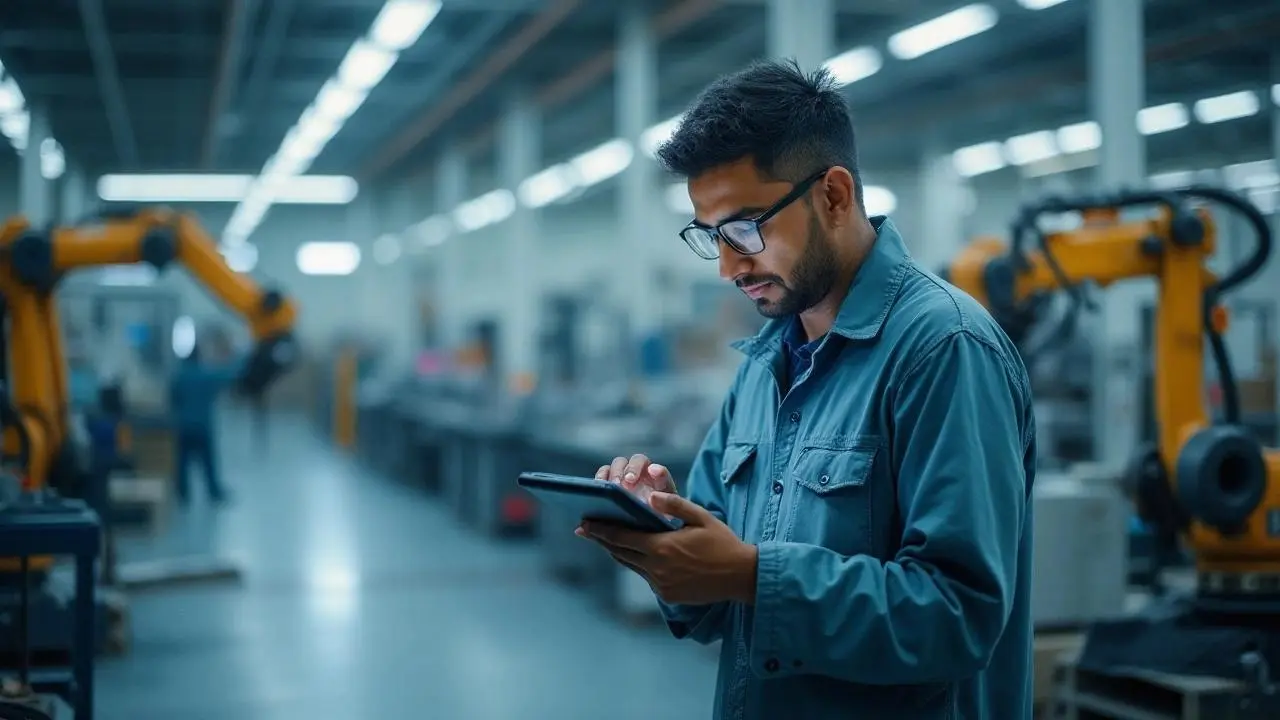
Ask an Indian student what they want to become and the usual answers aren’t hard to guess.
Doctor. Engineer. MBA. Government officer. Maybe a software developer if they’re feeling a bit more current.
“Electrician” doesn’t usually make that list. Neither does HVAC technician, industrial maintenance technician, solar technician or robotics technician.
Which is interesting, because while everyone’s busy talking about AI reshaping the future of work, something quieter is happening alongside it: India needs people who can work with the physical systems that make the digital economy possible in the first place.
Data centres need electricity and cooling. Factories need specialised machinery installed and maintained. EVs need charging infrastructure. Solar projects need people who can install and service the equipment. Industrial facilities need technicians who can figure out what’s wrong when a machine suddenly stops working.
The future of work isn’t going to unfold entirely behind a laptop screen. A good part of it will happen on factory floors, workshops, construction sites, warehouses, energy systems and technical facilities places that don’t always feature in conversations about “future careers.”
So what does the future of Indian blue-collar jobs actually look like?
What Does “Blue-Collar” Actually Mean?
The term “blue-collar” gets thrown around as though it automatically means low-skilled, low-paying, or physically exhausting work. That’s a genuinely outdated way of looking at it.
A skilled electrician, industrial technician, HVAC specialist, or robotics technician may carry formal training, certifications, a diploma, or years of specialised, hard-won experience. Their work can involve electrical systems, machinery, diagnostics, safety procedures, digital tools and increasingly sophisticated technology – not exactly the mental image most people default to.
So there’s an important distinction worth holding onto: blue-collar does not automatically mean unskilled. In fact, one of the more interesting shifts happening in India’s labour market right now is the growing importance of skilled technical work specifically.
The government’s current skilling ecosystem reflects this shift pretty clearly. Skill India programmes now include training in areas like robotics, AI, cybersecurity, semiconductor manufacturing and green technologies, while ITIs and apprenticeship programmes are being connected more tightly with actual industry needs rather than generic curricula. That’s a very different picture from the old assumption that vocational work is simply a fallback for students who couldn’t manage a degree.
The AI Boom Needs More Than Software Engineers
Here’s where things get genuinely interesting.
Most conversations about AI start and end with software. But AI systems don’t exist in thin air. They depend on reliable power, advanced cooling systems, servers, buildings, networks and the physical infrastructure that keeps everything running. Automated factories need machines that have to be installed, calibrated, maintained and repaired by actual people.
Someone has to do that work and increasingly, someone is being paid quite well to do it.
A 2026 analysis by Randstad covering more than 50 million job postings found that demand in India had climbed 242% for electricians, 200% for HVAC technicians and more than 500% for robotics technicians over four years. That’s not a rounding error – that’s a genuine structural shift.
The point here isn’t that every electrician is suddenly about to out-earn every software engineer. That’s not what the data actually says and it would be a lazy read of it. The more useful takeaway is this: technology can create demand for physical skills at the exact same time it’s automating other kinds of work entirely. That should genuinely change how students think about technical careers.
Why Is Demand Growing for Skilled Technical Workers?
There isn’t one single driver here – several things are happening at once, reinforcing each other.
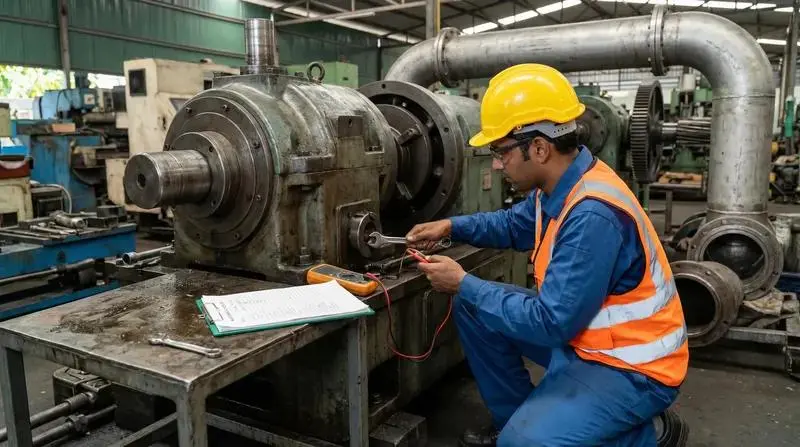
More infrastructure means more maintenance. India is building more factories, commercial facilities, infrastructure and technology-driven operations by the year. Every physical system eventually needs someone to install it, operate it, maintain it and repair it – that need doesn’t go away once construction finishes, it just changes shape.
Automation creates new technical work, not less of it. A factory full of robots doesn’t mean a factory empty of people – it means a factory that needs people who genuinely understand those robots. Someone still has to troubleshoot the equipment, maintain the systems, monitor performance and deal with the problems software alone can’t fully solve.
The energy system is changing underneath everything. Solar power, EVs, batteries, charging infrastructure and energy-efficient buildings are all generating new technical requirements that didn’t exist a decade ago – real opportunities are opening up around installation, servicing, maintenance and system operations.
Technology is quietly becoming part of traditional trades. The modern technician isn’t necessarily reaching for the same toolbox that existed ten or twenty years ago. Digital diagnostics, sensors, monitoring systems, automation software and AI-assisted tools are all becoming part of ordinary technical work – creating a genuinely new kind of worker: the technology-enabled technician.
What Does the Future of Indian Blue-Collar Jobs Look Like?
It’s unlikely to be one giant, uniform category of “blue-collar jobs.” Different trades will change at very different speeds. But a few areas stand out clearly.
Electrical and Industrial Electrical Work
Electricians are needed pretty much everywhere, but industrial electrical work specifically involves a much more specialised skill set. Industrial electricians often work with machinery, electrical panels, motors, control systems and production equipment – not just household wiring. As factories become more automated, understanding both electrical systems and modern technology together becomes increasingly valuable. Randstad’s current job listings also show real demand for specialised electrical and technical roles, including heavy-equipment electricians and other technician positions.
HVAC and Cooling
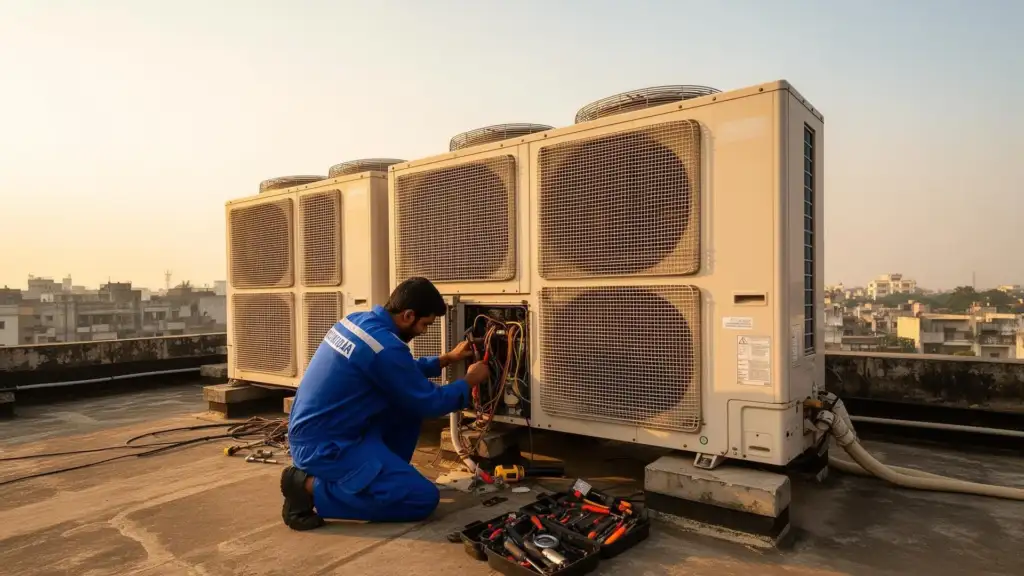
Heating, ventilation and air-conditioning may not sound like a particularly futuristic career path – but cooling is becoming genuinely critical as technology infrastructure keeps expanding. Data centres, hospitals, commercial buildings, factories and large facilities all depend on cooling systems that simply cannot fail.
A technician who understands modern HVAC systems isn’t just “fixing ACs.” The work can involve installation, diagnostics, maintenance, energy efficiency and increasingly sophisticated equipment that most people would never associate with a cooling technician’s job description.
Robotics and Automation
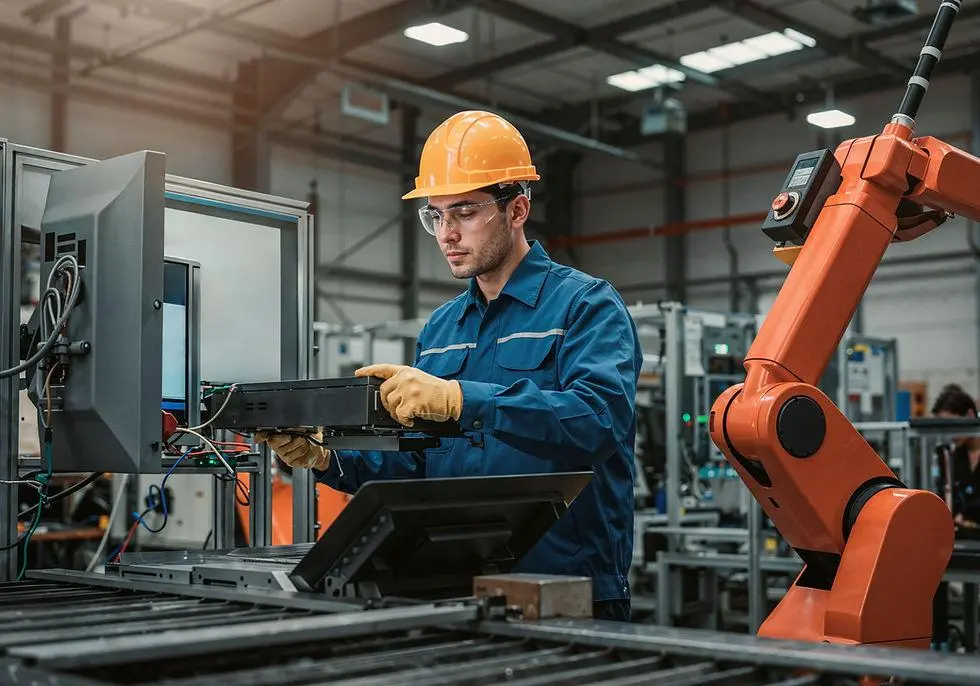
This might be the clearest example of how the entire definition of blue-collar work is shifting. A robotics technician may work with industrial robots, collaborative robots (cobots), sensors, control systems and automated production equipment. Randstad’s current listings already include roles involving industrial robotics, cobots and autonomous mobile robots – showing these skills aren’t theoretical, they’re already appearing in real job markets right now.
And the government is explicitly aligning new-age ITI and skilling programmes with Industry 4.0 areas like robotics and mechatronics, which suggests this isn’t a passing trend.
EV and Charging Infrastructure
The growth of electric mobility creates work that goes well beyond designing the vehicle itself. There’s an entire physical ecosystem sitting around EVs – charging stations, electrical systems, batteries, vehicle servicing, diagnostics, installation and ongoing maintenance. That creates real opportunities for people who build the right combination of mechanical, electrical and digital skills together.
Renewable Energy
Solar and other renewable-energy systems all need people who can install, inspect, operate and maintain them properly. This is another area where technical training connects directly to a genuinely growing industry rather than a speculative one. The government’s own skilling data shows substantial training activity under green-job categories, alongside newer programmes focused specifically on emerging technologies.
Industrial Maintenance
Every factory depends on its machines actually working. When something breaks, production stops – full stop, no workaround. That makes maintenance far more than a background support function; it can genuinely sit at the centre of an entire operation. Modern maintenance roles can involve mechanical systems, electrical systems, sensors, diagnostics and increasingly, predictive maintenance that catches problems before they cause a shutdown.
The New Technician May Look Very Different From the Old One
This might be the single most important idea in this whole conversation about blue-collar careers.
Picture two technicians. The first follows instructions, performs repetitive repairs and relies almost entirely on traditional tools. The second actually understands the equipment, reads sensor data, uses digital diagnostic systems, works comfortably with automation and can spot why a machine is behaving oddly before it fails outright.
Both of them are, technically, “technicians.” But their career profiles couldn’t look more different.
Technology isn’t necessarily making technical workers irrelevant – in a lot of cases, it’s actually raising the technical ceiling of the work itself. Randstad describes this shift through examples like predictive-maintenance technicians and robotics technicians, where AI and automation give technicians access to more advanced diagnostic and analytical work than the role used to demand.
Which is why the future here isn’t simply “human worker → machine → job disappears.” More often, it looks like: traditional trade → technology → more specialised, more valuable trade.
Are Blue-Collar Jobs Actually Becoming High-Paying?
This is where it’s worth being careful.
You’ll find plenty of headlines confidently claiming that “electricians now earn more than office workers.” That’s too broad a claim to trust at face value. Income varies enormously depending on the trade, location, employer, experience, certification, industry and whether someone is employed by a company or running their own business.
The more useful question is: what actually makes a skilled trade valuable? Usually it comes down to some combination of specialised technical knowledge, scarcity of genuinely skilled workers, the ability to troubleshoot genuinely difficult problems, real industry experience, relevant certifications, safety knowledge, comfort working with advanced equipment, a willingness to keep learning and sometimes supervisory or management responsibility layered on top.
Recent labour-market reporting based on Randstad’s analysis found that blue-collar job volumes in India grew substantially between 2022 and 2026 and that wages for blue-collar roles were also growing faster than entry-level white-collar wages in that same analysis. That doesn’t mean every skilled trade is automatically lucrative – it means specialisation is where the real value sits.
What Skills Will Matter in Blue-Collar Careers?
Knowing the trade itself is still the foundation, obviously. But increasingly, that alone isn’t enough on its own.
Technical knowledge means genuinely understanding the equipment or system you’re working with, rather than just memorising a fixed sequence of repair steps that stops working the moment something unusual happens.
Troubleshooting matters because a truly valuable technician isn’t just someone who performs routine maintenance well – they’re someone who can actually figure out why something has stopped working when the manual doesn’t have an answer.
Digital literacy is showing up everywhere now – apps, sensors, digital documentation, diagnostic software, monitoring dashboards. You don’t necessarily need to become a programmer, but being genuinely uncomfortable with technology is turning into a real disadvantage in this space.
Safety awareness isn’t optional in electrical, industrial, construction, mechanical, or energy-related work – the risks are real and understanding procedures properly is a core part of the job, not an add-on.
Adaptability matters because equipment changes, industries change and the tools used in a given trade keep shifting. A career built around one fixed, unchanging set of skills becomes genuinely vulnerable the moment those skills stop being sufficient on their own.
Communication rounds this out – technical workers routinely work alongside engineers, supervisors, customers, operators and other technicians. Being able to explain a problem clearly, without jargon, is a real and underrated professional skill.
The broader labour market seems to be moving in exactly this direction. The World Economic Forum identifies technological literacy, analytical thinking, creative thinking, resilience and lifelong learning among the skills becoming increasingly important as work changes – and none of that is specific to office jobs.
Do You Need a Degree for a Blue-Collar Career?
Not always – and that’s one of the bigger reasons students should genuinely understand their options before assuming a three- or four-year degree is the only respectable route forward.
Depending on the specific occupation, real pathways can include ITI training, diploma or polytechnic programmes, apprenticeships, vocational programmes, industry-specific certifications, specialised technical courses, or degree programmes for the roles that genuinely require one.
The right route really does depend on the occupation. An electrician, a robotics technician, an HVAC technician and an industrial engineer don’t share the same educational pathway at all. So don’t pick a course simply because someone tells you it’s “shorter” or “more practical” – figure out what kind of work you actually want to do first and then work backward to whatever qualification that specific work genuinely requires.
What About ITI?
ITI is worth taking seriously if skilled technical work genuinely interests you. India’s Craftsmen Training Scheme currently runs through a large network of Industrial Training Institutes and the government has been actively adding and revising courses to align training more closely with what industry actually needs.
The important question here isn’t “which ITI course is best?” It’s “which trade gives me skills I actually want to use?” – a genuinely different question with a genuinely different answer for every student. Someone who enjoys electrical systems may end up miserable in a trade they picked simply because “somebody said it has scope.” Someone who genuinely loves machines might find a technical career far more satisfying than a desk job that merely looks more prestigious on paper at a family gathering.
Apprenticeships Could Become More Important
There’s another route students and parents often overlook entirely: learning while actually working.
Apprenticeships offer real exposure to an actual workplace, not just classroom theory. Under NAPS, apprenticeship training happens directly in real work environments and the government has continued expanding industry participation in the scheme. As of March 2026, more than 54.41 lakh apprentices had been engaged through NAPS since it launched in 2016, according to government data – a genuinely significant number.
That matters because technical competence is often difficult to learn purely from a textbook. You can understand how a machine works in theory perfectly well. Actually working on the machine is a different experience entirely and there’s no real substitute for it.
Can Blue-Collar Careers Lead to Entrepreneurship?
Absolutely – and this is another reason not to think of skilled trades as just “jobs” with a fixed ceiling.
A person can start by developing a technical skill and eventually build an entire business around it. An electrician can grow into an electrical contractor. An HVAC technician can build a full service company. A solar technician can move into installation and maintenance services at scale. An EV technician can eventually specialise in EV servicing as demand grows. A fabrication specialist can start their own workshop.
The career path doesn’t have to stop at training → job → retirement. It can genuinely become training → experience → specialisation → supervision → business – a real, escalating trajectory. That possibility matters especially in India’s MSME-heavy economy, where small, specialised businesses have always found room to grow.
What About AI? Will AI Replace These Jobs Too?
Some tasks will almost certainly become more automated over time. But that’s a different claim from saying an entire occupation will simply vanish.
A machine can help diagnose a fault. A robot can handle a repetitive movement all day without tiring. AI can analyse sensor data faster than any human ever could. But physical environments are genuinely messy in ways software struggles with. Machines fail in unexpected combinations. Equipment wears unevenly. Buildings aren’t identical to each other. Installations come with their own quirky constraints. Someone still has to inspect, troubleshoot, repair, replace and make real judgment calls out in the physical world – and that’s not disappearing anytime soon.
That’s exactly why human judgement remains genuinely important even as AI keeps getting more capable. The World Economic Forum has also flagged the growing importance of human judgement alongside AI adoption – it isn’t treating the future of work as a simple story of machines quietly replacing people.
So the safer career strategy isn’t “find a job AI cannot touch.” Honestly, that’s almost impossible to guarantee anymore, no matter what field you’re in. A better strategy is this: build a skill that becomes more useful when it’s paired with technology, not less.
What Should Students Study After 10th?
If you’re finishing Class 10 and drawn to practical or technical work, you have far more options than simply following the traditional academic path just because everyone around you is doing it.
Depending on your interests and eligibility, you can look at ITI trades, diploma or polytechnic programmes, vocational education, technical training, or apprenticeships and other industry-linked pathways.
But don’t choose based purely on what sounds easy. Ask yourself instead: do I actually enjoy practical problem-solving? Do I like understanding how machines work? Would I honestly rather build, repair, or operate something than spend the whole day reading and writing? Am I comfortable learning through hands-on work rather than lectures? Would I enjoy getting really, genuinely good at one specific technical skill?
If several of those land as “yes,” technical careers deserve a serious, unembarrassed look.
What If You’re Already in College?
You haven’t missed your window – not even close. A degree doesn’t permanently lock you into one career track.
You can still add technical or vocational skills on top of what you’re studying through certifications, practical training, internships, apprenticeships and specialised programmes. A mechanical engineering graduate could specialise in industrial automation, while an electrical background could lead towards EV infrastructure or renewable energy. A technical diploma can also become a strong foundation for developing skills in robotics, industrial controls and related technologies.
The idea is to stack skills, not treat your original qualification as the finish line for learning.
How Do You Know If a Blue-Collar Career Is Right for You?
This is where the conversation stops being generic and gets personal.
A career can have excellent market demand and still be completely wrong for you as an individual. Before committing to a technical career, think about the actual work involved – not just the salary figure attached to it.
Would you genuinely enjoy working with equipment? Diagnosing problems as they come up? Moving between different work environments rather than sitting at one desk? Practical, hands-on tasks? Learning how complex systems actually operate? Working under strict safety procedures? Becoming highly specialised in one narrow area? Continuing to learn new technology as it shows up, year after year?
And be just as honest about the parts you might not enjoy. Technical work can come with very different working conditions. It may involve physical effort, regular travel, shift-based schedules, outdoor work or industrial environments where conditions aren’t always comfortable. In some roles, you’re also expected to respond quickly when equipment fails or an unexpected problem needs to be fixed.
The right career was never simply the one with the highest demand – it’s the one where the actual work makes sense for who you are. If you’re unsure how your interests, aptitude and personality line up with different paths, a career aptitude assessment can be one genuinely useful part of figuring that out.
Don’t Choose a Career Because It Sounds “Less Prestigious”
This is probably the single biggest barrier blue-collar careers face in India today – not skill, not demand, just image.
A student might genuinely enjoy working with machines and still feel a quiet sense of embarrassment about choosing a technical trade over a degree. Parents might ask, “why don’t you do a degree instead?” Friends might say, “you scored well, why would you choose this?”
But career decisions shouldn’t get made around what sounds impressive at a family gathering. A career is something you might spend tens of thousands of hours doing over your lifetime. If you’re naturally good at practical problem-solving and genuinely enjoy technical work, choosing a career that matches those strengths isn’t “settling” for less. It might honestly be the smarter call – the one that actually holds up once the initial excitement of any career wears off.
The Future Isn’t Blue-Collar vs White-Collar
That old distinction is becoming less useful by the year.
The more interesting dividing line these days runs between low-specialisation work and high-specialisation work. A technician who only knows one repetitive task is genuinely exposed to automation pressure. A technician who understands electrical systems, digital diagnostics, automation and safety protocols together tends to become more valuable, not less, as technology advances. Meanwhile, a desk worker doing highly repetitive administrative tasks faces similar exposure – while another white-collar professional who blends technology with judgement, creativity and specialised knowledge becomes correspondingly more valuable.
So the question was never really “should I choose a blue-collar or white-collar career?” A better one is: “what skills will actually stay valuable and do I have the genuine interest and ability to get really good at them?” That question holds up a lot better over a full career.
So, What Is the Future of Indian Blue-Collar Jobs?
The future probably isn’t blue-collar work suddenly overtaking white-collar work – it’s more layered than that framing suggests.
India will keep needing software professionals, doctors, managers, designers, researchers and other knowledge workers, obviously. But it will just as much need people who can build, install, operate, maintain, repair and improve the physical systems that whole economy actually runs on.
And those jobs themselves are changing shape underneath the old job titles. The electrician of the future may work with smart, connected systems rather than just wiring and switches. The maintenance technician may lean on predictive analytics to catch problems before they happen. The factory worker may operate alongside robots rather than instead of them. The EV technician may work with genuinely sophisticated electrical and diagnostic systems. The solar technician may deal with increasingly networked energy infrastructure.
The line between “traditional trade” and “technology career” is blurring fast – and that’s honestly one of the most overlooked career opportunities in India right now, mostly because the old labels haven’t caught up with what the work has actually become.
For years, the safest career advice handed to students has sounded something like: get a degree, get a job. Simple, tidy, done.
But the world of work has gotten more complicated than that advice can really account for. Some students genuinely thrive in universities and traditional professional careers. Others are much better suited to practical, technical work and neither path is automatically the better one. What actually matters is whether the skills you’re building are genuinely valuable, whether there’s real room to grow within them and whether you can honestly picture yourself doing the work, not just tolerating it for a paycheck.
If you’re a student or a parent trying to figure out where a particular technical career might fit, Hashtag Counseling can help you look at the bigger picture by bringing your interests, aptitude, personality and long-term goals together before you commit to a course you might later regret.
Because the real question was never “is blue-collar work a good career?” It’s: which kind of work is genuinely worth becoming really good at? And in India’s changing economy, that answer probably includes far more skilled trades than most students have ever been told to seriously consider.
Frequently Asked Questions
Q1. What is the future of blue-collar jobs in India?
Ans: The future is likely to favour skilled and specialised technical roles over purely repetitive work. Areas like electrical systems, HVAC, industrial maintenance, robotics, EV infrastructure and renewable energy are all being reshaped by infrastructure growth, automation and new technology.
Q2. Are blue-collar jobs in India becoming more valuable?
Ans: Some skilled blue-collar roles are seeing genuinely stronger demand – recent labour-market analysis has reported significant increases in demand for electricians, HVAC technicians and robotics technicians in India. That said, earnings and career growth still vary a lot by occupation, location, experience and specialisation.
Q3. Will AI replace blue-collar workers?
Ans: AI and automation will change plenty of tasks and some genuinely repetitive work will get automated. But technology also creates real demand for people who install, operate, maintain and troubleshoot the systems behind it. The actual outcome will look very different from one occupation to the next.
Q4. Which blue-collar jobs are growing in India?
Ans: Skilled technical areas showing strong demand or real growth include electrical work, HVAC, robotics and automation, industrial maintenance, EV-related work, renewable energy and other technology-enabled trades. Government skilling programmes are also expanding into robotics, green technologies, cybersecurity and other emerging areas.
Q5. Can I start a blue-collar career after Class 10?
Ans: Yes, Depending on the occupation and your eligibility, you can explore ITIs, vocational programmes and diploma pathways right after Class 10. The right route depends on the specific trade and the qualification that particular role actually requires.
Q6. Do blue-collar workers need degrees?
Ans: Not necessarily. Plenty of skilled trades run on vocational, ITI, diploma, certification, or apprenticeship routes instead. Some technical and engineering roles do need formal degrees, so it’s worth checking the specific requirements for your target occupation rather than assuming one rule covers everything.
Q7. Is ITI a good option after Class 10?
Ans: It can be a strong option for students genuinely interested in practical, technical work who want structured training in a specific trade. The important part is choosing both the trade and the institute based on your actual interests, career goals, training quality and future opportunities – not just proximity or convenience.
Q8. Can blue-collar workers start their own business?
Ans: Yes and it happens more often than people assume. Skilled trades can provide a genuine foundation for entrepreneurship – experienced electricians, HVAC technicians, solar specialists, EV technicians and other skilled workers can build real service businesses once they’ve developed the necessary technical, financial and business skills.
Q9. Are blue-collar jobs suitable for students who don’t want a traditional degree? Ans: They can be. Vocational education, ITIs, diplomas and apprenticeships all offer real alternative routes into technical careers. But choose based on the actual work you enjoy, not simply because it lets you avoid a traditional degree – that’s not a strong enough reason on its own.
Q10. What skills are important for future blue-collar jobs?
Ans: Technical knowledge stays essential, but digital literacy, troubleshooting, safety awareness, adaptability and communication are all becoming increasingly useful alongside it. The ability to keep learning new technology throughout a career is likely to matter just as much as any single skill you start with.
Q11. Can girls build careers in skilled technical trades?
Ans: Absolutely – technical careers aren’t inherently limited by gender in any meaningful sense. The real considerations are training quality, workplace safety, genuine opportunity, mobility, employer practices and the individual’s own interests and abilities. India’s skilling ecosystem is also placing growing emphasis on women’s participation in training, apprenticeships, employment and entrepreneurship within these fields.
Q12. How do I know whether a skilled technical career is right for me?
Ans: Start by looking honestly at the actual work involved. Think about whether you enjoy practical problem-solving, working with equipment, troubleshooting, hands-on tasks and learning technical systems. An aptitude or psychometric assessment can also help you see how your interests, strengths and personality line up with different career paths before you commit.