
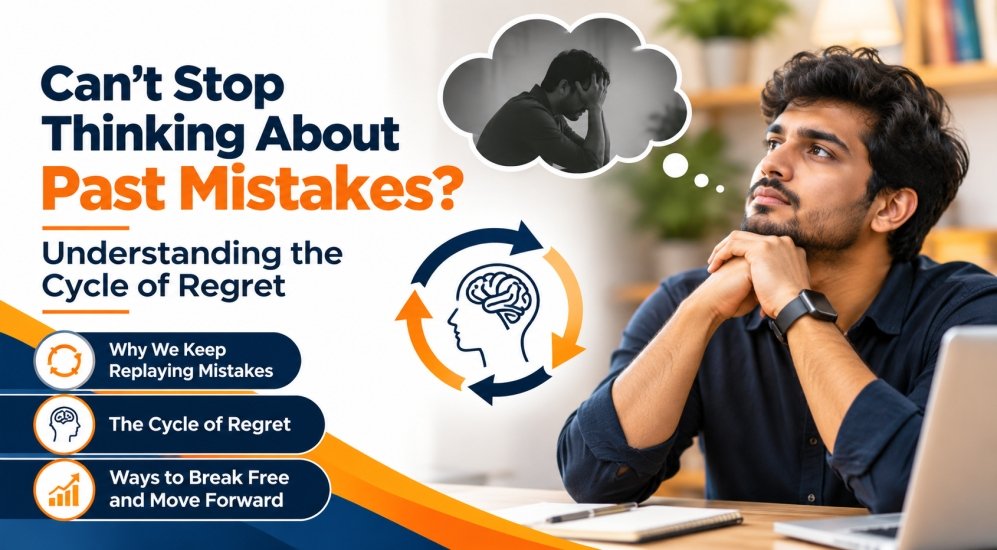
There are moments when a small mistake from years ago suddenly comes back to your mind. It might be something you said during a conversation, a decision you made, an opportunity you missed or a situation you wish you had handled differently.
You remember what happened and start thinking about how things could have turned out if you had acted differently.
At first, it may seem like ordinary reflection. But sometimes the same memory keeps returning, even when there is nothing you can do to change it. You begin questioning yourself, imagining alternative outcomes and feeling disappointed all over again.
This repeated pattern can become exhausting. Instead of learning from the past, you may find yourself mentally living through it again and again.
Why Do Past Mistakes Keep Coming Back to Your Mind?
People naturally look back at their experiences. Thinking about a past decision can help us understand what went wrong and make better choices in the future.
The difficulty begins when reflection turns into repetitive thinking without leading to a useful conclusion.
For example, imagine that you once rejected a job opportunity. Years later, you may find yourself wondering whether accepting it would have made your career better. Even if your circumstances have changed, your mind may continue creating different versions of what could have happened.
A few common reasons this happens include:
- Unfinished feelings: You may still feel embarrassed, guilty, disappointed or hurt about what happened.
- Fear of repeating the same mistake: Your mind keeps reviewing the situation because you do not want a similar experience in the future.
- Unrealistic expectations: You judge your past decisions using the knowledge and experience you have today.
- Need for certainty: You may keep searching for an explanation or answer that the situation can no longer provide.
- Self-criticism: Instead of accepting that mistakes are part of being human, you repeatedly blame yourself.
These experiences are not the same for everyone. Understanding what is behind your thoughts can be a useful first step.
When Reflection Turns Into a Cycle of Regret
Thinking about a mistake is not necessarily harmful. It can help you recognise what you would do differently next time.
However, a cycle of regret can develop when your thoughts repeatedly follow the same pattern:
- Something reminds you of the past. A conversation, place, photograph or similar situation brings back an old memory.
- You start questioning your decision. You wonder why you acted that way or why you did not choose another option.
- You imagine different outcomes. Your mind creates several versions of how life might have been.
- You blame yourself. You focus on what you believe you should have done differently.
- The same memory returns. You feel temporarily occupied with the question, but no clear resolution comes from thinking about it again.
Over time, this pattern can affect your concentration, mood and ability to stay engaged with the present.
The important distinction is whether looking back is helping you understand something or simply making you feel worse without changing anything.
The Difference Between Learning From a Mistake and Punishing Yourself
One of the biggest difficulties with regret is that people sometimes confuse self-criticism with personal growth.
Consider two ways of responding to the same experience.
Learning from the mistake:
“I could have handled that conversation differently. Next time, I will take a moment before responding.”
Punishing yourself:
“Why did I say that? I always make things worse. I should never have behaved that way.”
The first response focuses on a lesson and a possible change. The second turns one experience into a negative judgement about your entire personality.
You can accept responsibility for something you did without constantly attacking yourself for it. Acknowledging a mistake does not require you to carry the same guilt every day.
How Regret Can Affect Your Everyday Life
Regret does not always appear as visible sadness. Sometimes it affects ordinary activities in ways that are difficult to recognise.
You might notice that:
- You struggle to concentrate because your thoughts keep returning to the past.
- You hesitate before making new decisions because you are afraid of getting something wrong again.
- You avoid certain people or situations that remind you of an uncomfortable experience.
- You compare your present life with an imagined version of how things could have been.
- You become unusually critical of yourself over small mistakes.
- You find it difficult to enjoy positive experiences because your attention keeps shifting backwards.
If these patterns continue and begin affecting your daily functioning or emotional well-being, it may be worth speaking with a qualified mental health professional.
What Can You Do When You Keep Replaying the Same Memory?
You cannot change what happened, but you can gradually change how you respond when the memory returns.
Here are a few practical approaches to consider.
Notice When the Thought Pattern Starts
Instead of immediately following the memory, pause and recognise what is happening.
You might tell yourself, “I am thinking about that situation again.”
This simple acknowledgement can help you notice the difference between remembering an event and getting caught up in repeated thoughts about it.
Ask Whether There Is Anything You Can Change Now
Sometimes regret points towards an action that is still possible. You may be able to apologise, correct a misunderstanding or make a different choice in a similar situation.
If there is something practical you can do, consider taking that step.
If the situation cannot be changed, repeatedly analysing it may not provide a new answer.
Look at the Situation With the Knowledge You Had Then
It is easy to judge an old decision using what you know today.
But when you made that decision, you had different information, experiences and circumstances. Try to understand what you knew at that time rather than expecting your past self to have the clarity you have now.
Write Down What You Have Learned
If the same memory keeps returning, try writing down three things:
- What actually happened?
- What have I learned from the experience?
- What would I like to do differently in the future?
This can help you move from repeatedly questioning the past towards identifying a useful lesson.
Give Your Attention Back to the Present
When you notice yourself spending too much time thinking about an old event, gently return your attention to something happening now.
You could focus on a task, take a walk, speak to someone you trust or spend time doing an activity that helps you feel engaged.
The aim is not to force yourself to forget the past. It is to prevent an old memory from taking up all your attention.
Why Is It Sometimes Difficult to Forgive Yourself?
Forgiving yourself can be more complicated than simply deciding to move on.
You may believe that feeling guilty proves you understand the seriousness of your mistake. You might also worry that accepting yourself means ignoring the impact of your actions.
But self-forgiveness does not mean pretending nothing happened. It means recognising your responsibility, understanding the experience and allowing yourself the possibility of change.
If another person was affected, taking appropriate responsibility may be part of that process. However, continuing to punish yourself mentally does not automatically repair the situation.
You can acknowledge what happened while also recognising that you are capable of making better decisions in the future.
When Should You Consider Psychological Counselling?
Sometimes, repeated regret becomes difficult to manage without support. You may understand that the past cannot be changed, yet still find yourself thinking about the same situation every day.
Consider seeking professional support if:
- Thoughts about past mistakes frequently disturb your peace of mind.
- Guilt or regret is affecting your sleep, concentration or daily activities.
- You constantly blame yourself, even for situations outside your control.
- Fear of making another mistake is stopping you from taking decisions.
- You feel emotionally stuck despite trying different ways to move forward.
Psychological Counselling in Silvassa can be one option to explore when repetitive thoughts and unresolved emotions begin affecting your everyday life.
A counselling conversation can provide an opportunity to discuss what you are experiencing, understand recurring thought patterns and explore healthier ways of responding to difficult emotions. The approach and support needed will depend on each person’s circumstances.
Seeking help does not mean you are unable to handle life. It can simply mean that you do not have to work through every difficult experience alone.
Your Past Is Part of Your Story, Not Your Entire Identity
Everyone has moments they wish they could change. Some decisions may stay in our memories for a long time, but they do not have to define every decision we make afterwards.
There is a difference between remembering an experience and allowing it to control how you see yourself today.
You cannot return to the moment and choose differently. But you can understand what happened, take responsibility where necessary and make thoughtful choices from this point onwards.
If you find yourself repeatedly asking, “Why did I do that?”, perhaps it is time to ask a different question: “What can I learn from it, and how do I want to move forward?”
Your past deserves understanding, but your present deserves your attention too.