
The current job market prioritizes soft skills in the candidates. Someone can have the highest grades in their class but if they lack basic soft skills, it is highly likely they will struggle to get a job in this job market. Because nowadays companies prefer skilled candidates who can communicate smoothly and deliver their ideas rather than candidates who only have the skills required for the job role.
And yet look at how most students spend their time preparing for the future. Marks. Certifications. Entrance exams. Technical knowledge. The stuff that fits neatly on a report card and can be measured with a number. The other stuff, how you actually talk to people, how you handle pressure, how you show up when things go sideways, gets treated like it’ll figure itself out eventually.
It usually doesn’t. Not without someone actually paying attention to it.
What Soft Skills Really Mean, Because the Name Is Doing Nobody Any Favours
Soft skills are things like how clearly you communicate, how you manage conflict without it becoming a disaster, whether you can take feedback without falling apart, how you adapt when everything changes, how well you actually function inside a team with people who are nothing like you. These are not soft in any meaningful sense. They’re some of the hardest things to build and some of the hardest to fake once you’re in a real environment with real stakes.
Why Communication Skills Are at the Centre of Everything
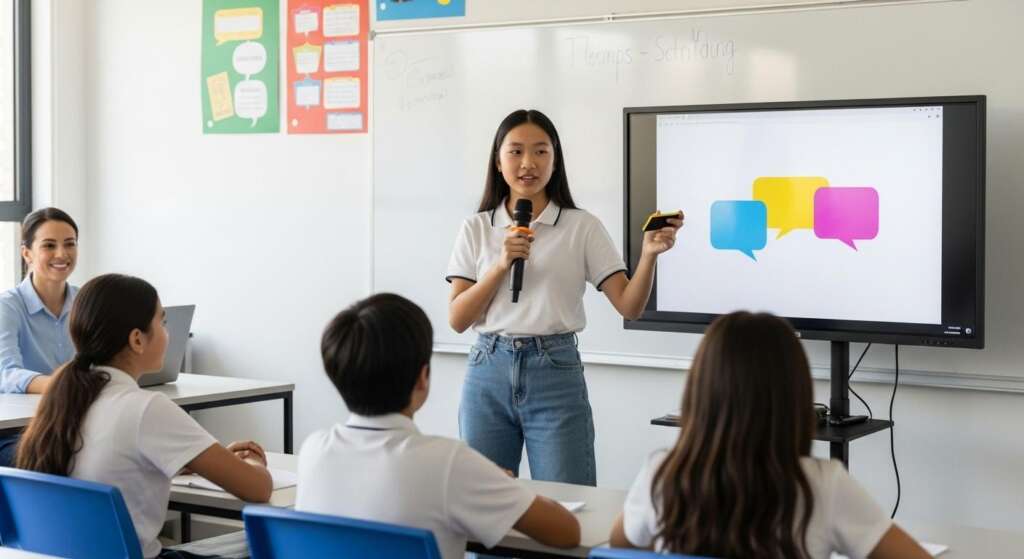
If there’s one thing that comes up in literally every job, every day, regardless of field or level, it’s communication skills.
Not because employers are grading them on eloquence. Because communication skills are what everything else in a workplace runs on. You can have the sharpest idea in the room. If you can’t explain it to the people who need to act on it, it sits there and does absolutely nothing.
Schools almost never teach this directly. There’s no exam on “how to handle a tense conversation with your manager.” But it comes up in real jobs within the first month. Guaranteed.
The Job Market Right Now Is Specifically Asking for This
Here’s what changed, and it matters.
Automation happened. It is still happening. A huge chunk of work that used to need a human, routine analysis, repetitive writing, basic data tasks, is getting done by software faster and cheaper than any person can manage. That trend isn’t going backwards.
Building trust with a client who’s nervous. Managing a team through something genuinely hard without everyone quietly falling apart. Telling a story that makes people care about an idea enough to actually act on it.
These are the employability skills that no algorithm does particularly well. And because so much of the repetitive technical work is going to machines, the things that actually separate people in the job market right now are increasingly the things that require being human.
Getting Hired vs Getting Promoted, Because They’re Different Games
Here’s something nobody says clearly enough to students.
The skills that get you hired and the skills that get you promoted are not the same list. And soft skills matter even more for the second one.
Think about how promotions actually work. By the time someone’s being considered, everyone in the running can probably do the technical work. The manager already knows that. What gets decided at that point is almost always something else entirely. Who does the team actually trust? Who stays calm when things get messy? Who makes the people around them better instead of just looking out for themselves? Who can manage up, across, and down without creating drama at every turn?
That’s all soft skills territory. Students who don’t build this early tend to hit a wall around three to five years in. They have the technical ability to go further. But nothing they built along the way is helping them move. And it shows up as this vague, confusing feeling of being stuck without quite knowing why.
Adaptability, the One Everybody Underestimates
Tools change. Teams change. Company strategies change. Sometimes the entire industry shifts and what you knew how to do last year is already partially obsolete. Students who can learn fast, adjust without completely unravelling, take on something unfamiliar without needing everything sorted before they move, those are the people organizations want to keep and actually invest in.
Adaptability is partly personality, yes. But mostly it gets built through doing things outside your comfort zone. Taking on tasks you might fail at. Recovering when something goes wrong and figuring out the next move without shutting down. These are things you can start building now, before a job makes them non-negotiable.
What Teamwork Actually Means
When employers say they want team players, a lot of students read that as “be agreeable, avoid conflict, go along with things.” That interpretation is not what they mean and it leads students completely in the wrong direction.
Real teamwork means being able to disagree productively. Pushing back on a bad idea without making it personal. Telling someone their work needs improvement without them feeling attacked. Motivating your team and doing tasks together efficiently.
That’s hard. Honestly harder than just being pleasant and nodding along. It needs a combination of communication skills, self-awareness, and emotional regulation that most people haven’t specifically practiced, because school mostly rewards individual performance and rarely puts students in situations where they have to navigate real group dynamics with real friction. Learning teamwork is one of the most vital employability skills one can master.
How You Actually Build These Skills Before You Graduate
This is the practical bit. And the honest answer is through doing, not through knowing about it.
Joining a club and actually showing up. Organising something. Taking on a leadership role even in a small, low-stakes context. Doing internships where you’re working alongside actual people with actual opinions. Volunteering. Public speaking even when it’s terrifying. Peer tutoring. These things build employability skills in real environments with real people, which is the only way they actually develop.
At Hashtag Counseling, we work with students not just on picking the right career direction but on building the actual soft skills and employability skills that will take them somewhere real once they’ve picked that direction. Because knowing where you want to go and being genuinely equipped to get there are two separate things. Both matter.
Frequently Asked Questions
Q1. What are soft skills exactly?
How you communicate, collaborate, adapt, handle feedback, and manage yourself under pressure. Everything that’s hard to put on a report card but shows up in every job.
Q2. Are they more important than technical skills?
Not more important but they’re what separates equally qualified people. Technical skills get you considered. Soft skills decide who gets chosen.
Q3. Can they actually be learned?
Mostly yes, through real experience in situations that push you. Personality shapes the starting point but doesn’t set the ceiling.
Q4. When should students start building them? School is genuinely the best time. Lower stakes, more room to get it wrong and recover before it actually matters.